Recruitment Automation & Workflow
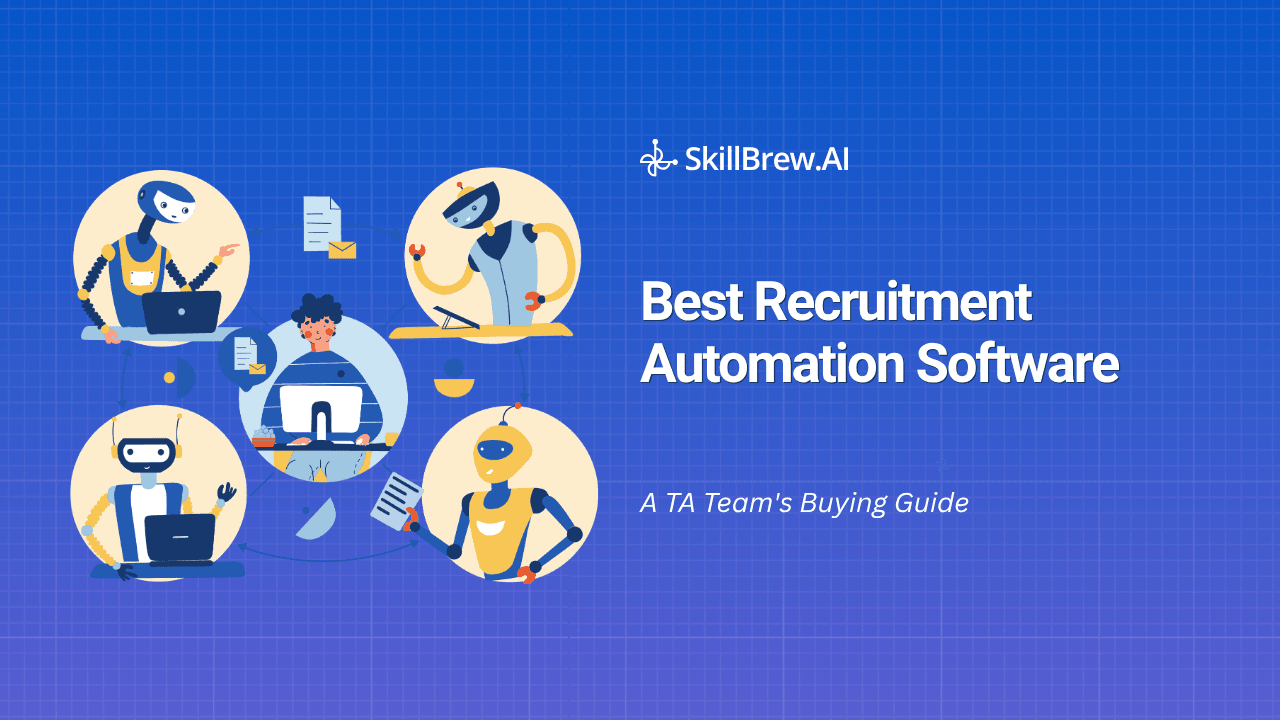
Best Recruitment Automation Software in 2026: A TA Team's Buying Guide
Most TA teams don't have a sourcing problem. They have a processing problem. Applications come in fast. The recruitment automation process after that, the screening, the scheduling, the coordination, collapses under volume. Recruiters spend their best hours on tasks that software should be handling. The best recruitment automation software fixes this by replacing manual work with AI agents, workflow rules, and structured evaluation, across every stage of the hiring funnel. This guide maps the

Most TA teams don't have a sourcing problem. They have a processing problem.
Applications come in fast. The recruitment automation process after that, the screening, the scheduling, the coordination, collapses under volume. Recruiters spend their best hours on tasks that software should be handling.
The best recruitment automation software fixes this by replacing manual work with AI agents, workflow rules, and structured evaluation, across every stage of the hiring funnel.
This guide maps the full recruitment automation process, compares the leading recruitment automation tools on the market today, and tells you exactly what each platform does and doesn't cover, so you can find the best recruitment automation software for your team's actual bottleneck.
Table of Contents
- What is recruitment automation software?
- The 6-stage recruitment automation process every TA team needs to cover
- Best recruitment automation software at a glance
- SkillBrew AI - built for the full recruitment automation process
- Tool-by-tool breakdown: best recruitment automation software in 2025
- How to evaluate recruitment automation tools before buying
- Frequently Asked Questions
What is the best recruitment automation software?
The best recruitment automation software is the one that automates the stage of your recruitment workflow process where your team actually loses the most time.
That sounds obvious. In practice, most teams evaluate features first and fit second, which is why so many TA departments end up with three or four point solutions that cover sourcing and scheduling while leaving voice screening and evaluation completely manual.
Recruitment automation software spans a wide range of capabilities: ATS workflow management, AI resume screening, automated telephonic screening, AI interview delivery, assessment generation, scheduling coordination, and pipeline analytics. The best recruitment automation software covers as many of these stages as possible within a unified platform, without requiring you to stitch together a fragmented stack.
For Indian TA teams specifically, the best recruitment automation software must also handle regional language diversity, something most global platforms are not built to do.
The 6-stage recruitment automation process every TA team needs to cover
Before comparing any recruitment automation tools, map the recruitment automation process against where your team's hours actually go. This is the framework that determines which platform is actually the best recruitment automation software for your context.
Stage 1: Job posting and candidate sourcing
What automation handles here: Multi-board job distribution from a single input, inbound resume collection, application deduplication, and automatic WhatsApp or email acknowledgments.
Where manual workflows break: Recruiters posting to five job boards separately, then manually downloading and sorting CVs into spreadsheets, then sending applicant acknowledgment emails one at a time. This costs 2–3 hours daily for a team managing active drives.
Stage 2: Resume screening and shortlisting
What automation handles here: JD-to-criteria parsing, knockout question scoring across experience, location, and certifications, ranked shortlist generation.
Where manual workflows break: A recruiter reading 200+ resumes daily to produce a shortlist that AI can generate in minutes. This is not a judgment task. It is a pattern-matching task and it should not consume recruiter time.
Stage 3: Voice screening - the most under-automated stage in the recruitment automation process
This is where the recruitment automation process breaks for most high-volume TA teams.
A shortlist of 300 candidates means a week of outbound recruiter phone calls. Notes are inconsistent. Callbacks happen over weekends. Strong candidates accept competing offers before anyone reaches them. By the time the screened list is ready, 7–10 days have passed and drop-off is high.
AI voice calling for hiring eliminates this entirely. An AI voice bot for HR calls candidates at scale, 500+ outbound calls per day, asks structured, role-relevant questions, and delivers scored reports within hours. No coordinator. No callback loop. No inconsistency.
This is the stage that separates the best recruitment automation software from tools that only automate the easy parts.
Stage 4: AI interviews and technical assessments
What automation handles here: Autonomous 24/7 interview delivery, JD-based assessment generation, structured evaluation scoring, and proctoring.
Where manual workflows break: Scheduling live interviews with candidates who have not been properly screened yet, and creating assessment questions from scratch for every new role.
Stage 5: Scheduling and candidate communication
What automation handles here: Interview slot offers via WhatsApp or email, automated reminders, no-show detection, stage-level status updates pushed to candidates.
Where manual workflows break: Coordinators managing calendar ping-pong across dozens of candidates per day, candidates dropping out because they did not receive timely communication.
Stage 6: Pipeline tracking and offer workflows
What automation handles here: Live funnel dashboards, time-to-hire tracking, offer letter generation from approved templates, post-offer document collection.
Where manual workflows break: TA leads building weekly hiring reports from spreadsheet data, chasing candidates for documents after an offer has been accepted.
Best recruitment automation software at a glance
| Tool | Best For | Standout Feature | Voice Screening | Pricing |
| SkillBrew AI | High-volume Indian hiring | Rhea AI recruiter & pipeline orchestration | Yes (10+ languages) | Pay-as-you-go |
| Greenhouse | Enterprise structured hiring | Deep workflow customization | No | By request |
| Lever | Mid-market CRM-focused hiring | Candidate nurture sequences | No | By request |
| Workable | SMB sourcing & hiring | AI job descriptions | No | From $149/mo |
| Paradox | Chatbot-based engagement | Conversational scheduling | Limited | By request |
| HireVue | Enterprise video & assessment | AI-scored video responses | Limited | By request |
| Zoho Recruit | Value-conscious teams | AI matching & resume parsing | No | From $30/u/mo |
| Manatal | Lean, high-growth teams | Drag-and-drop pipeline | No | From $19/u/mo |
| iCIMS | Large enterprise suites | Comprehensive talent cloud | No | By request |
| Kula AI | Outbound sourcing | AI outreach sequences | No | By request |
SkillBrew AI - best recruitment automation software for the full hiring cycle
Most recruitment automation tools cover one or two stages of the recruitment automation process. SkillBrew covers all six within a single platform, no fragmented point solutions, no manual handoffs between systems.
Here is how the platform maps across the complete recruitment automation process:
HireFlow - the always-free orchestration layer
HireFlow is the backbone of SkillBrew's recruitment workflow automation. It handles job posting, inbound resume collection, AI resume shortlisting, Kanban pipeline management, WhatsApp and email candidate communications, and multi-stage hiring drive setup, permanently free, with no subscription required.
For TA leads managing multiple simultaneous drives, HireFlow's live Kanban shows every candidate's stage, what's stuck, and where conversion is dropping. This level of pipeline visibility is what separates the best recruitment automation software from basic ATS tools.
BrewVoice (Rhea) - AI voice calling for hiring at scale
This is where SkillBrew separates from every other recruitment automation software on this list.
Rhea is SkillBrew's AI recruiter persona, the voice your candidates hear during automated telephonic screening. She is built specifically for the Indian recruitment automation process, covering 10+ regional languages and delivering screening via both telephonic calls and WhatsApp.
What Rhea handles in the recruitment automation process:
- Initiates outbound calls to shortlisted candidates automatically, triggered by resume screening completion in HireFlow
- Conducts structured but adaptive conversations, not robotic scripts
- Probes deeper when answers are vague ("You mentioned field sales, was that primarily inbound or outbound?")
- Screens in 10+ Indian regional languages, from Tamil to Marathi to Bhojpuri
- Returns a structured 3-signal report within hours: role fit, technical signal, communication clarity
For Indian TA teams, regional language capability is not optional. It is the difference between a voice screening tool India can actually deploy at scale versus a global platform that treats regional accents as degraded input.
The economics are straightforward. 300 screening calls at 20 minutes each equals 100 recruiter hours. With automated telephonic screening via Rhea, those 100 hours become a 30-minute morning review of scored, ranked reports.
Rhea is what makes SkillBrew the best recruitment automation software for high-volume Indian hiring. No other platform on this list combines AI voice calling for hiring with this depth of regional language support.
AI Interviews - resume-aware, autonomous evaluation
Once voice screening is complete in the recruitment automation process, candidates move to AI interviews. SkillBrew's interview avatar is resume-aware, it knows the candidate's background before the session starts and asks adaptive, role-relevant follow-up questions rather than a fixed Q&A script.
The output is a structured 3-signal evaluation report. No recruiter involvement required for the session itself. Interviews run 24/7.
Technical Assessments - JD-to-test in 2 minutes
Paste a job description. The platform generates a curated assessment covering technical competencies, behavioral signals, and cognitive ability in under 2 minutes. This removes the test-building overhead that typically adds 1-2 days to assessment setup for every new role in the recruitment automation process.
BrewShield - proctoring across the full evaluation pipeline
Every interview and assessment runs with BrewShield's anti-cheating layer detecting 13 integrity signals: camera, screen sharing, voice detection, keystroke logging, tab-switching, and more.
For the best recruitment automation software to deliver reliable evaluation data, the proctoring layer is not optional. Unproctored data produces shortlists that do not hold up.
Tool-by-tool breakdown: best recruitment automation software in 2025
1. SkillBrew AI
Category: Full-cycle recruitment automation platform
Best for: High-volume hiring, campus drives, staffing agencies, RPOs, frontline hiring, Indian market
SkillBrew is the best recruitment automation software for teams managing high application volumes across the Indian market. It is the only platform on this list that treats voice screening as a first-class stage in the recruitment automation process rather than an afterthought.
Key strengths
- Rhea AI recruiter handles 500+ outbound calls per day in 10+ Indian regional languages
- The only voice screening tool India-built for regional language diversity at scale
- JD-to-assessment in under 2 minutes
- HireFlow orchestration layer is permanently free
- Pay-as-you-go pricing, no subscriptions, no expiring credits
Potential limitation: Teams hiring primarily in English-speaking international markets may not need the depth of Indian regional language coverage.
2. Greenhouse
Category: Enterprise ATS
Best for: Large organizations with complex, structured hiring workflows
Greenhouse is one of the most configurable ATS platforms available. Its strength is in structured interview planning, scorecard design, and deep workflow customization for organizations with multiple hiring teams and compliance requirements.
It does not cover voice screening in the recruitment automation process. Teams using Greenhouse as their primary recruitment automation software will need to integrate a separate voice screening or assessment layer.
Key strengths
- Deep workflow customization and structured interviewing
- Strong DEI features and scorecard design
- Robust reporting
Potential limitation: No native voice or AI interview capability. Complex implementation. Enterprise pricing.
3. Lever
Category: ATS + CRM
Best for: Mid-market companies with proactive sourcing needs
Lever combines ATS with candidate relationship management, making it well-suited for teams that run nurture sequences for passive candidates. It covers sourcing, pipeline management, and candidate communication.
Like Greenhouse, it does not address voice screening in the recruitment automation process. Teams using Lever as their sole recruitment automation software will be missing the highest-friction stage for high-volume hiring.
Key strengths
- Strong CRM and candidate nurturing
- Clean pipeline visualizations
- Solid ATS fundamentals
Potential limitation: No voice screening or AI interview capability.
4. Workable
Category: ATS with sourcing
Best for: SMBs and growing teams looking for accessible recruitment automation tools
Workable covers job posting, sourcing, ATS tracking, and has basic AI-assist features for job description writing and candidate matching. It handles the front end of the recruitment automation process well.
Voice screening and assessment are not native capabilities.
Key strengths
- Easy setup and intuitive UI
- Multi-board job posting
- AI-assisted sourcing suggestions
Potential limitation: No voice screening. Assessment features are limited compared to dedicated recruitment automation software.
5. Paradox (Olivia)
Category: Conversational AI assistant
Best for: Retail, hospitality, and hourly hiring with high scheduling volume
Paradox's Olivia is a conversational AI chatbot built primarily for candidate engagement, FAQ handling, and scheduling automation. Its voice capability is limited relative to a dedicated AI voice bot for HR.
The platform is strongest in standardized hiring environments where scheduling automation is the primary need in the recruitment automation process.
Key strengths
- Strong chatbot-based candidate engagement
- Scheduling automation for high-volume hourly roles
- Good ATS integrations
Potential limitation: Not a substitute for structured voice screening. Limited evaluation depth.
6. HireVue
Category: Enterprise video interview and assessment
Best for: Large enterprises with established video interview programs
HireVue combines video interview delivery with AI-scored evaluation and assessment tools. Its voice module exists but is an add-on rather than a core capability in the recruitment automation process.
Regional language support is not designed for Indian hiring contexts. It is not the right platform for teams requiring regional language voice screening at scale.
Key strengths
- Mature video interview infrastructure
- AI scoring for video responses
- Assessment capabilities at enterprise scale
Potential limitation: Voice is an add-on, not core. Not designed for Indian market regional language requirements.
7. Zoho Recruit
Category: Value ATS
Best for: Teams with limited budgets who need core ATS functionality
Zoho Recruit offers solid ATS fundamentals at an accessible price point: resume parsing, candidate matching, and basic AI features, well-integrated with the broader Zoho ecosystem.
It does not include voice screening or AI interview automation. For teams evaluating the best recruitment automation software that covers the full recruitment workflow process, Zoho Recruit addresses the front-end stages only.
Key strengths
- Competitive pricing
- Solid ATS fundamentals
- Good Zoho ecosystem integration
Potential limitation: No voice screening. AI features basic compared to full-suite recruitment automation software.
8. Manatal
Category: ATS for high-growth teams
Best for: Lean recruiting teams that want a clean, fast ATS
Manatal is a well-designed ATS with a drag-and-drop pipeline builder and clean candidate management. Voice screening and assessment automation are not part of the platform.
Teams using Manatal as their primary recruitment automation software will need separate tools for voice screening and evaluation stages of the recruitment automation process.
Key strengths
- Clean interface and fast onboarding
- Drag-and-drop pipeline builder
- Good value for price
Potential limitation: No voice screening or interview automation. Not designed for high-volume hiring at scale.
How to evaluate recruitment automation tools before buying
Start with your bottleneck, not the feature list
The best recruitment automation software for your team is the one that solves the stage costing you the most hours per week. Evaluate your current recruitment automation process stage by stage before opening a single vendor demo.
The platform that looks best on paper is useless if it does not address your actual workflow problem.
| Evaluation Criterion | Minimum Standard | Why It Matters |
| Stage Coverage | Matches actual bottleneck stages | Prevents software that skips your specific problem. |
| Voice Screening | AI-native, not a bolt-on | Critical for high-volume process execution. |
| Language Support | Matches candidate demographic | Non-negotiable for India-market TA teams. |
| Daily Call Capacity | 300+ simultaneous calls | Prevents screening bottlenecks at peak volume. |
| Report Quality | Structured scores, not raw transcripts | Enables fast, data-driven recruiter decisions. |
| Pricing Model | Usage-based or flexible | Aligns costs with hiring volume fluctuations. |
| Integration Capability | API or native ATS connections | Eliminates manual data entry between tools. |
| Time to Deploy | Days, not months | Vital for campus drives and urgent hiring needs. |
Prioritize the voice screening stage
The recruitment automation process breaks most often at voice screening. It is the highest-volume, most time-intensive manual stage in high-volume hiring, and it is the stage most recruitment automation software simply does not cover.
If your team is manually making more than 50 screening calls per week, that is your first automation target. Every other optimization, ATS, scheduling, communication, delivers less operational impact than eliminating manual telephonic screening from your recruitment workflow automation.
Insist on a live demo with your actual JD
Any credible recruitment automation software should be able to run a demo against a real job description you provide. For voice screening tools, hear what the AI sounds like in the candidate's language. Evaluate the report output against your scoring criteria.
Marketing demos show best-case scenarios. Live demos against your JD show whether the tool actually fits your recruitment automation process.
Frequently Asked Questions
What is the best recruitment automation software for Indian TA teams?
The best recruitment automation software for Indian TA teams is one that covers the full recruitment automation process, including voice screening in regional languages, within a single platform. SkillBrew AI is built specifically for this context, with Rhea handling automated telephonic screening in 10+ Indian languages at 500+ calls per day.
What does recruitment automation software actually do?
Recruitment automation software replaces manual hiring tasks with AI agents, workflow rules, and system triggers. It covers sourcing, resume screening, voice screening, candidate communication, AI interviews, technical assessments, scheduling, and pipeline tracking. The goal is to remove administrative overhead from the recruitment automation process so recruiters focus on judgment and relationship-building.
What is the difference between an ATS and recruitment automation software?
An ATS is a database and workflow manager for job applications. The best recruitment automation software goes further, it actively executes tasks: making outbound calls, running interviews, generating assessments, and communicating with candidates automatically. Many teams use an ATS as one component of a broader recruitment automation tools stack.
Which stage of the recruitment automation process should I automate first?
Start with whichever stage costs your team the most hours per week. For most high-volume TA teams, that is voice screening. Automating sourcing or scheduling first is an easier change, but delivers less operational impact than addressing the stage where volume hits hardest in the recruitment automation process.
Can recruitment automation software handle Indian regional languages?
Most global recruitment automation software cannot. Platforms built for American or European markets are typically optimized for English. For Indian TA teams hiring across Tamil Nadu, Maharashtra, Rajasthan, or Gujarat, a voice screening tool India-built for regional languages is required. SkillBrew's Rhea AI recruiter natively supports 10+ Indian regional languages.
What is AI voice calling for hiring and how does it work in the recruitment automation process?
AI voice calling for hiring uses an AI voice agent to conduct outbound screening calls with candidates as part of the automated recruitment workflow. The agent asks structured, role-relevant questions, follows up when answers are vague, evaluates responses in real time, and delivers a scored candidate report. A well-built AI voice bot for HR handles hundreds of calls simultaneously and returns reports within hours.
How much does the best recruitment automation software cost?
Pricing varies widely across the recruitment automation tools market. ATS platforms range from $19 to $30 per user per month for SMB tiers, with enterprise platforms priced on request. SkillBrew uses pay-as-you-go pricing for voice and interview modules, with the HireFlow orchestration layer permanently free. Usage-based pricing aligns better with variable hiring volumes than flat subscriptions.
Is automated telephonic screening accurate enough for shortlisting?
When properly configured, automated telephonic screening via the best recruitment automation software produces shortlists that align closely with manual recruiter outcomes, while eliminating the inconsistency that comes from recruiter fatigue and varying call quality. A structured 3-signal report (role fit, technical signal, communication clarity) gives recruiters a consistent basis for comparison across every candidate in the recruitment automation process.
Ready to see the best recruitment automation software working end-to-end?
See AI-powered hiring in action
Discover how SkillBrew helps hiring teams cut time-to-hire by 60% with skill-validated assessments and AI-ranked shortlists.
Book a free demoNo commitment required · 30 minutes
Continue reading
View All Posts