Latest insights on hiring and AI
Practical guidance on hiring, skill validation, and AI-enabled workflows for job seekers and hiring teams.
SkillBrew.AI
Recruitment Automation & Workflow
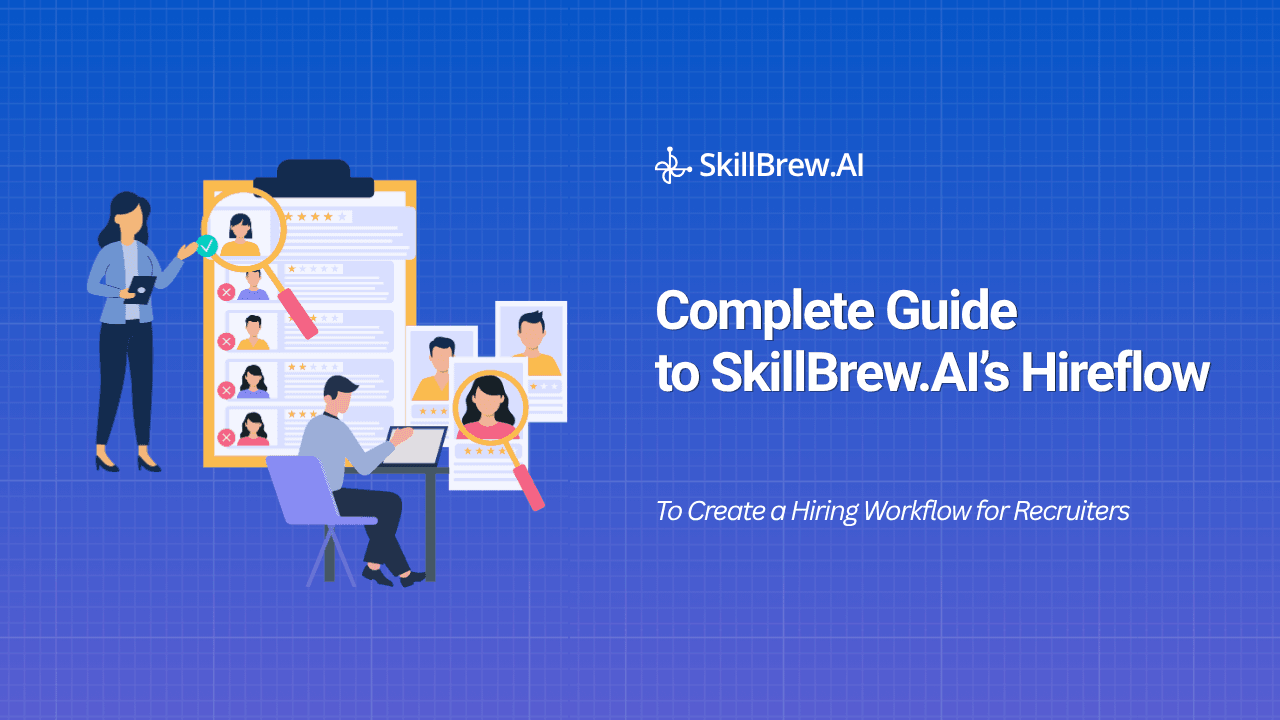
The Complete Guide to Creating a Hiring Workflow in HireFlow
Learn how to build, configure, and manage a full hiring workflow in HireFlow, from creating your first drive to tracking candidates and closing roles faster.
AI Interview
AI Interview
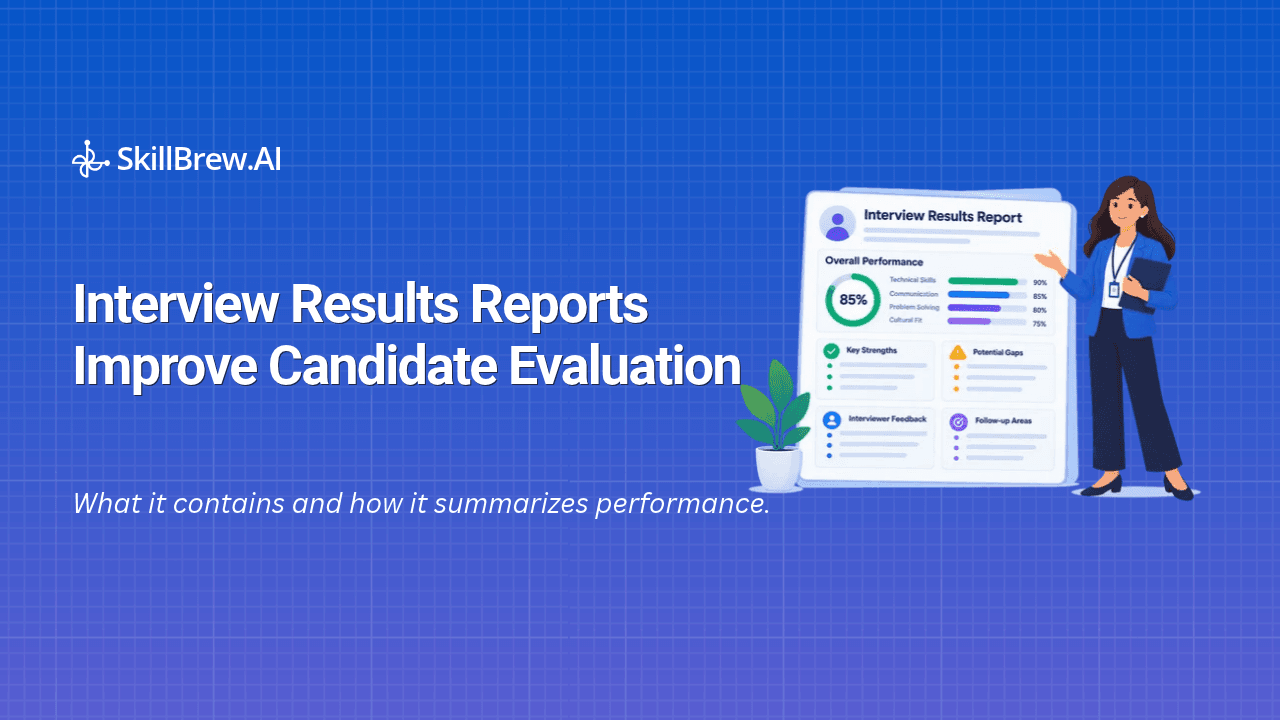
How Interview Results Reports Improve Candidate Evaluation
After an interview, recruiters often have notes, scores, candidate responses, comments, and recordings spread across different places. An interview results report brings the key information together in a structured format, making it easier to review what happened during the interview and identify areas that may need further evaluation. This becomes especially useful when teams are interviewing many candidates for the same role. Instead of relying on scattered notes or memory, recruiters and hir
AI Interview
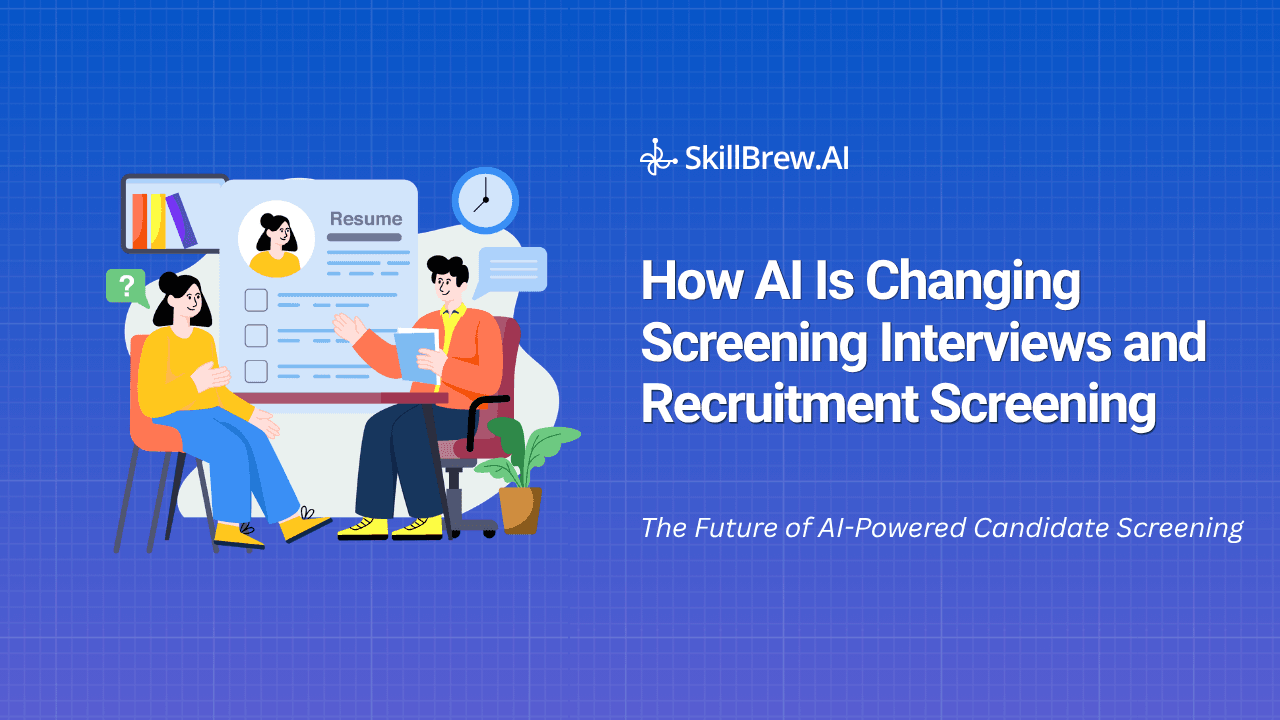
How AI Is Changing Screening Interviews and Recruitment Screening in 2026
Hiring teams are under increasing pressure to find qualified candidates quickly while managing larger application volumes. In 2026, artificial intelligence is transforming recruitment screening by helping organizations analyze resumes, match candidates to roles, automate initial evaluations, and improve recruiter productivity. The biggest change is not simply automation. AI is changing how candidates move through the hiring funnel and how recruiters use information to make better decisions. Tas
Assessment
Assessment
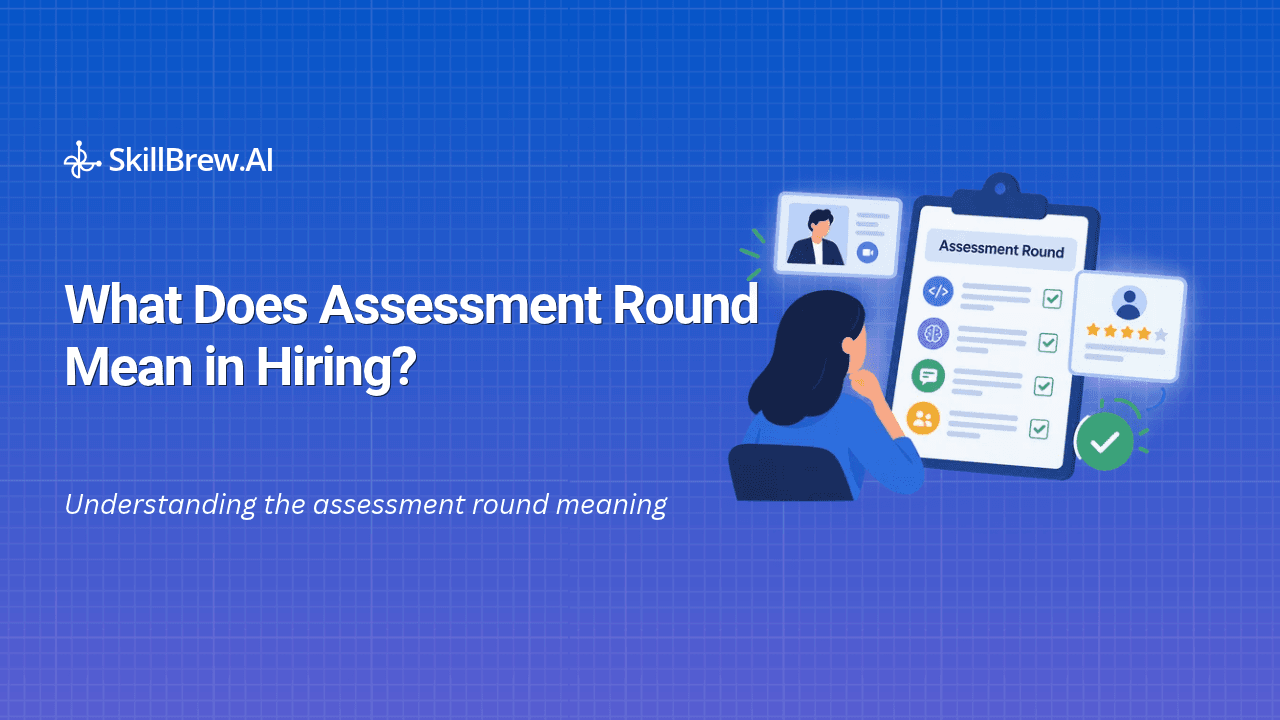
What Does Assessment Round Mean in Hiring?
If you are applying for a job and have been told that the next step is an assessment round, you may be wondering what it actually involves. So, what does assessment round mean in the hiring process? An assessment round is a structured stage of recruitment where employers evaluate a candidate's skills, knowledge, reasoning, communication, or other job-relevant competencies. Depending on the role, it may include technical questions, coding tasks, aptitude tests, situational questions, communicat
Assessment
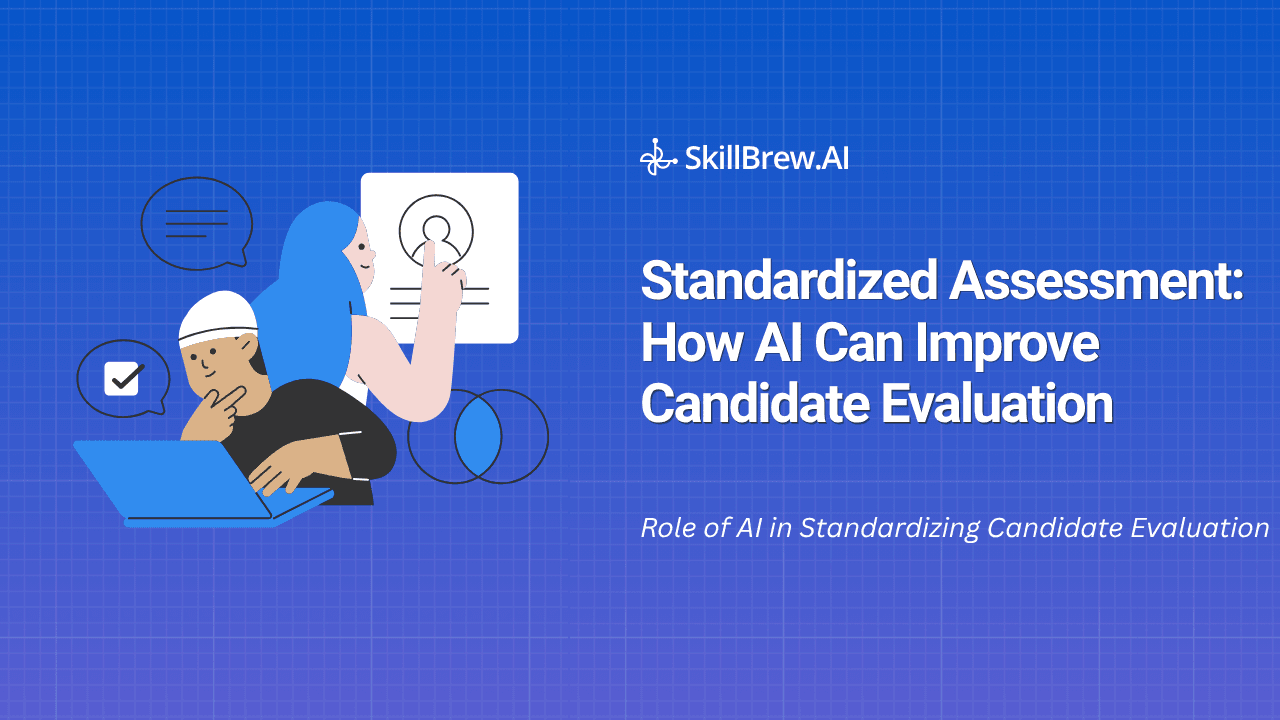
Standardized Assessment: How AI Can Improve Candidate Evaluation
Two recruiters can interview the same candidate and walk away with completely different conclusions. One focuses on technical depth. Another prioritizes communication. A hiring manager weighs prior experience more heavily than either of them. The problem usually isn't that someone evaluated the candidate incorrectly. It's that everyone used a different standard. A standardized assessment helps address this by giving candidates comparable questions, instructions, and scoring criteria, so resul
See AI-powered hiring in action
Discover how SkillBrew helps hiring teams cut time-to-hire by 60% with skill-validated assessments and AI-ranked shortlists.
Book a free demoNo commitment required · 30 minutes
BrewVoice
BrewVoice
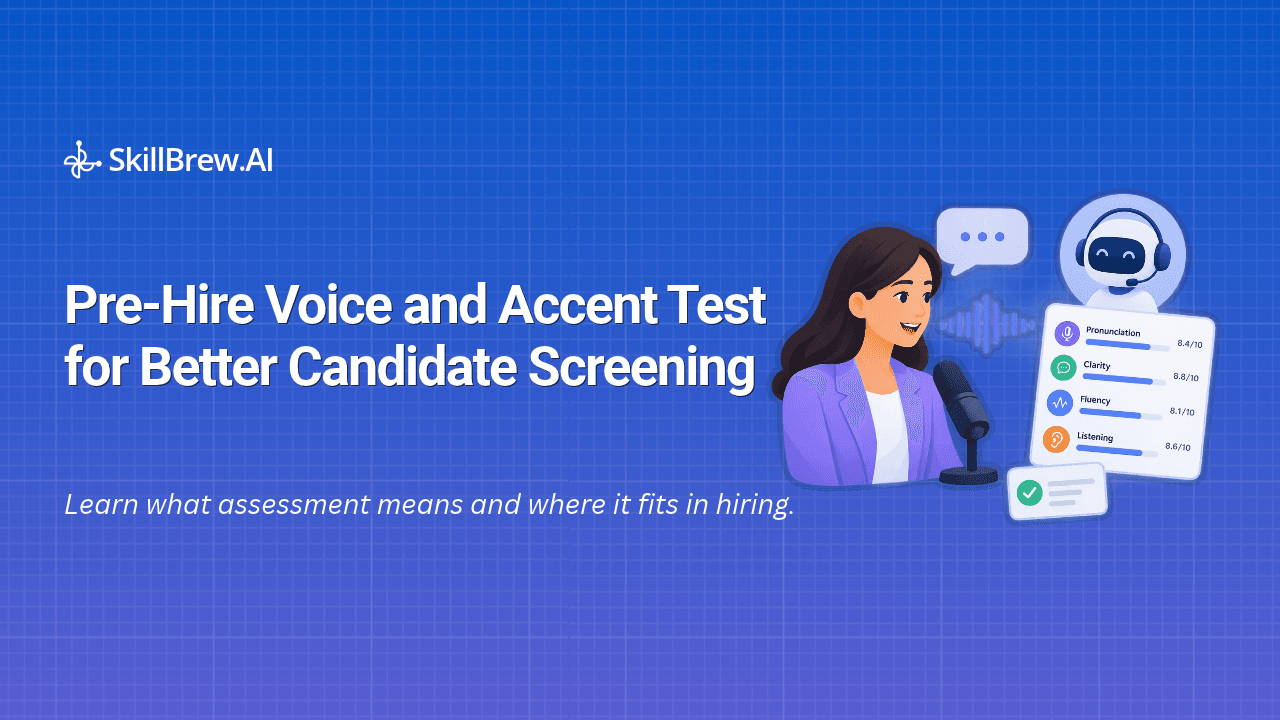
Pre-Hire Voice and Accent Test for Smarter Candidate Screening
Resumes can show a candidate’s experience, qualifications, and career history, but they do not always show how effectively someone communicates in a real conversation. This matters especially for customer support, sales, BPO, recruitment, telecalling, and other voice-based roles. A pre-hire voice and accent test gives recruiters a structured way to evaluate spoken communication before investing time in later interview stages. Depending on the role, the assessment can examine pronunciation, clar
BrewVoice
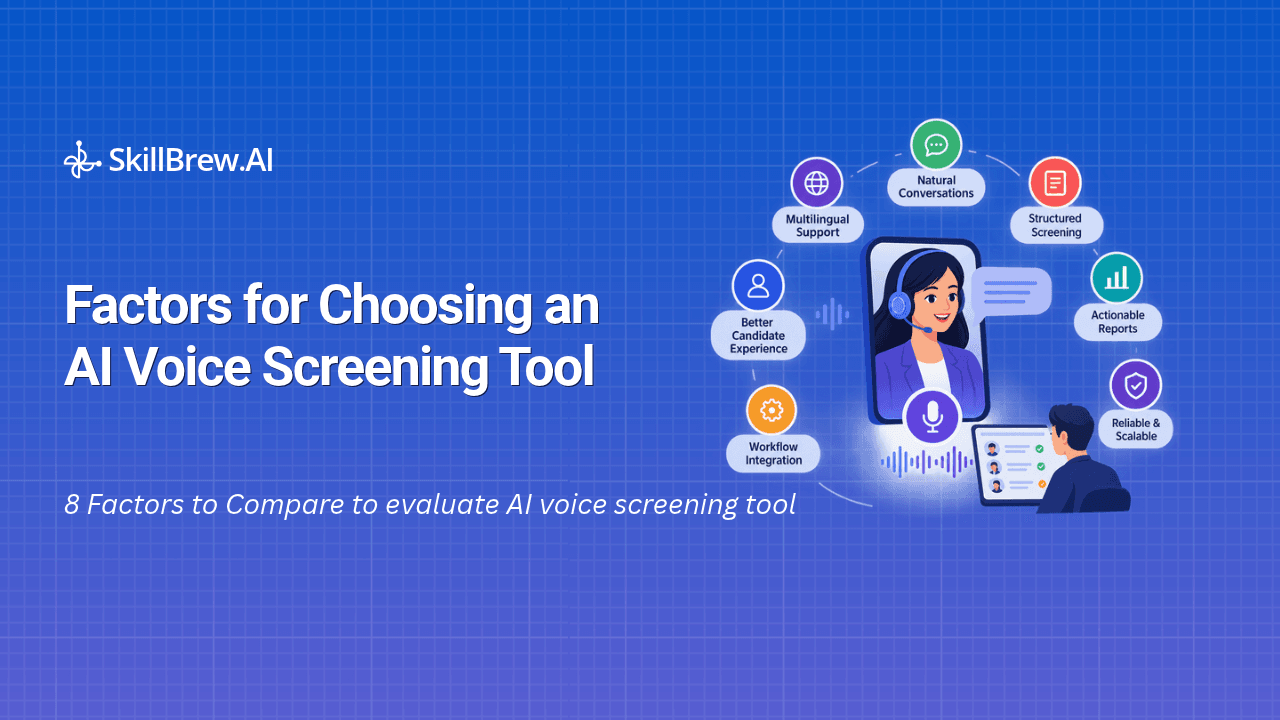
8 Factors to Compare When Choosing an AI Voice Screening Tool
What aspects do recruitment teams compare when evaluating AI voice screening tools? Choosing an AI voice screening tool is not simply about whether it can make an automated call. Recruitment teams typically compare these tools across conversation quality, screening depth, language support, candidate experience, workflow fit, reporting, scalability and reliability, and pricing. These areas help recruiters understand how a platform would actually fit into their hiring process. A tool may offer au
Campus Placement Drive
Campus Placement Drive
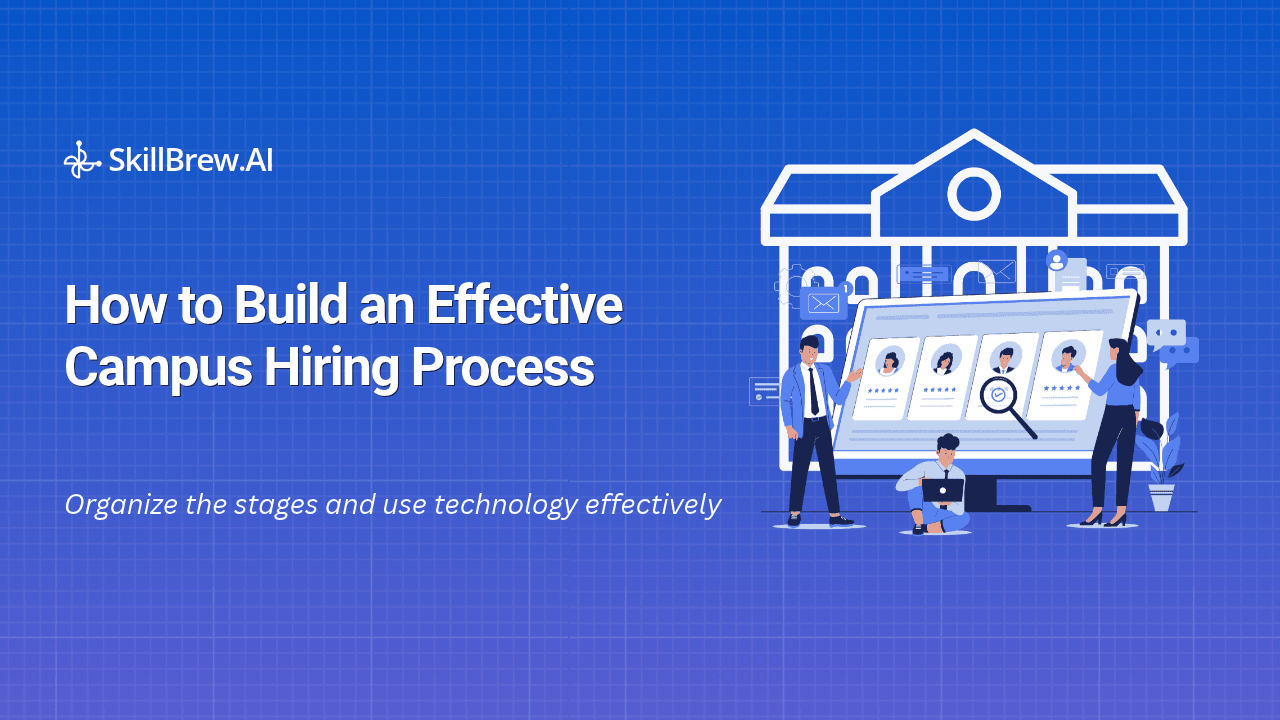
How to Build an Effective Campus Hiring Process
Campus recruitment helps organizations connect with students and recent graduates who can grow into valuable team members. However, hiring from multiple colleges can become difficult when application volumes increase, placement schedules overlap, and recruiters use different methods to evaluate candidates. So, how do you build an effective Campus Hiring Process? It starts with clear hiring goals, a structured recruitment strategy, consistent screening criteria, relevant assessments, and a reli
Campus Placement Drive
Campus Hiring ROI: Calculate the True Cost of a Bad Screening Process
Campus Hiring is often treated as a volume problem: attract enough applicants, screen them quickly, interview the strongest candidates, and make offers. But when the screening process is inefficient, the real cost can extend far beyond recruiter salaries or assessment software. Manual screening, unnecessary interviews, repeated evaluations, inconsistent decisions, candidate drop-offs, and replacement hiring can all add cost to the same hiring cycle. For recruitment leaders managing high-volume