BrewVoice
How Call Assistant and Screening Technologies Are Transforming Recruitment
Introduction How much time does your recruitment team spend calling candidates who are unavailable, unqualified, or no longer interested in a position? This is where call assistant and screening technologies can help recruitment teams automate routine outreach, standardize initial screening, and organize candidate information for faster review. By combining automated calling, conversational artificial intelligence (AI), and structured reporting, these solutions let recruiters spend less time o
BrewVoice
Best AI Voice Interview Platforms for Hiring Analytics
Recruitment teams often spend hours calling candidates to confirm their interest, discuss job requirements, check notice periods, and schedule interviews. These repetitive tasks become difficult to manage when organizations receive hundreds or thousands of applications for a single role. An AI Voice Interview Platform can automate initial candidate conversations, collect structured responses, and help recruiters identify applicants who meet predefined job requirements. Instead of manually calli
BrewVoice
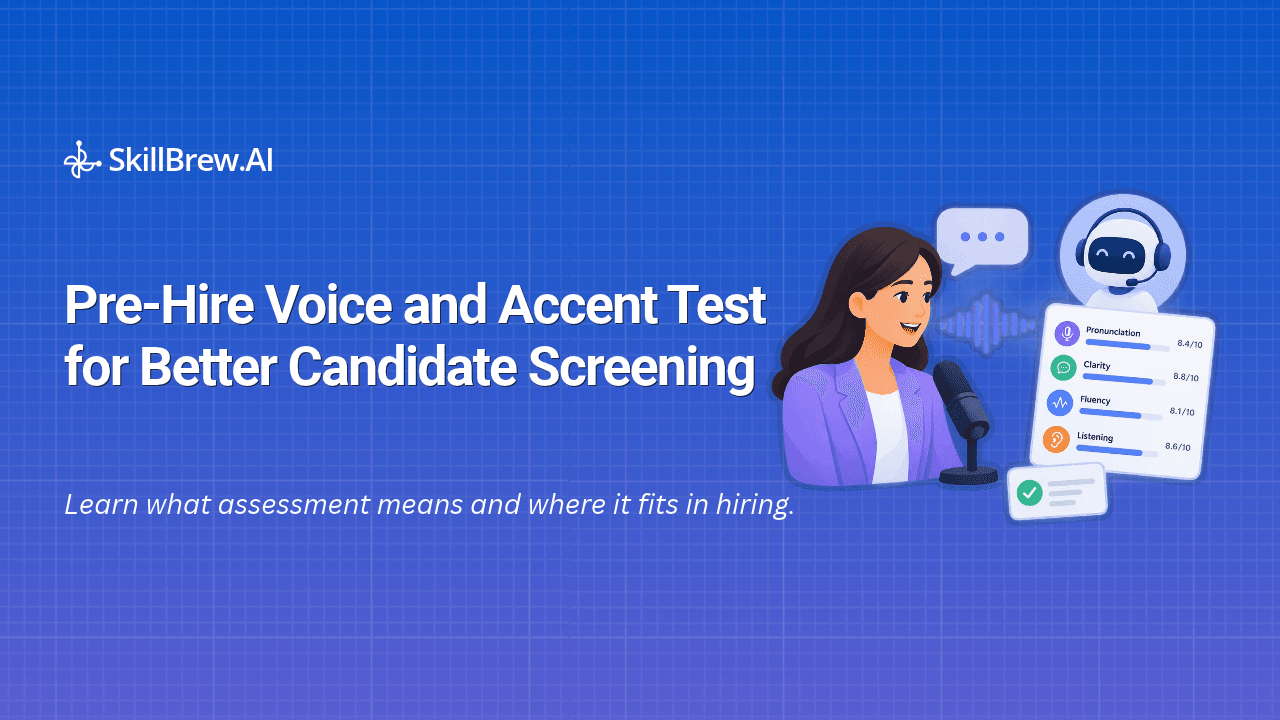
Pre-Hire Voice and Accent Test for Smarter Candidate Screening
Resumes can show a candidate’s experience, qualifications, and career history, but they do not always show how effectively someone communicates in a real conversation. This matters especially for customer support, sales, BPO, recruitment, telecalling, and other voice-based roles. A pre-hire voice and accent test gives recruiters a structured way to evaluate spoken communication before investing time in later interview stages. Depending on the role, the assessment can examine pronunciation, clar
BrewVoice
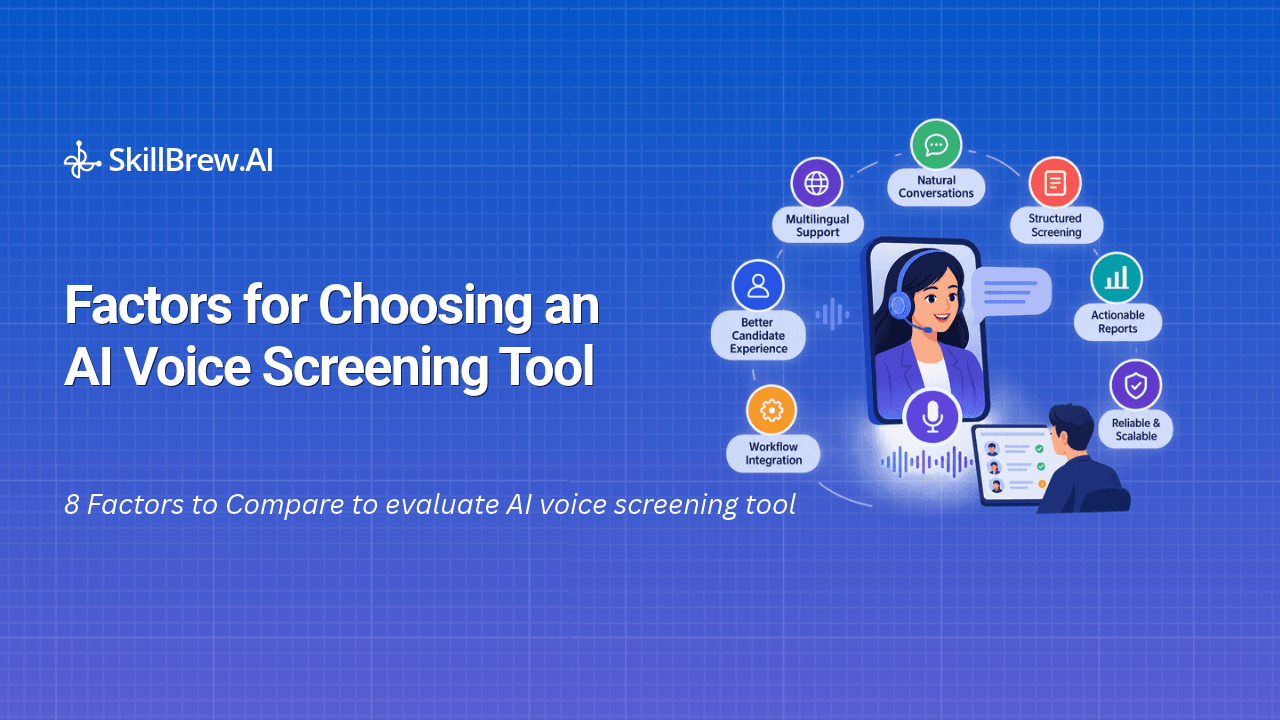
8 Factors to Compare When Choosing an AI Voice Screening Tool
What aspects do recruitment teams compare when evaluating AI voice screening tools? Choosing an AI voice screening tool is not simply about whether it can make an automated call. Recruitment teams typically compare these tools across conversation quality, screening depth, language support, candidate experience, workflow fit, reporting, scalability and reliability, and pricing. These areas help recruiters understand how a platform would actually fit into their hiring process. A tool may offer au
BrewVoice
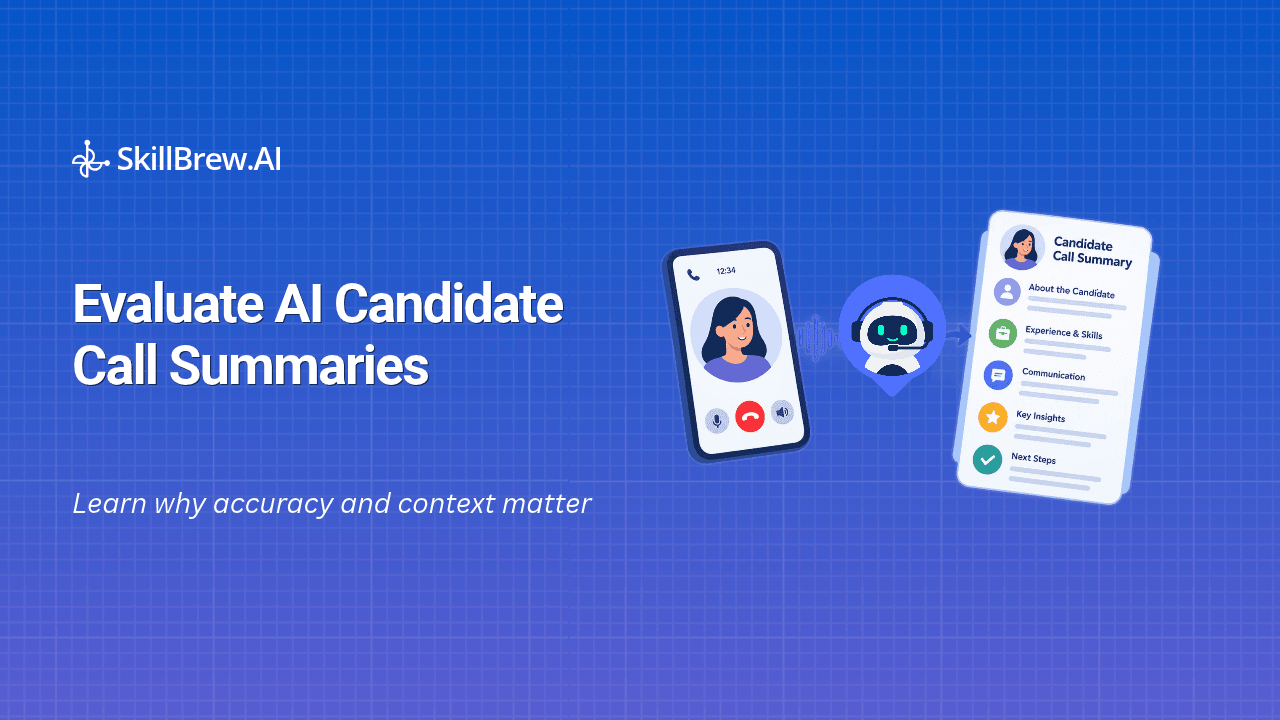
How to Evaluate AI Candidate Call Summaries
Recruiters often have to make sense of a large amount of information after candidate screening calls. A single conversation can cover experience, availability, salary expectations, role interest, communication, and other job-specific requirements. AI-powered voice screening can turn these conversations into structured summaries, helping recruiters review candidate information without replaying every call. But a summary is only useful if the information is accurate, relevant, complete, and prese
BrewVoice
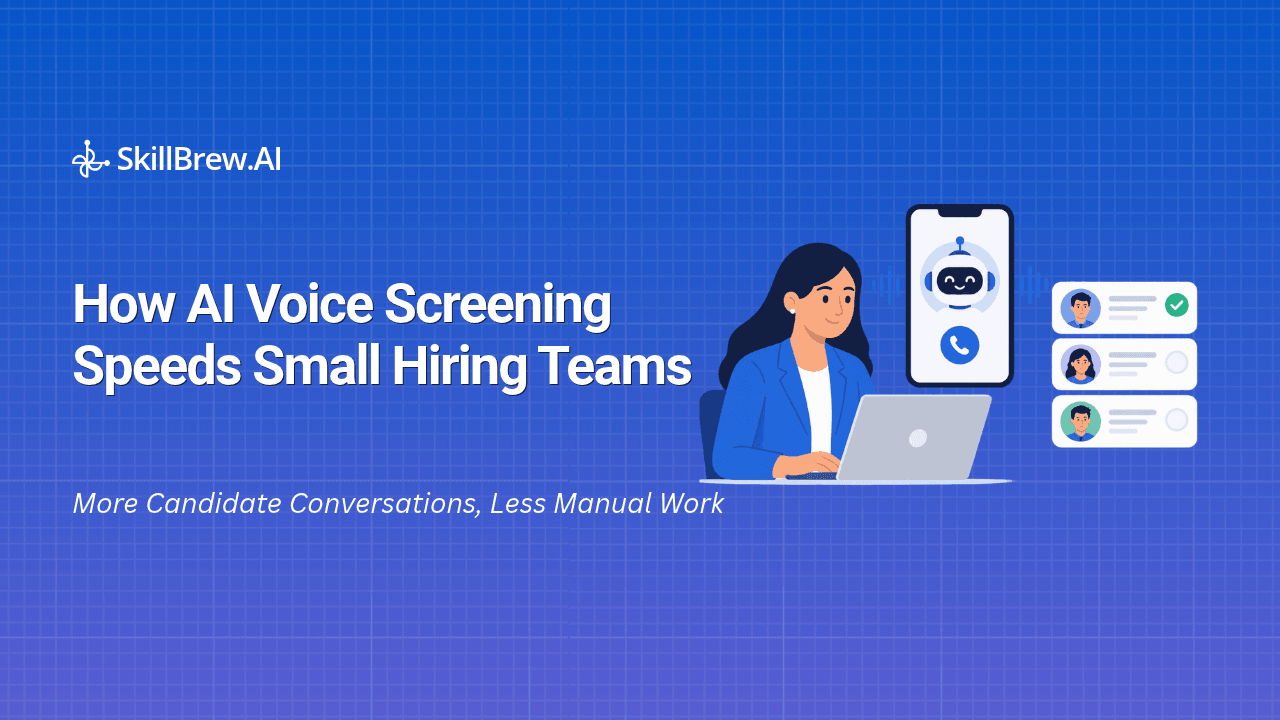
How AI Voice Screening Speeds Small Hiring Teams
Small hiring teams often face a unique recruitment challenge: every new role increases the number of candidate conversations, but the recruiting team size usually stays the same. A recruiter managing multiple open positions may need to review applications, contact candidates, conduct initial calls, collect information, schedule interviews, and update hiring records. As candidate volume grows, these repetitive tasks can quickly become a bottleneck. The challenge is that many of these activities
BrewVoice
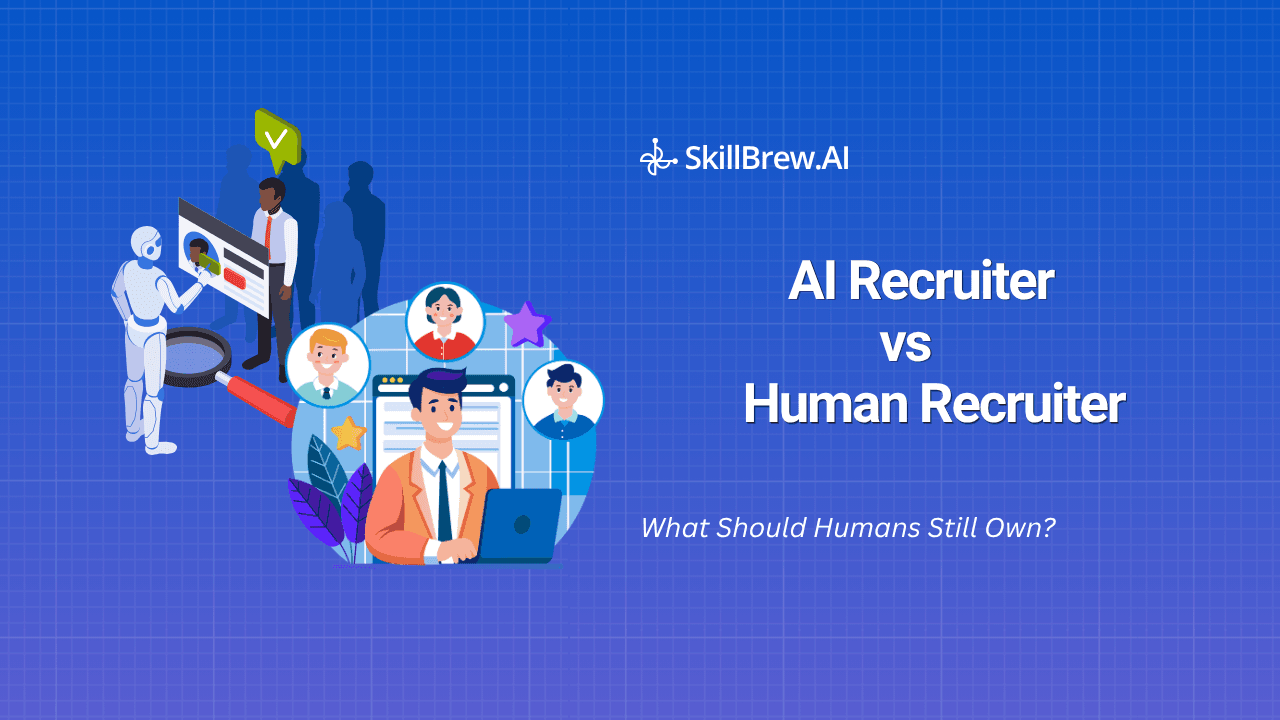
AI vs Human Recruiter: What Should Humans Still Own?
AI isn't replacing every part of recruiting. It's changing who does what. AI can now source candidates, run first-round screening, schedule interviews, answer candidate FAQs, and chase follow-ups automatically. As those capabilities expand, TA teams face a more practical question: which parts of hiring should AI handle, and which should remain human-led? That's the real AI vs human recruiter question, and the honest answer is neither one, alone. Recruiters lose an average of 17.7 hours per va
BrewVoice
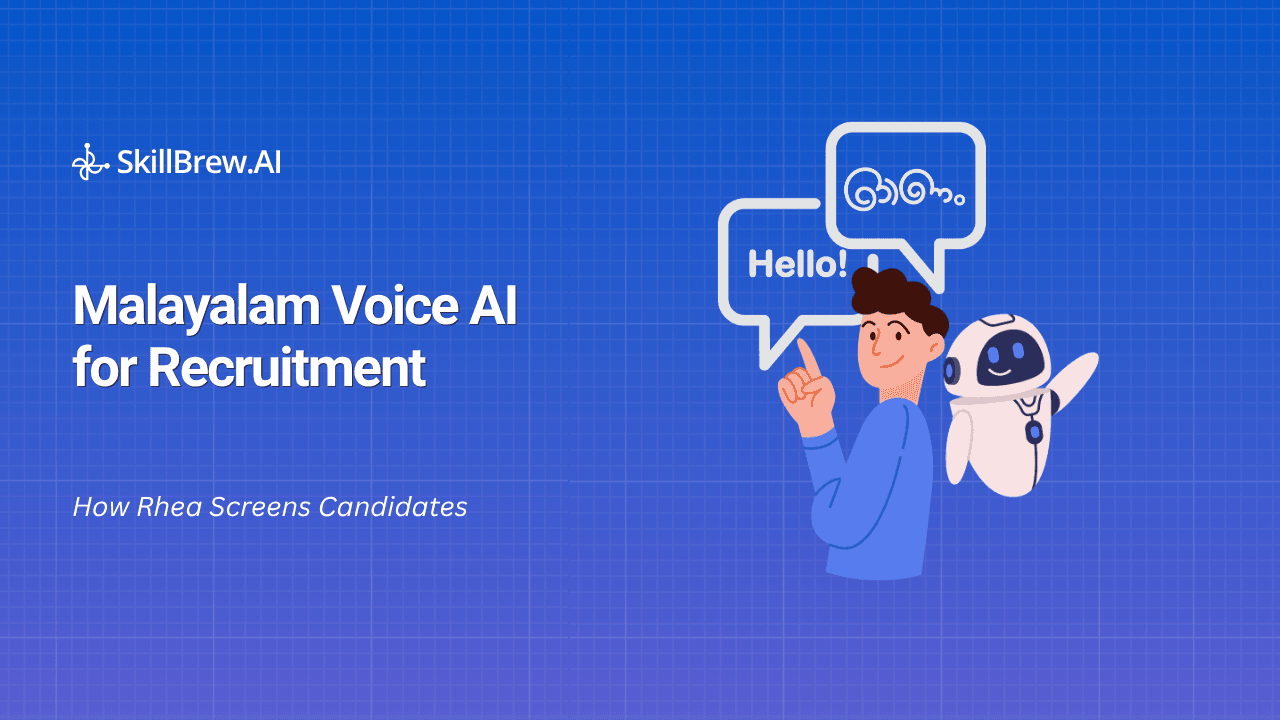
Malayalam Voice AI for Recruitment: How Rhea Screens Candidates
For recruiters hiring across Kerala, the first screening call doesn't need to happen in English. A job description can be written in English and still lead to a first conversation in Malayalam. For candidates in frontline, field, and blue-collar roles especially, that first call often decides whether they stay engaged with a hiring process or drop off before anyone gets to evaluate them properly. This is where Malayalam voice AI changes the screening workflow. BrewVoice, SkillBrew.AI's AI voi
BrewVoice
How to Measure the ROI of AI Voice Screening in Recruitment
Consider a recruitment team where a recruiter spends 12 minutes screening each candidate. At 10,000 screens a year, that translates to roughly 2,000 hours of recruiter time every year, time that could otherwise go toward interviews, candidate engagement, and closing hires. That is exactly why AI voice screening ROI deserves a proper business case instead of a gut feeling. Recruitment teams are under constant pressure to hire faster while managing growing candidate volumes. First-round screening
BrewVoice
AI Voice Screening vs Phone Screening: Which Is Better for High-Volume Hiring?
When hiring volume increases, the first bottleneck usually isn't finding candidates. It's screening them. A recruiter may spend 10 to 20 minutes on every initial phone screen. Multiply that across hundreds or thousands of applicants, and the screening stage can quickly consume days of recruiter time. Manual phone screening becomes increasingly difficult once a team needs to process hundreds or thousands of applicants for a single role, and that difficulty compounds during campus drives, seasona
BrewVoice
Your Recruiters Are Making 80 Calls a Day. They Shouldn't Be.
High-volume hiring has a quiet crisis: in many TA teams, a significant share of the work week disappears into first-round telephonic screens that a machine can handle better, faster, and without bias. AI voice calling for hiring exists precisely for this problem. It automates round one completely, a structured voice agent calls candidates, evaluates responses against a defined rubric, and returns a scored shortlist to the hiring team. No recruiter on the line. No scheduling tetris. No call note
BrewVoice
What Is An AI Voice Recruiter? How It Works and Where It Beats Phone Screening?
Phone screening was never broken because recruiters were bad at it. It broke because volume grew faster than headcount ever could. That gap is why an entirely new category of hiring software has shown up on TA leaders' radar in the last two years: the AI voice recruiter. Not a chatbot. Not an IVR that reads a script and collects keypad taps. An AI voice recruiter is software that calls candidates, has a real conversation, and reports back what it learned, at a scale no phone-based team can matc