Recruitment Automation & Workflow
How to Automate Candidate Screening Without Losing the Human Touch
Learning to automate candidate screening human touch intact is the single biggest lever most TA teams haven't pulled yet. Screening 300 applicants for a single role takes time most recruiters don't have. The pile grows, the pipeline stalls, and by the time your team gets to the strongest candidates, many have already accepted another offer. That's the real problem with high-volume hiring: not that automation is risky, but that doing it manually is already failing. The question smart TA leaders
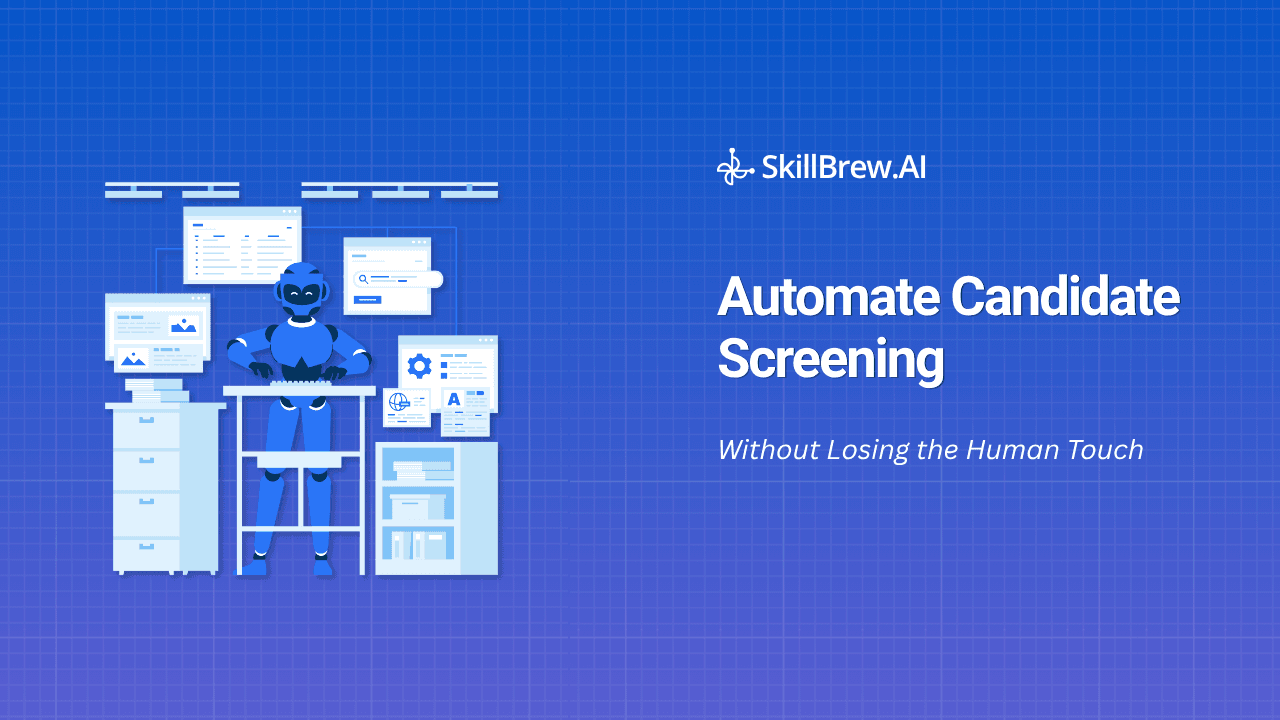
Learning to automate candidate screening human touch intact is the single biggest lever most TA teams haven't pulled yet. Screening 300 applicants for a single role takes time most recruiters don't have. The pile grows, the pipeline stalls, and by the time your team gets to the strongest candidates, many have already accepted another offer.
That's the real problem with high-volume hiring: not that automation is risky, but that doing it manually is already failing. The question smart TA leaders are asking isn't whether to automate. It's how to automate candidate screening human touch intact, so speed doesn't come at the cost of judgment.
Table of Contents
- Why Manual Screening Breaks at Scale
- What Candidate Screening Automation Should (and Shouldn't) Do
- How to Automate Candidate Screening Without Introducing Bias
- Why Recruiters Become More Valuable After Automation
- Where Most Automated Screening Setups Fail
- A Practical Framework to Automate Candidate Screening, Human Touch Included
- The Metrics That Tell You If It's Working
- FAQs on Automating Candidate Screening with a Human Touch
- Final Thoughts
Why Manual Screening Breaks at Scale
When a role receives 200 applications, recruiters can spend close to 100 hours reviewing resumes before speaking with a single candidate. That's not a productivity challenge, it's a structural limitation.
The issue isn't just speed. It's consistency. Two recruiters reviewing the same candidate pool will often produce different shortlists. One may favor specific universities. Another may prioritize certain employers. Neither approach is necessarily wrong, but without a standardized process, results vary significantly from reviewer to reviewer.
This is exactly the gap automate candidate screening human touch strategies are built to close. Automated screening solves this by applying the same criteria to every applicant. It doesn't replace judgment, it ensures recruiters spend their time evaluating candidates who've already met the baseline requirements. That's the whole premise behind learning to automate candidate screening human touch preserved for the decisions that actually need it.
What Candidate Screening Automation Should (and Shouldn't) Do
Get automate candidate screening human touch right, and the goal of automation isn't to remove humans from hiring. The goal is to remove humans from repetitive work that doesn't require judgment. Most screening processes consist of three layers.
Layer 1: Qualification Filtering
Does the candidate meet the minimum requirements? Required certifications, years of experience, work authorization, geographic location. These criteria are objective and binary. Reviewing them manually adds little value when automation handles them instantly and consistently.
Layer 2: Skills and Competency Assessment
Can the candidate actually perform the job? Skills assessments, coding challenges, job simulations, AI-assisted video screening, and structured technical evaluations become valuable here. This stage often surfaces strong candidates whose resumes don't immediately stand out but who demonstrate the required skills in practice.
This is the layer that makes automate candidate screening human touch a real strategy instead of a buzzphrase.
Layer 3: Human Evaluation This is where recruiters and hiring managers should spend their time. Communication style, motivation, career goals, team fit, organizational context, these require human judgment, full stop. The ideal process lets automation handle the first two layers so recruiters can focus on meaningful conversations. That's the entire point of learning to automate candidate screening human touch reserved for exactly where it counts.
How to Automate Candidate Screening Without Introducing Bias
Bias-proofing is non-negotiable if you want to automate candidate screening human touch the right way. Automation doesn't eliminate bias automatically. Poor screening criteria simply let bias operate at greater speed and scale. If screening rules are based primarily on characteristics of previous hires, and previous hires came from the same schools, regions, or backgrounds, the system will keep reinforcing those patterns.
The solution isn't avoiding automation. It's auditing the criteria before automating them. Ask: is this requirement actually predictive of performance, or is it just a historical preference?
Degree requirements are a common example. For many roles, replacing degree filters with skills-based assessments improves shortlist quality while expanding access to qualified talent.
Best practices for fair automated screening:
- Define screening criteria based on job requirements, not historical hiring patterns
- Use structured assessments tied directly to role-specific skills
- Audit screening outcomes regularly
- Review demographic patterns to identify unintended exclusions
- Provide transparency around screening expectations wherever possible
Candidates generally respond more positively when they understand why they were screened out, rather than receiving a vague rejection based on an unknown score. This is the fairness half of the equation when you automate candidate screening human touch and transparency working together.
Why Recruiters Become More Valuable After Automation
This is where teams start to see why they wanted to automate candidate screening human touch in the first place. One of the most common concerns about recruiting automation: "If the system screens candidates, what do recruiters do?"
The answer is simple: they focus on the work that actually influences hiring outcomes. Recruiters spend more time building candidate relationships, aligning with hiring managers, managing stakeholder expectations, running calibration discussions, negotiating offers, and improving candidate experience.
Recruiters who spend most of their day reviewing resumes are performing administrative work. Recruiters who spend most of their day engaging candidates are performing strategic work. Organizations that implement automation effectively often see candidate experience improve because response times decrease, communication becomes more consistent, recruiters enter conversations with better context, and high-potential candidates move through the process faster.
Where Most Automated Screening Setups Fail
Even the best plan to automate candidate screening human touch can fail in execution. Most implementations fail in one of two places.
1. Poor Handoffs
Automation successfully identifies qualified candidates. Then nothing happens. Candidates sit in a "screened" status without a defined next step, and the time saved during screening gets immediately lost downstream.
2. Over-Filtering
Many teams become overly cautious and raise screening thresholds too high. The result: smaller shortlists, lower funnel conversion, missed talent, increased hiring difficulty.
Neither of these are technology problems. They're process-design problems. Before introducing automation, define what happens after each screening decision and establish clear ownership for every stage. A practical setup includes applications screened within 24 hours, assessments completed within 72 hours, recruiter review completed within 5 business days, and automatic follow-up triggers for stalled candidates.
A Practical Framework to Automate Candidate Screening, Human Touch Included
This is the actual framework to automate candidate screening human touch, step by step. If you're building or redesigning a screening process, use this five-step framework.
Step 1: Identify Where Candidates Drop Off
Review your funnel and determine where qualified candidates are leaving. Are candidates dropping before the first interview? Disappearing after screening? Is response time causing delays? Understanding the bottleneck determines what should be automated.
Step 2: Define Clear Pass/Fail Criteria
Every role should have documented screening requirements: minimum technical skills, required certifications, language proficiency, relevant experience thresholds. Written criteria eliminate ambiguity from the process.
Step 3: Add a Structured Skills Assessment
Resumes show what candidates have done. Assessments show what they can do now. For many technical and operational roles, skills assessments are significantly more predictive than resume reviews alone.
Step 4: Establish Response SLAs
Automation only improves candidate experience if it accelerates communication: immediate application acknowledgment, assessment invitation within 24 hours, screening outcomes communicated within 48 hours. Fast communication protects employer brand and improves candidate engagement.
Step 5: Calibrate Regularly with Hiring Managers
Automated screening shouldn't run unchecked. Schedule regular reviews: are the right candidates reaching interviews? Are strong candidates being filtered out? Do screening criteria still reflect current role requirements? Continuous calibration keeps the system aligned with hiring goals, and it's the step most teams skip when they try to automate candidate screening human touch included, without the follow-through.
The Metrics That Tell You If It's Working
Once you automate candidate screening human touch, metrics are what tell you it's actually working. Many teams track the wrong metrics. The number of applications processed is not a meaningful success metric. Instead, focus on:
Time-to-Shortlist - often the strongest indicator of screening efficiency. Organizations that implement structured screening processes frequently reduce time-to-shortlist by 60-70% within the first few months.
Quality of Hire at 90 Days - are screened candidates succeeding after they join? If performance and retention improve, the screening process is working.
Recruiter Hours Per Hire - track how much recruiter time is required to move a candidate from application to interview. The goal isn't to process more candidates. The goal is to spend less time finding qualified ones.
Candidate Response Time - measure how quickly candidates hear back after applying. Faster communication directly impacts candidate experience and offer acceptance rates.
FAQs on Automating Candidate Screening with a Human Touch
The FAQs below cover the practical side of how teams automate candidate screening human touch and all.
Q1. What is automated candidate screening?
Automated candidate screening uses technology to evaluate applicants against predefined criteria, qualifications, skills, experience, and assessment results, before recruiter review.
Q2. Does automated screening replace recruiters?
No. Automation handles repetitive qualification and assessment tasks, while recruiters focus on relationship-building, evaluation, and hiring decisions. That's the balance behind learning to automate candidate screening human touch fully intact, one layer for machines, one for people.
Q3. How can companies reduce bias in automated screening?
Use skills-based assessments, audit screening criteria regularly, remove unnecessary requirements, and review outcomes for unintended exclusion patterns.
Q4. What parts of the hiring process should be automated?
The best candidates for automation are qualification checks, application filtering, skills assessments, scheduling, and status updates. Final hiring decisions should stay human-led.
Q5. What is the biggest benefit of automated screening?
Reduced time-to-shortlist. Automation lets recruiters identify qualified candidates faster while maintaining consistency across large applicant volumes.
Q6. What metric should recruiters track after implementing automation?
Time-to-shortlist is typically the most important operational metric, while 90-day quality-of-hire is the most important long-term success metric.
Final Thoughts
There's no real debate left about whether to automate candidate screening human touch, only about how well you execute it. The question isn't whether candidate screening should be automated. Most hiring teams are already struggling under application volume that manual processes can't realistically handle.
That's the entire discipline behind trying to automate candidate screening human touch well instead of just fast. The real question is where automation should stop and human judgment should begin. The strongest hiring teams automate qualification filtering and skills validation, then invest recruiter time where it creates the most value: understanding people, building relationships, and making informed hiring decisions. Done right, you get to automate candidate screening human touch not just preserved but strengthened by it.
SkillBrew.AI is built to help teams automate candidate screening human touch around that exact split. HireFlow handles qualification filtering and candidate tracking automatically. Assessments validate skills before a recruiter ever opens a resume. AI Interviews run structured first rounds and hand recruiters a clear report instead of a stack of transcripts to sort through.
When done correctly, automation doesn't make hiring less human. It makes the human parts matter more.
Ready to automate candidate screening human touch, without the tradeoffs? Book a demo with SkillBrew.AI.
See AI-powered hiring in action
Discover how SkillBrew helps hiring teams cut time-to-hire by 60% with skill-validated assessments and AI-ranked shortlists.
Book a free demoNo commitment required · 30 minutes
Continue reading
View All Posts