Campus Placement Drive
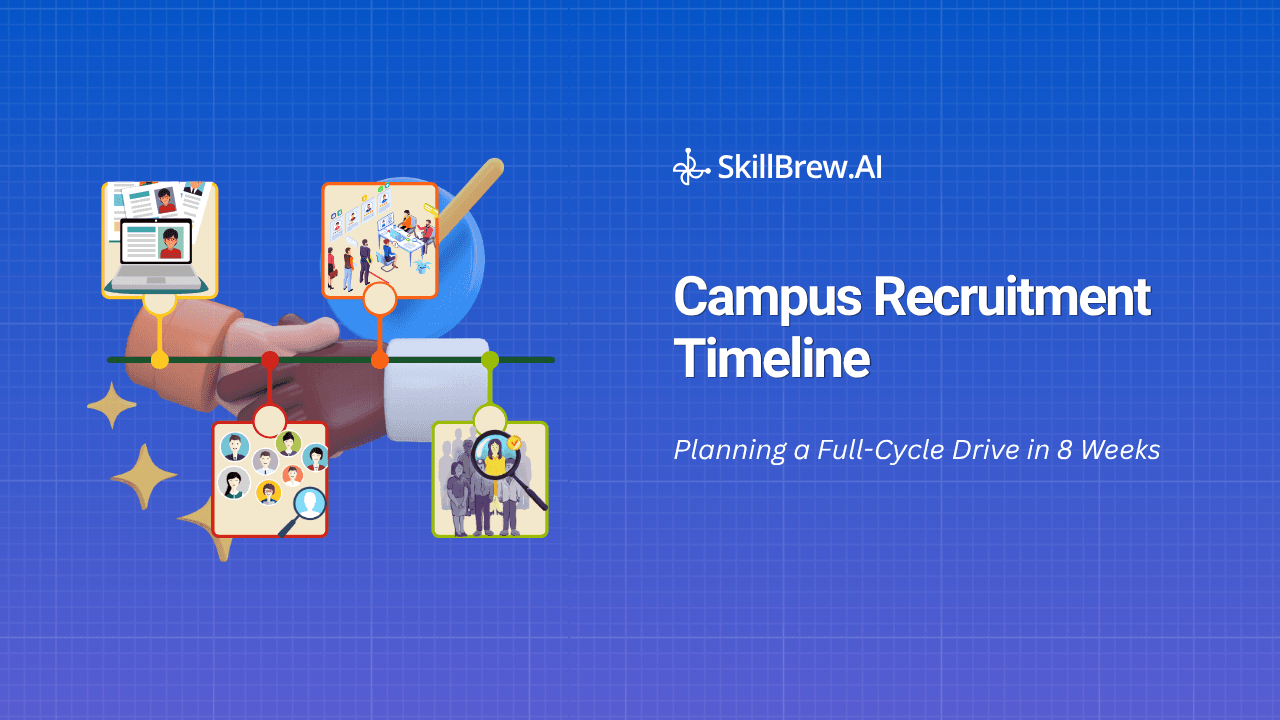
Campus Recruitment Timeline: Planning a Full-Cycle Drive in 8 Weeks
Most campus drives fail in the planning stage, not the execution, and it usually happens before week one of the campus recruitment timeline even begins. TA teams scope for 12 weeks, get compressed into six, and end up running a reactive hire-what-shows-up exercise instead of a structured process. The result is predictable: screening becomes inconsistent, interview schedules slip, offer decisions get delayed, candidate drop-off increases. The challenge was never finding candidates. It's managin
Most campus drives fail in the planning stage, not the execution, and it usually happens before week one of the campus recruitment timeline even begins. TA teams scope for 12 weeks, get compressed into six, and end up running a reactive hire-what-shows-up exercise instead of a structured process.
The result is predictable: screening becomes inconsistent, interview schedules slip, offer decisions get delayed, candidate drop-off increases.
The challenge was never finding candidates. It's managing the process well enough to identify, evaluate, and secure the right ones before competitors do. This is an 8-week campus recruitment timeline that works at scale, week by week, covering the decisions that matter most, the common points of failure, and the actions that keep hiring drives on track.
Table of Contents
- Week 1-2: Lock the Brief Before You Brief Anyone Else
- Week 3: Campus Outreach and Drive Scheduling
- Week 4: Assessment Infrastructure Setup
- Week 5-6: Managing Campus Drives at Scale
- Week 7: Shortlisting and Offer Decisions
- Week 8: Offer Management and Pre-Joining Engagement
- Why Structured Screening Anchors the Whole Timeline
- FAQs on the Campus Recruitment Timeline
- The Part Most Campus Recruitment Timelines Skip
Week 1-2: Lock the Brief Before You Brief Anyone Else
The most expensive mistake in any campus recruitment timeline is starting outreach before the hiring brief is finalized. When requirements change mid-cycle, everything downstream gets harder. Candidates get evaluated against shifting criteria, recruiters revisit earlier decisions, and hiring managers lose confidence in the shortlist.
The first two weeks should focus on alignment across three areas: role profile, hiring volume, and assessment criteria. TA, hiring managers, and HRBPs need to agree on exactly what success looks like before the first campus conversation happens.
The role profile needs to be specific. "Strong communicator" isn't a screening criterion, define what communication success looks like during the first 60 days in the role. "Technical aptitude" isn't enough either, specify the exact skills, expected proficiency level, and evaluation method. The campus selection criteria locked during these two weeks influences every screening and interview decision for the rest of the campus recruitment timeline.
Build backwards from hiring targets. Volume planning matters as much as role definition. If the organization needs 30 hires and historical offer acceptance rates run around 15%, the team needs roughly 200 qualified candidates entering final interviews, which means screening hundreds of applicants at the top of the funnel. The strongest teams calculate these conversion requirements before outreach begins, not after the first shortlist is built.
Week 3: Campus Outreach and Drive Scheduling
Once the hiring brief is finalized, outreach begins: college placement cells, campus coordinators, alumni networks, off-campus recruitment channels.
This is where the campus recruitment timeline starts to depend on more than a calendar. Relationships matter here. A strong connection with a placement coordinator often delivers faster scheduling and smoother execution than outreach to a more prestigious institution with no prior relationship. Campus selection should run on hiring outcomes rather than brand perception alone, previous performance data should answer which campuses produced the strongest hires, which delivered the highest joining rates, and which had the lowest first-year attrition.
Create scheduling buffers. One common mistake in any campus recruitment timeline is scheduling drives too tightly together. When campus visits happen back-to-back, there's little time to review outcomes, adjust assessments, or recalibrate interview panels. A minimum two-day gap between major drives lets the team catch issues before repeating them at the next campus.
Week 4: Assessment Infrastructure Setup
This is where many timelines start slipping. Assessment frameworks are still evolving while the first drive is already underway, and the result is inconsistent evaluation standards across campuses.
Everything needs to be finalized before the first candidate enters the process: online assessments, coding challenges, interview question banks, scoring rubrics, candidate communication templates, and offer/rejection workflows.
Resume shortlisting and assessment automation. Manual screening becomes unsustainable at campus hiring scale, a single drive generating 200 applications can require dozens of recruiter hours before interviews even begin. SkillBrew.AI HireFlow automates application intake and shortlisting by scoring every application against the job description before recruiter review begins, so TA teams start with ranked candidates instead of raw resumes.
Standardize scoring before campus one. Every interviewer should use the same scoring framework. A simple test flags a weak scorecard: if two interviewers can't independently score the same candidate within a reasonable range, the rubric isn't detailed enough. Fixing evaluation criteria before the first drive prevents calibration problems later in the campus recruitment timeline.
Week 5-6: Managing Campus Drives at Scale
The drive weeks determine whether the timeline survives or collapses. Most failures at this stage are operational, not strategic: candidate no-shows, last-minute schedule changes, delayed assessment starts, panel availability conflicts.
Successful teams build buffer time into every stage. Planning for a 20% no-show rate is usually more realistic than assuming perfect attendance.
Conduct daily calibration reviews. At the end of each drive day, run a short review session with one objective: identify anything that needs correcting before the next campus. Without regular calibration, interview standards drift between campuses, and small inconsistencies become major problems once shortlists from multiple campuses need side-by-side comparison.
Keep off-campus hiring aligned. Many organizations run off-campus recruitment alongside campus drives. The same evaluation framework should apply to both channels so candidates get assessed against identical standards regardless of how they entered the pipeline. Without that consistency, comparing talent pools becomes nearly impossible.
Week 7: Shortlisting and Offer Decisions
By week seven, the focus shifts from evaluation to decision-making. The goal is no longer identifying the strongest candidate at each campus, it's identifying the strongest candidates across all campuses using a common benchmark.
By week seven, the campus recruitment timeline stops being about scheduling and starts being about judgment. This is where structured assessment data earns its keep. When every candidate has been evaluated consistently, shortlisting becomes a ranking exercise rather than a debate. Without structured scoring, final selection meetings often devolve into subjective discussions based on memory and personal preference.
Make offer decisions in one session. Bring hiring managers, TA leaders, and relevant stakeholders together. Review the ranked shortlist, finalize decisions, and establish a waitlist. Extended email chains create unnecessary delays, and strong campus candidates are often weighing multiple offers simultaneously, every additional day increases acceptance risk.
Move fast on offers. The strongest teams issue offers within 24 to 48 hours of the final decision. The package should include the offer letter, compensation details, joining timeline, and a named TA contact so candidates know exactly who to reach out to.
Week 8: Offer Management and Pre-Joining Engagement
The final stretch of the campus recruitment timeline is also the easiest to underestimate. Campus hiring doesn't end when the offer is accepted. It ends when the candidate joins, and for many organizations that joining date sits six to nine months after the drive. The real challenge in this final stretch of the campus recruitment timeline is maintaining engagement. Candidates who hear nothing between acceptance and joining become vulnerable to competing opportunities.
Build a structured pre-joining plan. A simple engagement cadence significantly reduces drop-offs: a 30-day post-offer check-in, a 60-day role briefing, and a 90-day joining confirmation. Every candidate should have a named point of contact throughout. Organizations that maintain structured engagement consistently see lower pre-joining attrition than those relying on occasional updates.
Conduct a timeline debrief. Week eight should also include a process review: which campus had the highest no-show rate, which assessment questions caused confusion, which stage generated the longest delays, where the strongest candidates dropped out. The best teams improve because they document lessons immediately after the cycle ends, not months later when the next campus recruitment timeline is already underway.
Why Structured Screening Anchors the Whole Timeline
Every phase of this campus recruitment timeline depends on consistent evaluation. Weak screening criteria create weak assessments. Weak assessments create unreliable shortlists. Unreliable shortlists create poor hiring decisions.
SkillBrew.AI supports this end to end: HireFlow for application intake and shortlisting, AI Assessments for role-specific candidate evaluation, AI Interviews for structured first-round screening, and BrewShield for integrity monitoring throughout. For the full mechanics of what makes screening consistent across campuses, see our breakdown of structured screening for campus recruitment.
FAQs on the Campus Recruitment Timeline
Q1. What is the ideal campus recruitment timeline?
For most organizations, 8 weeks is enough to run a structured process without creating bottlenecks: planning, campus outreach, assessment setup, drive execution, shortlisting, offer management, and pre-joining engagement. The key isn't the number of weeks, it's completing each stage before moving to the next.
Q2. How early should campus recruitment planning begin?
At least 8-12 weeks before the first drive. The earlier the team aligns on role requirements, hiring targets, assessment criteria, and campus selection, the fewer process changes happen later. Most delays in a campus recruitment timeline trace back to rushed planning rather than execution problems.
Q3. How many candidates should we expect to screen for one campus hire?
This varies by role and acceptance rates, but a common benchmark is 20-30 candidates screened per successful hire. For 30 hires, teams may need to process 600-800 applications to build a sufficiently strong final shortlist.
Q4. What's the biggest mistake organizations make during campus hiring?
Launching outreach before finalizing hiring criteria. When job requirements, assessment standards, or selection criteria change mid-cycle, recruiters end up re-screening candidates, interviewers apply inconsistent standards, and hiring decisions become harder to defend.
Q5. How can recruiters reduce manual screening time during campus drives?
Introduce automated screening and assessment tools at the top of the funnel. Resume matching, online assessments, and structured scoring can cut the applications requiring manual review by 60-70%, freeing recruiters to focus on qualified candidates instead of processing every application individually.
Q6. When should offers go out after a campus interview process?
Ideally within 24-48 hours of the final selection decision. Delays beyond that raise the risk of losing candidates to competing employers, especially during peak placement season when students are weighing multiple offers.
Q7. Why do candidates drop out after accepting campus offers?
Most pre-joining attrition happens because candidates get little or no communication between offer acceptance and joining day. Campus hires often wait several months before onboarding. Regular check-ins, pre-boarding communication, and assigned points of contact meaningfully improve joining rates.
Q8. How do you maintain consistency across multiple campus drives?
Use the same assessment framework, interview scorecards, and evaluation criteria across every campus. Calibrate recruiters and interviewers before the first drive, and keep scoring rubrics unchanged throughout the hiring cycle unless a critical issue is identified.
Q9. Should off-campus hiring follow the same process as campus hiring?
Yes. Sourcing channels may differ, but the evaluation framework should stay consistent. Different screening criteria for campus versus off-campus applicants makes candidate comparisons difficult and often leads to inconsistent hiring decisions.
Q10. How do you measure whether a campus recruitment cycle was successful?
Look beyond hire count: application-to-shortlist conversion rate, assessment completion rate, interview-to-offer ratio, offer acceptance rate, pre-joining attrition rate, 90-day retention rate, and quality of hire after 6-12 months.
The Part Most Campus Recruitment Timelines Skip
Even a well-run campus recruitment timeline has a weak point. Eight weeks is already compressed. The first thing that usually gets sacrificed is process discipline: assessment criteria become inconsistent, screening becomes manual, interview scoring becomes subjective. Unfortunately, those are exactly the areas that determine hiring quality.
SkillBrew.AI's campus hiring platform helps TA teams automate the screening stages that typically consume the most recruiter time, application review, assessment management, candidate ranking, and interview reporting.
If your current campus recruitment timeline consistently feels rushed, the issue usually isn't the timeline. It's the amount of manual effort sitting inside it. A structured process keeps the timeline predictable, even when application volumes aren't.
Want a campus recruitment timeline that holds up under real volume? Book a demo with SkillBrew.AI.
See AI-powered hiring in action
Discover how SkillBrew helps hiring teams cut time-to-hire by 60% with skill-validated assessments and AI-ranked shortlists.
Book a free demoNo commitment required · 30 minutes
Continue reading
View All Posts