SkillBrew.AI
Campus Placement Drive
Automate Campus Hiring Process: A Practical Guide for TA Teams
Campus hiring has always been a volume game. A single recruitment drive can generate thousands of applications, hundreds of assessments, and dozens of interviews within a few weeks. Yet many Talent Acquisition (TA) teams are still running that volume through manual processes built for a fraction of the load. The result is predictable: recruiter burnout, inconsistent candidate evaluation, delayed hiring decisions, and a poor candidate experience. Campus hiring automation isn't about replacing r
Campus Placement Drive
Campus Hiring ROI: Calculate the True Cost of a Bad Screening Process
Campus Hiring is often treated as a volume problem: attract enough applicants, screen them quickly, interview the strongest candidates, and make offers. But when the screening process is inefficient, the real cost can extend far beyond recruiter salaries or assessment software. Manual screening, unnecessary interviews, repeated evaluations, inconsistent decisions, candidate drop-offs, and replacement hiring can all add cost to the same hiring cycle. For recruitment leaders managing high-volume
Campus Placement Drive
AI Screening for Campus Hiring: A Workflow for 10,000 Applicants
10,000 applicants. Multiple campuses. A few weeks to build a shortlist that hiring managers can actually work with. That is where campus screening becomes difficult. The challenge is rarely the final interview. It is processing thousands of applications, running assessments, coordinating first-round interviews, and identifying relevant candidates without adding more manual work. SkillBrew.AI connects key stages of the campus screening workflow through HireFlow, AI Assessments, AI Interviews, a
Campus Placement Drive
How to Cut Campus Recruitment Time by 40% Without Cutting Evaluation Steps
Consider a 21-day campus drive. In a process like this, much of the elapsed time typically comes from coordination rather than evaluation. Teams that manage to reduce time to hire aren't skipping steps or lowering their bar. They're cutting out the back-and-forth that sits between decisions. This guide walks through where a campus drive tends to lose time, stage by stage, and what it takes to reduce time to hire without dropping a single evaluation step. Quick Guide to This Article * The re
Campus Placement Drive
Campus Recruitment Metrics Dashboard: What to Track and Report
Most campus recruitment dashboards are a wall of numbers that look impressive in a review meeting and tell almost nobody anything useful. Applications received. Offers made. Drives completed. All true, all tracked, all close to meaningless on their own. A campus recruitment metrics dashboard that actually earns its place answers a different kind of question: not "what happened," but "is this working, and where exactly is it not." This blog covers what belongs on the dashboard, who should be loo
Campus Placement Drive
Campus Hiring at Scale: 5 Approaches Compared
Campus hiring at scale breaks the same way every year. The funnel opens, 600 applications arrive over 72 hours, and your team has four days to build a shortlist. Most of it gets done manually, most of the shortlist is inconsistent, and strong candidates can clear your process only to accept a competing offer while you're still scheduling interviews. The volume problem is only half of it. The other half is quality: specifically, the gap between the shortlist you produce under pressure and the sh
Campus Placement Drive
Campus Recruitment Software: What to Look for Beyond ATS Features
Most campus recruitment software on the market is an ATS with a "campus" label slapped on the pricing page. If you are running 200 to 2,000 hires from 20+ colleges in a single season, that is not going to be enough. This post covers the six features that actually separate purpose-built campus recruitment software from generic applicant tracking systems, the questions to ask any vendor before you sign, and where SkillBrew.AI's campus recruitment software fits into that picture. Table of Conten
Campus Placement Drive
The Virtual Placement Drive Is Broken. Here's How to Fix It.
Most virtual placement drives fail at scale. Here's what a well-designed AI-powered campus hiring process looks like — and what it replaces.
Campus Placement Drive
Campus Placement Drive: Why You're Losing Top Freshers (And How AI Fixes It)
Your campus placement drive is losing top freshers to slow screening and zero follow-up. Here's how AI voice and automated interviews fix it.
Campus Placement Drive
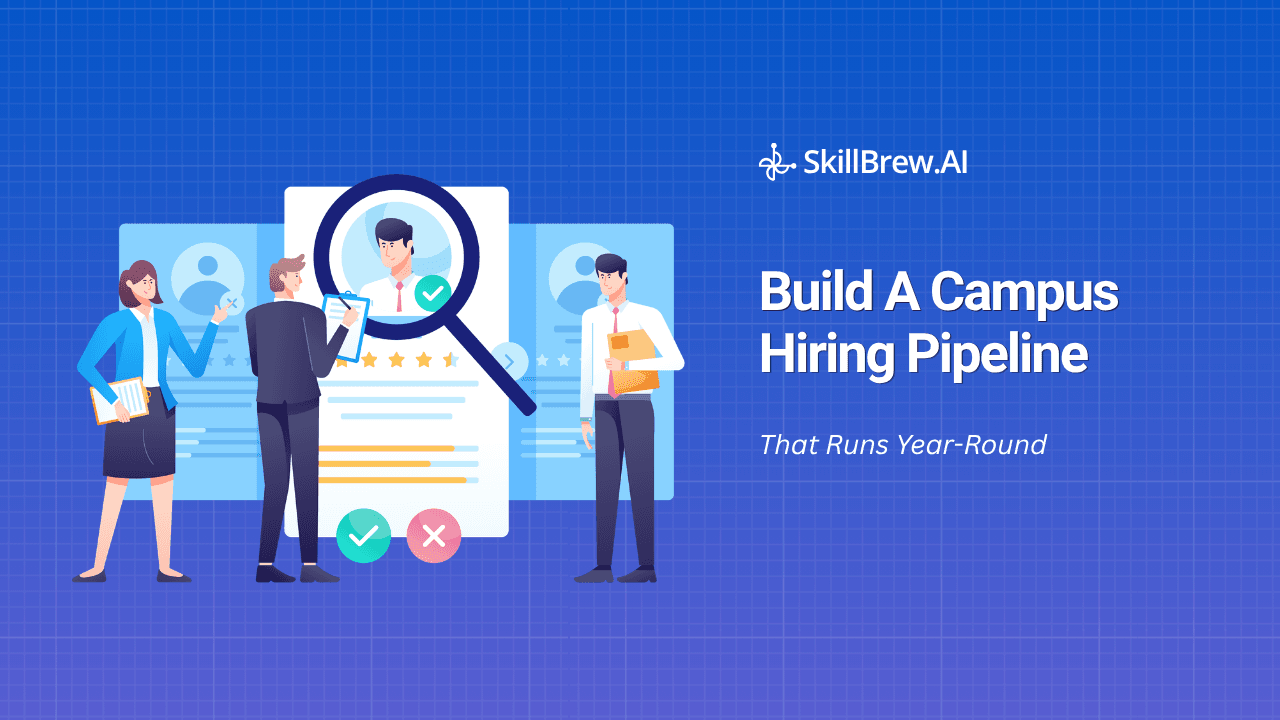
How to Build a Campus Hiring Pipeline That Runs Year-Round
Most organizations don't have a campus hiring pipeline. They have a campus hiring event. For a few weeks every placement season, recruitment teams scramble to visit campuses, run assessments, conduct interviews, and roll out offers. Then everything goes quiet until the next hiring cycle begins. The result is predictable: * Rushed hiring decisions * Inconsistent candidate quality * High offer drop-off rates * Poor campus relationships * Repeated planning effort every year The most succes
Campus Placement Drive
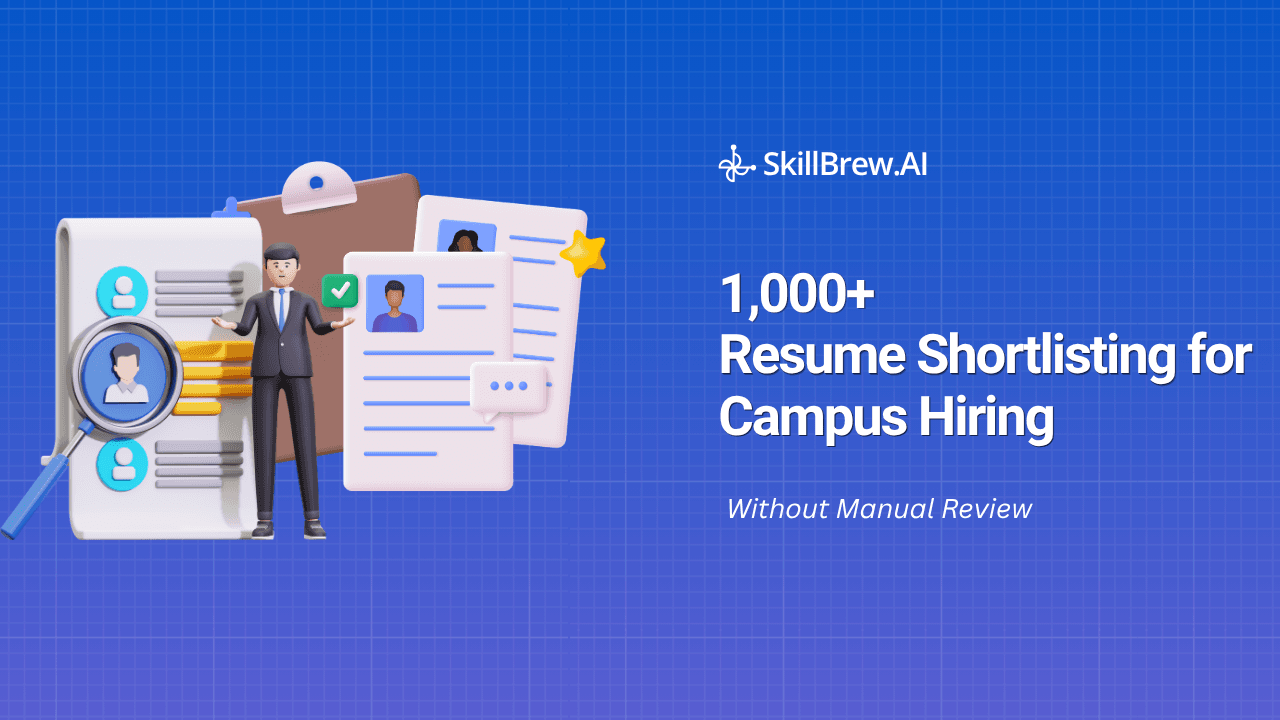
How to do 1,000+ Resume Shortlisting for Campus Hiring Without Manual Review
A campus hiring drive can generate hundreds, even thousands, of applications in a matter of days. The challenge was never collecting resumes. It's turning that pile into a shortlist worth interviewing. For many Talent Acquisition (TA) teams, resume shortlisting campus hiring becomes the single biggest bottleneck in the funnel. Recruiters spend days reviewing resumes, hiring managers wait on shortlists, and candidate experience quietly falls apart because decisions take too long. The reality is
Campus Placement Drive
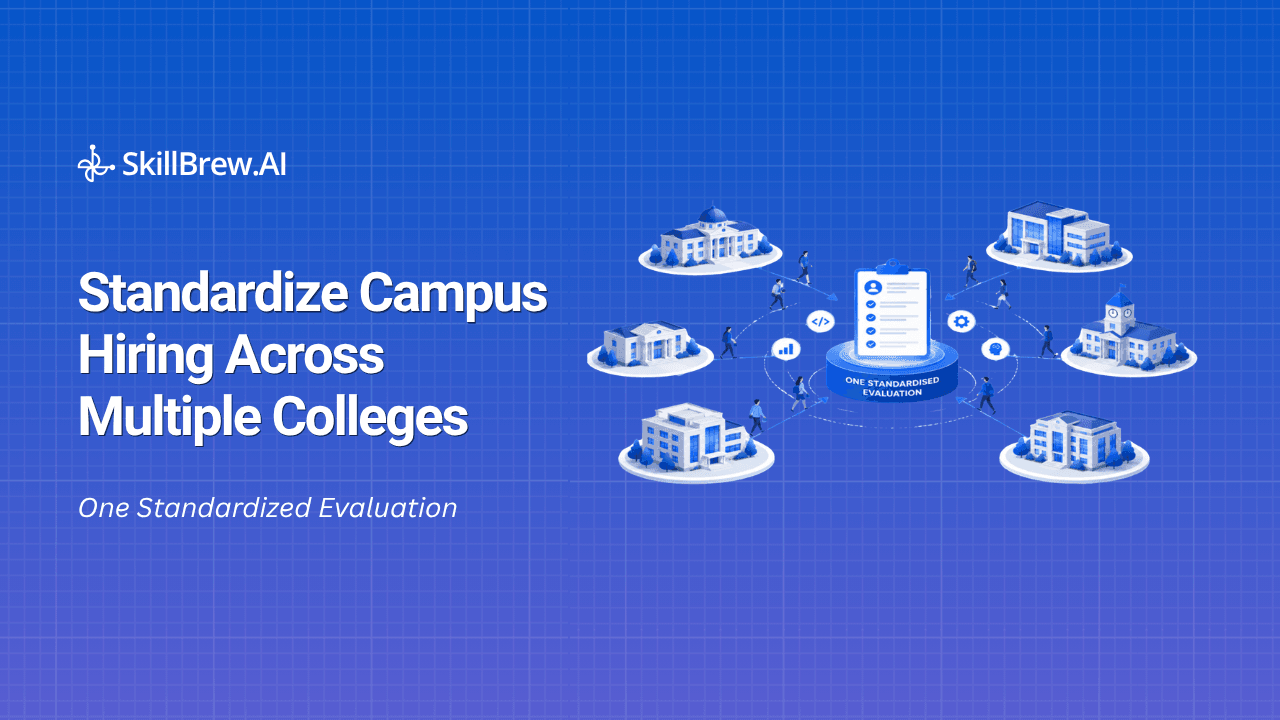
How to Standardize Campus Hiring Across Multiple Colleges
Running campus hiring at one college is manageable. Running drives across eight, ten, or twenty campuses at once is where most Talent Acquisition (TA) teams start to feel the strain. Different campus coordinators follow different processes. Shortlists arrive in different formats. Screening standards vary by location. By the time candidates reach the interview stage, recruiters are often struggling to compare them fairly. The challenge was never hiring volume, most campus recruitment teams can