BrewVoice
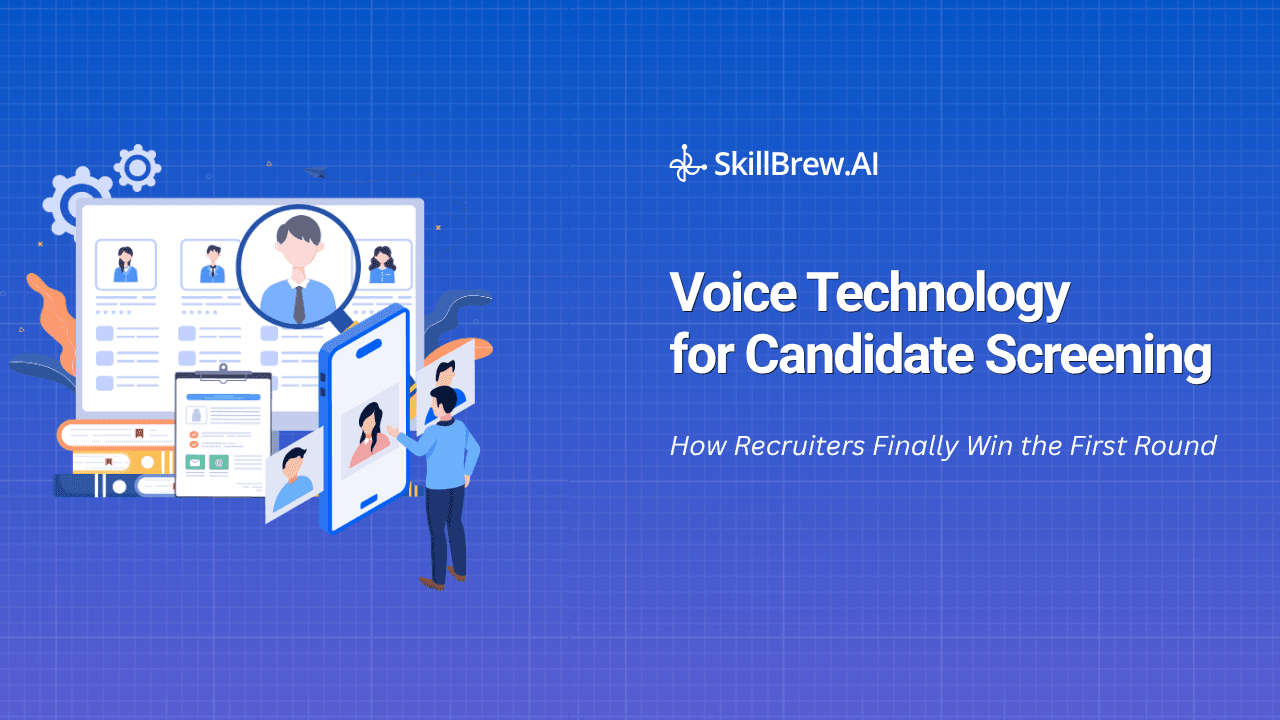
Voice Technology for Candidate Screening: How Recruiters Finally Win the First Round
The first round is where hiring quietly falls apart. Ask any recruiter running a 2,000-applicant campus drive or a high-volume hiring campaign what eats the most time in a week. It's rarely sourcing. It's rarely the final interview. It's the first round. Hundreds of introductory screening calls have to happen before a recruiter can even build a shortlist. Candidates don't pick up. Contact details are outdated. Scheduling turns into a full-time job. Recruiters end up asking the same five quest

The first round is where hiring quietly falls apart.
Ask any recruiter running a 2,000-applicant campus drive or a high-volume hiring campaign what eats the most time in a week. It's rarely sourcing. It's rarely the final interview.
It's the first round.
Hundreds of introductory screening calls have to happen before a recruiter can even build a shortlist. Candidates don't pick up. Contact details are outdated. Scheduling turns into a full-time job. Recruiters end up asking the same five questions, over and over, all day long.
By Friday, most teams have screened a fraction of applicants while thousands sit untouched in spreadsheets and ATS pipelines. This is exactly where strong candidates lose interest, response rates crater, and recruiter burnout starts creeping in, and exactly where voice technology for candidate screening earns its place in the stack.
Voice technology for candidate screening solves this by automating first-round conversations at scale. Instead of recruiters dialing candidates one by one, AI voice agents engage every applicant the moment they enter the funnel — turning a week-long bottleneck into a same-day shortlist.
In this guide, you'll learn:
- What voice technology for candidate screening actually does
- How AI voice agents run first-round interviews
- Why campus and bulk hiring teams benefit the most
- How voice screening improves recruiter productivity
- What to consider before you roll out AI voice screening
Table of Contents
- Why First-Round Screening Became a Hiring Bottleneck
- What Voice Technology for Candidate Screening Actually Does
- What AI Voice Agents Evaluate During Screening
- Why Campus and Bulk Hiring Teams Benefit Most
- How Voice Screening Improves Hiring Consistency
- What AI Voice Screening Frees Recruiters to Focus On
- How BrewVoice and Rhea Simplify Candidate Screening
- Frequently Asked Questions
Why First-Round Screening Became a Hiring Bottleneck
High-volume hiring creates a brutally simple operational problem: recruiters can only make so many calls in a day.
Picture a campus recruitment campaign pulling in 2,000 applications. A recruiter attempting manual screening calls runs straight into:
- Unanswered calls
- Incorrect phone numbers
- Candidate scheduling conflicts
- The same screening conversation, repeated hundreds of times
- Follow-up queues that never seem to shrink
Even the sharpest teams struggle to reach every candidate promptly. And the longer response times drag on, the faster candidate engagement drops. Strong applicants simply move on to competing offers before a recruiter ever gets to evaluate them.
The challenge was never identifying talent. The challenge is reaching talent fast enough, which is exactly the gap voice technology for candidate screening is built to close.
What Voice Technology for Candidate Screening Actually Does
Modern voice technology for candidate screening goes far beyond legacy IVR systems or robocalls that read off a script.
An AI voice agent runs a structured, two-way conversation with candidates over the phone. Rather than just collecting responses, it asks follow-up questions, evaluates answers in real time, and generates structured screening insights recruiters can actually act on.
The goal of voice technology for candidate screening is simple: automate the repetitive first-round conversation while keeping candidate engagement high and evaluation consistent. Every completed conversation is automatically documented, scored, and summarized.
Instead of wading through thousands of resumes manually, recruiters start the day with ranked candidate insights and a pre-qualified shortlist already waiting for them.
What AI Voice Agents Evaluate During Screening
Resumes give you background. Conversations give you context.
This is where voice technology for candidate screening earns its keep, it evaluates the things application forms simply can't capture.
Communication Skills and Language Proficiency
AI voice agents assess:
- Communication clarity
- Response quality
- Listening ability
- Conversational fluency
The focus stays on comprehension and effective communication, not accent, region, or speaking style.
Role-Fit Requirements
Voice screening automatically verifies key hiring criteria, including:
- Current location
- Notice period
- Shift flexibility
- Salary expectations
- Job preferences
This helps recruiters catch qualification mismatches early, before a candidate wastes anyone's time.
Soft Skills Indicators
Structured conversations surface real signal on:
- Responsiveness
- Confidence
- Motivation
- Adaptability
- Candidate engagement
These are the signals that help hiring teams evaluate candidates beyond a resume's technical checkboxes.
Interest and Culture Alignment
Candidates get the space to share:
- Career goals
- Role expectations
- Reasons for applying
- Motivation for joining the organization
This context helps recruiters understand candidate intent before advancing anyone further down the pipeline.
Why Campus and Bulk Hiring Teams Benefit Most
Voice technology for candidate screening delivers its biggest impact exactly where application volume is highest.
Campus Recruitment
Campus drives generate thousands of applications in a short window. Without automation, screening alone can take weeks. With AI voice screening, TA teams can:
- Contact candidates immediately
- Screen thousands of applicants simultaneously
- Build ranked shortlists within hours, not weeks
- Cut recruiter workload dramatically
Walk-In and Volume Hiring
High-volume roles routinely pull in applicants outside standard business hours. Voice technology for candidate screening ensures every applicant gets a consistent first interaction, no matter when they apply. Benefits include:
- Faster candidate engagement
- Fewer response delays
- Fairer, more even screening coverage
- A noticeably better candidate experience
Lateral Hiring at Scale
For experienced hires, voice screening quickly flags:
- Compensation mismatches
- Notice period challenges
- Relocation concerns
- Availability constraints
That saves recruiters and hiring managers from burning time on candidates who were never going to move forward.
How Voice Screening Improves Hiring Consistency
Consistency is one of recruitment's hardest problems to solve. As recruiter workloads pile up, screening quality starts to drift, the first candidate of the day gets a sharper conversation than the sixtieth.
Voice technology for candidate screening eliminates that drift entirely. Every candidate gets:
- The same core questions
- The same evaluation framework
- The same scoring methodology
- The same fair shot to qualify
The result is a standardized, defensible screening process. For TA leaders, that consistency means better hiring quality and less evaluation bias creeping into the funnel.
What AI Voice Screening Frees Recruiters to Focus On
Automation isn't here to replace recruiters. It's here to strip out the repetitive admin work that burns them out.
Once first-round screening runs on autopilot, recruiters get their time back for work that actually needs a human:
Better Candidate Engagement - more time building relationships with qualified candidates, less time on cold screening calls.
Faster Hiring Decisions - shortlists land sooner, so hiring managers can move candidates through the pipeline faster.
Reduced Recruiter Burnout - hundreds of nearly identical calls a month is a fast track to fatigue. Automating them keeps teams sharp and efficient.
Improved Hiring Outcomes - recruiters get to focus on candidate assessment, hiring manager collaboration, interview prep, and offer management, the parts of the job that actually move the needle on hiring success.
How BrewVoice and Rhea Simplify Candidate Screening
For SkillBrew.AI customers, voice technology for candidate screening runs through BrewVoice and Rhea.
Rhea is the AI voice screening agent that automatically calls inbound applicants directly from the SkillBrew.AI platform, no separate tool, no exported candidate lists, no extra workflow steps to manage. It removes the need for:
- Manual dialing
- Candidate list exports
- Separate calling tools
- Additional workflow steps
Every candidate interaction is captured, summarized, and scored right inside your existing hiring workflow via HireFlow, SkillBrew.AI's always-free orchestration layer. Recruiters get a ranked shortlist instead of a raw applicant list, so prioritizing the strongest candidates takes seconds, not hours.
For teams running campus drives, volume hiring campaigns, or large-scale recruitment initiatives, this is what a genuinely faster path from application to shortlist looks like.
Conclusion
The first round of hiring is where most recruitment teams lose the most time. Manual screening calls create delays, pile onto recruiter workload, and slow candidates down as they move through the funnel.
Voice technology for candidate screening fixes this by automating structured first-round conversations at scale. Instead of spending days or weeks contacting applicants one at a time, organizations can engage every candidate immediately, evaluate screening criteria consistently, and generate a qualified shortlist in a fraction of the time.
For recruiters, that means less time dialing, and more time actually hiring.
Ready to See Voice Screening on Your Own Hiring Pipeline?
If your team is struggling to keep up with first-round screening calls, SkillBrew.AI's BrewVoice platform and Rhea AI voice agent can automate candidate conversations and generate ranked shortlists directly from your applicant pipeline.
Book a demo → and see how voice technology for candidate screening can take your team from thousands of applicants to interview-ready candidates, faster.
Frequently Asked Questions
What is voice technology for candidate screening?
Voice technology for candidate screening uses AI voice agents to run structured first-round interviews over the phone, evaluate responses, and generate candidate insights automatically.
How is AI voice screening different from traditional IVR systems? Unlike IVR systems that rely on menu selections, AI voice agents hold natural two-way conversations, ask follow-up questions, and evaluate candidate responses in real time.
Does AI voice screening replace recruiters? No. Voice technology for candidate screening automates repetitive first-round calls so recruiters can focus on candidate evaluation, relationship building, and final hiring decisions.
Is voice screening suitable for campus recruitment?
Yes, it's especially effective for campus hiring, since it lets organizations screen thousands of applicants simultaneously and generate shortlists far faster than manual calling ever could.
Can AI voice agents understand regional accents?
Modern systems like Rhea are built to handle diverse communication styles and regional accents. Evaluation focuses on clarity and comprehension, not accent or geography.
How many candidates can an AI voice agent screen at once?
Voice screening systems run multiple conversations simultaneously, letting organizations screen hundreds or thousands of applicants within a short window.
What information can voice screening collect?
Voice technology for candidate screening can gather communication skills, notice periods, salary expectations, location preferences, shift flexibility, job interest, and other role-specific requirements.
Can voice screening work with existing recruitment workflows?
Yes. SkillBrew.AI's BrewVoice integrates directly into the hiring workflow through HireFlow, so recruiters can manage screening conversations and candidate insights without juggling separate calling platforms.
See AI-powered hiring in action
Discover how SkillBrew helps hiring teams cut time-to-hire by 60% with skill-validated assessments and AI-ranked shortlists.
Book a free demoNo commitment required · 30 minutes
Continue reading
View All Posts