Campus Placement Drive
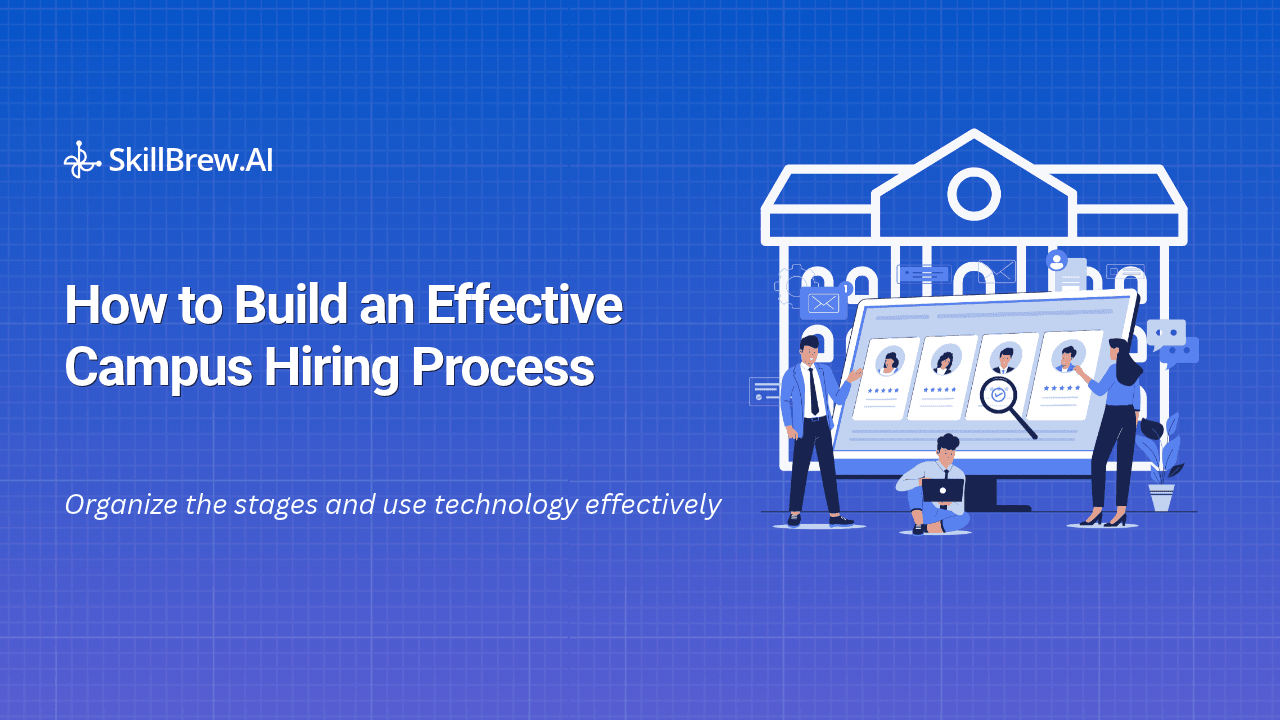
How to Build an Effective Campus Hiring Process
Campus recruitment helps organizations connect with students and recent graduates who can grow into valuable team members. However, hiring from multiple colleges can become difficult when application volumes increase, placement schedules overlap, and recruiters use different methods to evaluate candidates. So, how do you build an effective Campus Hiring Process? It starts with clear hiring goals, a structured recruitment strategy, consistent screening criteria, relevant assessments, and a reli

Campus recruitment helps organizations connect with students and recent graduates who can grow into valuable team members. However, hiring from multiple colleges can become difficult when application volumes increase, placement schedules overlap, and recruiters use different methods to evaluate candidates.
So, how do you build an effective Campus Hiring Process?
It starts with clear hiring goals, a structured recruitment strategy, consistent screening criteria, relevant assessments, and a reliable way to track candidate progress. Each stage should have a defined purpose and help recruiters make informed decisions without creating unnecessary delays for candidates.
This guide explains how to plan campus recruitment, organize the selection stages, use technology effectively, and measure recruitment outcomes.
Key Takeaways
- An effective Campus Hiring Process begins with clear hiring targets, role requirements, and recruitment timelines.
- College selection should be based on role requirements, relevant courses, placement schedules, and talent availability.
- Structured screening, assessments, and interviews help recruiters evaluate candidates against consistent criteria.
- Recruitment technology can organize candidate records and reduce repetitive administrative work.
- Metrics such as screening pass rate, assessment completion rate, offer acceptance rate, and joining rate help identify areas for improvement.
- AI can support screening and evaluation, but recruiters should review results and make final hiring decisions.
What Is a Campus Hiring Process?
A Campus Hiring Process is a structured approach organizations use to recruit students and recent graduates from colleges, universities, and other educational institutions.
It typically includes workforce planning, college selection, candidate outreach, application screening, assessments, interviews, selection, and onboarding.
The exact stages depend on the organization, the roles being filled, the number of applicants, and the skills required.
For example, a software company recruiting entry-level developers may use coding assessments and technical interviews. A company hiring customer support associates may focus on communication, language proficiency, and situational judgment.
A typical campus recruitment workflow looks like this:
Workforce Planning → College Selection → Candidate Outreach → Screening → Assessments → Interviews → Offers → Onboarding
Each stage should have clear requirements, assigned responsibilities, and defined next steps. This helps recruiters coordinate activities across colleges and maintain consistent evaluation standards.
For a detailed breakdown of the recruitment stages, read the complete campus recruitment process step-by-step guide.
When Should You Start Planning Campus Recruitment?
Campus recruitment planning should begin before applications open or placement drives start. Starting early gives recruiters enough time to confirm hiring requirements, coordinate with colleges, prepare evaluation materials, and arrange interviewer availability.
The preparation period depends on the number of colleges, hiring targets, and complexity of the roles.
For a multi-college recruitment drive, planning should cover:
- Hiring requirements: Confirm the number of positions, role descriptions, eligibility criteria, and expected joining dates.
- College coordination: Identify suitable institutions and confirm their placement calendars.
- Recruitment resources: Assign recruiters, interviewers, assessment owners, and hiring managers.
- Evaluation preparation: Finalize screening criteria, assessment questions, interview scorecards, and decision guidelines.
- Candidate communication: Prepare invitations, instructions, reminders, and updates for each stage.
A defined timeline helps prevent last-minute changes and scheduling conflicts.
If you are organizing a full recruitment drive, use the eight-week campus recruitment timeline as a planning reference.
Why Is an Effective Campus Hiring Process Important?
A structured recruitment process helps organizations manage large candidate groups while maintaining clear evaluation standards.
Evaluate Candidates Consistently
When recruiters use different criteria for similar roles, candidates may be evaluated inconsistently. Standardized eligibility requirements, scorecards, and assessment criteria give hiring teams a shared framework.
Manage High Application Volumes
Campus drives can generate large numbers of applications within a short period. A defined screening workflow helps recruiters prioritize eligible candidates and manage progression between stages.
Improve the Candidate Experience
Candidates should understand the role requirements, assessment format, interview stages, and expected timelines. Clear communication reduces confusion and helps candidates prepare.
Coordinate Multiple Stakeholders
Campus recruitment often involves placement officers, recruiters, interviewers, HR teams, and hiring managers. Defined ownership helps everyone understand their responsibilities and reduces delays between stages.
Make Better-Informed Hiring Decisions
Resumes, assessments, interviews, and practical exercises provide different types of evidence about a candidate's capabilities. Reviewing relevant evidence together helps recruiters make more informed decisions than relying on a single score or impression.
How to Build an Effective Campus Hiring Process
Building a repeatable recruitment workflow involves several connected steps. Each step should address a specific hiring need and prepare candidates for the next stage.
1. Define Hiring Goals and Role Requirements
Start by identifying the organization's hiring needs.
Work with hiring managers to confirm the number of graduates required for each role, department, and location. Document the skills and qualifications that candidates must demonstrate.
Include:
- Job titles and approved hiring targets.
- Required educational qualifications and eligible graduation years.
- Essential technical and professional skills.
- Preferred locations and work arrangements.
- Expected joining dates and compensation ranges.
- Training requirements for entry-level employees.
Separate mandatory requirements from preferences. Unnecessarily restrictive eligibility criteria can exclude capable applicants without improving hiring quality.
Set measurable targets for the recruitment drive, such as positions to fill, expected timelines, and acceptable recruitment costs. Use historical data where available, and refine estimates as results become available.
2. Select Colleges Based on Role Requirements
Choose colleges based on the talent needed for your open positions.
Consider course offerings, curriculum alignment, relevant projects, previous recruitment outcomes, placement schedules, geographic requirements, and candidate availability.
Avoid selecting institutions solely on reputation or historical relationships. A broader, evidence-based approach may help your organization reach candidates from different educational backgrounds.
Once the target colleges are selected, coordinate with their placement teams to confirm:
- Application deadlines.
- Placement drive dates.
- Expected candidate participation.
- Eligibility requirements.
- Available assessment and interview arrangements.
- Communication channels for students.
When recruiting across multiple institutions, maintain a shared calendar so that recruiters and hiring managers can coordinate their availability.
3. Establish Clear Screening Criteria
Screening helps recruiters identify applicants who meet the role's requirements before moving them to assessments or interviews.
Start by defining the eligibility criteria and evidence needed for each role. Depending on the position, these may include academic qualifications, graduation year, certifications, relevant projects, internships, or specific technical skills.
Use a structured screening scorecard to evaluate applications consistently. Keep mandatory eligibility checks separate from factors that contribute to a candidate's overall suitability.
For large application volumes, resume parsing and criteria-based shortlisting tools can help organize applications and reduce repetitive manual work.
However, automated matches should be checked against the actual job requirements, particularly when candidates describe similar skills using different terminology.
Learn more about shortlisting 1,000 resumes for campus hiring without manual review.
Track how many candidates progress from initial screening to assessment, and review whether your screening criteria are identifying applicants who meet the role requirements.
4. Use Relevant Assessments and Interviews
Resume screening alone may not show whether a graduate can apply their knowledge in a practical setting. Assessments and interviews help recruiters collect additional evidence about job-related skills.
The evaluation method should match the role.
| Role | Possible Assessment |
| Software developer | Coding challenges, debugging, and technical problem-solving |
| Data analyst | Data interpretation, SQL, and analytical reasoning |
| Customer support associate | Communication and situational judgment |
| Sales executive | Sales scenarios and objection handling |
| Content writer | Writing, editing, and comprehension |
| Financial analyst | Numerical reasoning and financial analysis |
Use consistent assessment criteria for candidates applying to equivalent roles. Prepare interview questions and scorecards before interviews begin so that candidates are evaluated against shared expectations.
Consider multiple sources of evidence, including assessment performance, interview responses, projects, and relevant experience. An automated score should not determine the hiring decision on its own.
5. Coordinate Candidate Communication and Progression
Candidate communication is an important part of the recruitment workflow, particularly when several colleges and hiring stages are involved.
Candidates should receive clear information about the next step, deadlines, assessment instructions, interview arrangements, and expected timelines for updates.
Establish a communication plan for:
- Application acknowledgments.
- Assessment invitations and reminders.
- Interview scheduling and instructions.
- Stage progression and rejection updates.
- Offer communication and joining requirements.
Maintain accurate candidate statuses so recruiters can identify who has been invited, who has completed an assessment, who is awaiting an interview, and who has received an offer.
Clear status definitions also help teams identify delays and avoid duplicated communication.
6. Use Technology to Manage Recruitment at Scale
Recruitment technology can help teams coordinate applications, assessments, interviews, and candidate records across multiple colleges.
A centralized workflow should make it easy to view candidate information, track stage changes, review evaluation results, and identify pending actions.
Depending on the platform, useful capabilities may include:
- Resume parsing and candidate organization.
- Automated assessment invitations and reminders.
- Online assessments and structured interviews.
- Candidate stage tracking.
- Evaluation reports and recruitment dashboards.
- Integration with existing recruitment systems.
AI-enabled tools can also help recruiters create role-specific assessments, conduct structured screening conversations, and organize candidate results.
Technology should address a specific operational need rather than add unnecessary complexity. Pilot new tools with a representative group before expanding them across all participating colleges.
Recruiters should also review automated outputs and interpret integrity alerts in context. An unusual activity signal alone is not proof of candidate misconduct.
7. Measure Recruitment Outcomes
An effective Campus Hiring Process should be evaluated using consistent metrics. Tracking only the number of offers accepted can hide delays, screening issues, or problems with candidate progression.
Useful metrics include:
| Metric | Definition |
| Screening pass rate | Percentage of applicants who complete screening and meet the defined criteria to progress to the next stage. |
| Assessment completion rate | Percentage of invited candidates who complete the assessment. |
| Interview-to-offer rate | Percentage of interviewed candidates who receive an offer. |
| Offer acceptance rate | Percentage of extended offers that candidates accept. |
| Joining rate | Percentage of candidates who accept offers and subsequently join. |
| Time to hire | Time between the defined start of the hiring process and the candidate's offer acceptance. |
| Cost per hire | Total recruitment costs for the measurement period divided by the number of hires made during that period. |
| Quality of hire | Indicators such as new-hire performance, retention, or manager feedback, measured over an appropriate period. |
Define the denominator and measurement period consistently for every metric. For example, decide whether time to hire begins when an application is received or when a candidate enters the formal selection process. For cost per hire, use the same cost categories and measurement period when comparing recruitment drives.
Identify Bottlenecks in the Recruitment Funnel
Review the time spent at each stage and the proportion of candidates progressing between stages.
A low assessment completion rate may indicate unclear instructions, inconvenient scheduling, or technical difficulties. A slow interview stage may point to limited interviewer availability or delays in sharing feedback.
Investigate the underlying cause before changing the process. A lower progression rate is not necessarily a problem if the stage is successfully identifying candidates who meet essential requirements.
Use Findings to Improve Future Drives
Compare outcomes across roles, colleges, recruitment channels, and stages where the data is sufficiently reliable.
Look for patterns that can improve future planning. For example, you may need to confirm placement schedules earlier, revise unclear screening criteria, or allocate more interviewers to a particular role.
The campus hiring metrics guide provides additional ideas for evaluating recruitment performance.
Common Campus Recruitment Mistakes to Avoid
Even well-planned recruitment drives can encounter problems. Identifying common mistakes helps teams improve their approach before the next cycle.
Using Different Criteria Across Colleges
Different screening standards can make candidate comparisons inconsistent. Define shared criteria for equivalent roles and document any approved exceptions.
Relying Only on Academic Scores
Academic performance can provide useful context, but it may not demonstrate every skill required for a job. Combine eligibility checks with relevant assessments, projects, and interviews.
Using Generic Assessments for Every Role
A single assessment may not measure the competencies needed for different positions. Design evaluations around the actual requirements of each role.
Delaying Candidate Communication
Unclear timelines and delayed updates can create confusion and increase follow-up work. Assign responsibility for candidate communication and establish expected response times.
Tracking Candidates Across Disconnected Systems
Scattered spreadsheets and inconsistent status labels can make it difficult to understand recruitment progress. Maintain a reliable source of candidate information and define ownership for record updates.
Measuring Activity Instead of Outcomes
The number of applications received or interviews conducted does not necessarily indicate recruitment effectiveness. Track progression, hiring outcomes, time, costs, and relevant quality indicators together.
How SkillBrew.AI Supports Campus Hiring
SkillBrew.AI provides AI-assisted hiring tools that can support candidate screening, assessments, interviews, and evaluation reporting.
Depending on your recruitment workflow, teams can use:
- AI assessments: Create role-specific assessments to evaluate candidate knowledge and skills.
- AI interviews: Conduct structured interviews and review candidate responses through generated reports and skill-based evaluations.
- BrewVoice: Support initial candidate screening through automated voice conversations.
- Assessment integrity monitoring: Review activity signals during supported assessments as part of a broader integrity process.
- Candidate evaluation reports: Organize results to help recruiters compare relevant evidence and decide which candidates should progress.
These capabilities can help reduce repetitive screening work and organize candidate evaluation across recruitment stages. Recruiters should still review results, consider relevant context, and make final selection decisions.
Campus Hiring Checklist for Recruiters
Before launching your next campus drive, use this checklist to review your preparation.
- Approved hiring targets and role requirements.
- Selected colleges and confirmed placement schedules.
- Defined eligibility criteria and screening scorecards.
- Prepared role-specific assessments and interview questions.
- Assigned recruiters, interviewers, and stage owners.
- Prepared candidate communication templates.
- Set up candidate tracking and reporting.
- Defined recruitment metrics and measurement periods.
- Confirmed candidate support and technical assistance arrangements.
- Scheduled a post-drive review to identify improvements.
This checklist helps ensure that planning, evaluation, communication, and reporting are covered before recruitment begins.
FAQs
1. What is a Campus Hiring Process?
A Campus Hiring Process is a structured workflow for recruiting students and recent graduates from educational institutions. It usually includes planning, college selection, screening, assessments, interviews, offers, and onboarding.
2. What are the main stages of campus recruitment?
The main stages are workforce planning, college selection, candidate outreach, application screening, assessments, interviews, selection, offer communication, and onboarding. The exact sequence depends on the role and hiring strategy.
3. How do you make campus recruitment more effective?
Define hiring goals early, select suitable colleges, use consistent screening criteria, conduct role-relevant assessments, communicate clearly with candidates, and track outcomes across the recruitment funnel.
4. Which metrics should recruiters track during campus hiring?
Useful metrics include screening pass rate, assessment completion rate, interview-to-offer rate, offer acceptance rate, joining rate, time to hire, cost per hire, and quality of hire.
5. How can technology improve campus recruitment?
Recruitment technology can centralize candidate records, organize applications, automate selected administrative tasks, support assessments and interviews, and provide reports that help recruiters monitor progress.
6. Can AI be used in campus hiring?
Yes. AI can support activities such as resume organization, screening conversations, assessment creation, evaluation, and candidate reporting. Recruiters should review results and make final hiring decisions using relevant evidence.
7. How can companies maintain consistency across multiple colleges?
Use shared eligibility criteria, structured scorecards, standardized assessments, clear stage definitions, and consistent candidate communication. Review results across colleges to identify differences that may require investigation.
8. How often should a campus recruitment strategy be reviewed?
Review progress during the recruitment drive and conduct a fuller evaluation after each cycle. Use the findings to update timelines, screening criteria, communication practices, and resource allocation for future drives.
Conclusion
Building an effective Campus Hiring Process requires clear hiring goals, relevant college outreach, structured screening, role-specific assessments, and consistent interviews. Tracking recruitment metrics helps teams identify bottlenecks, evaluate outcomes, and improve future hiring cycles.
If managing large applicant volumes, coordinating multiple colleges, or maintaining consistent evaluations is challenging your team, SkillBrew.AI can help you explore a more structured approach to candidate screening and assessment.
Ready to improve your campus recruitment workflow?
See AI-powered hiring in action
Discover how SkillBrew helps hiring teams cut time-to-hire by 60% with skill-validated assessments and AI-ranked shortlists.
Book a free demoNo commitment required · 30 minutes
Continue reading
View All Posts