SkillBrew.AI
AI Interview
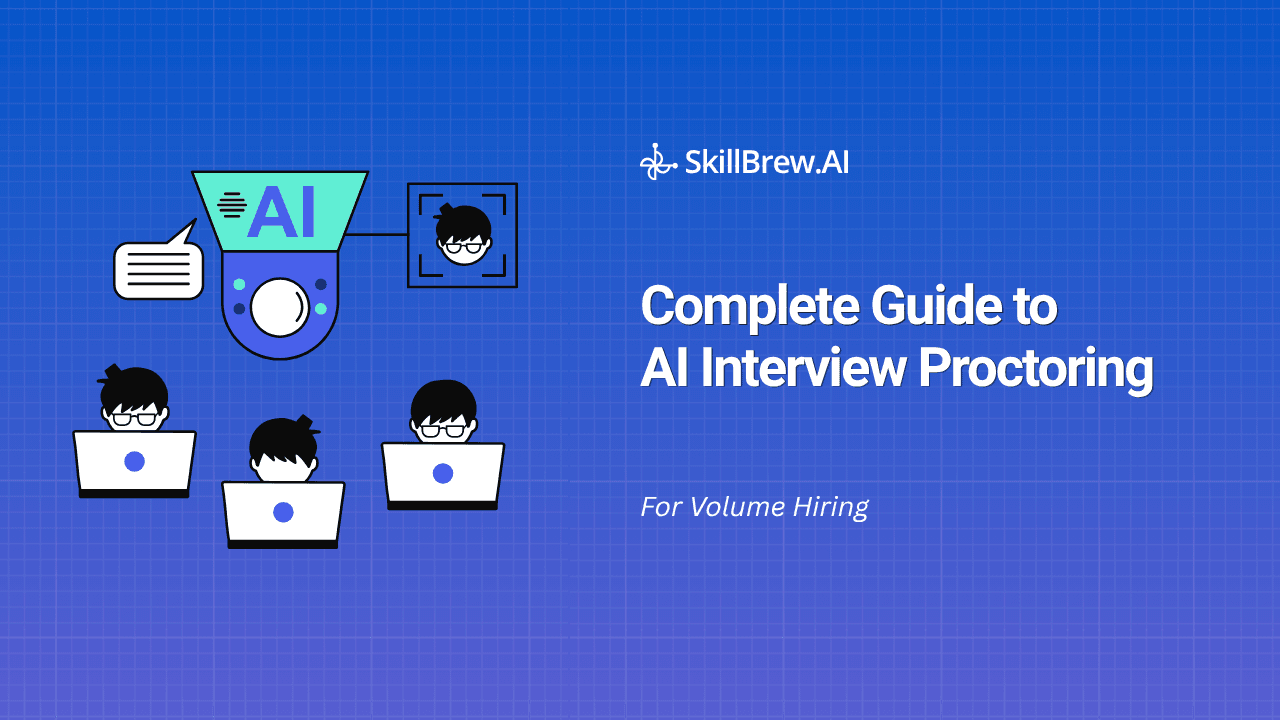
The Complete Guide to AI Interview Proctoring for Volume Hiring
Remote hiring solved one problem and quietly created another. Interviews got faster, more flexible, and scalable across geographies, but the same distance that made hiring convenient also made it easier to fake. A second monitor with pre-loaded answers. An earpiece feeding responses in real time. A stand-in who looks close enough on a low-resolution feed to pass a rushed glance. None of these require much sophistication, and none of them get caught by a recruiter who's watching a face on a scre
AI Interview
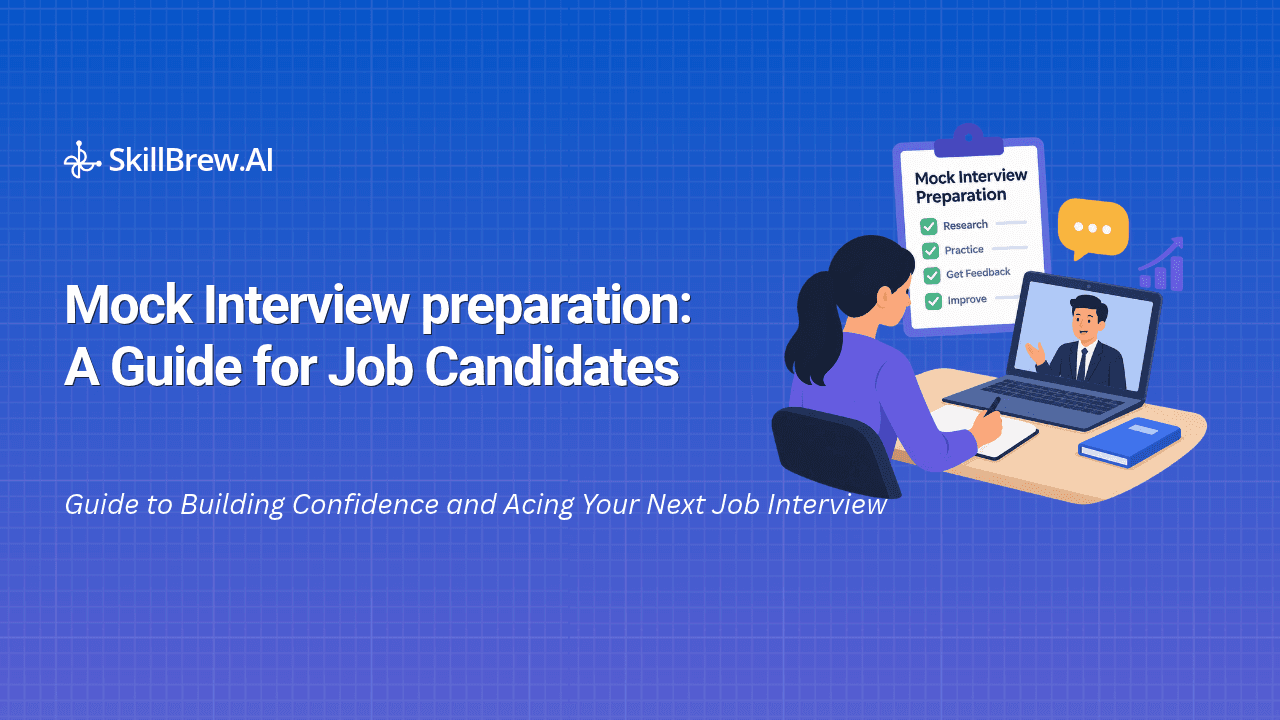
Mock Interview preparation: A Step-by-Step Guide for Job Candidates
Preparing for a job interview can feel challenging, especially when you are unsure what questions to expect or how to explain your skills effectively. Whether you are a fresher preparing for campus placements or an experienced professional looking for a new opportunity, practicing before the actual interview can help you perform with greater confidence. A mock interview recreates a real interview environment, allowing you to practice answering questions, explaining your experience, and handling
AI Interview
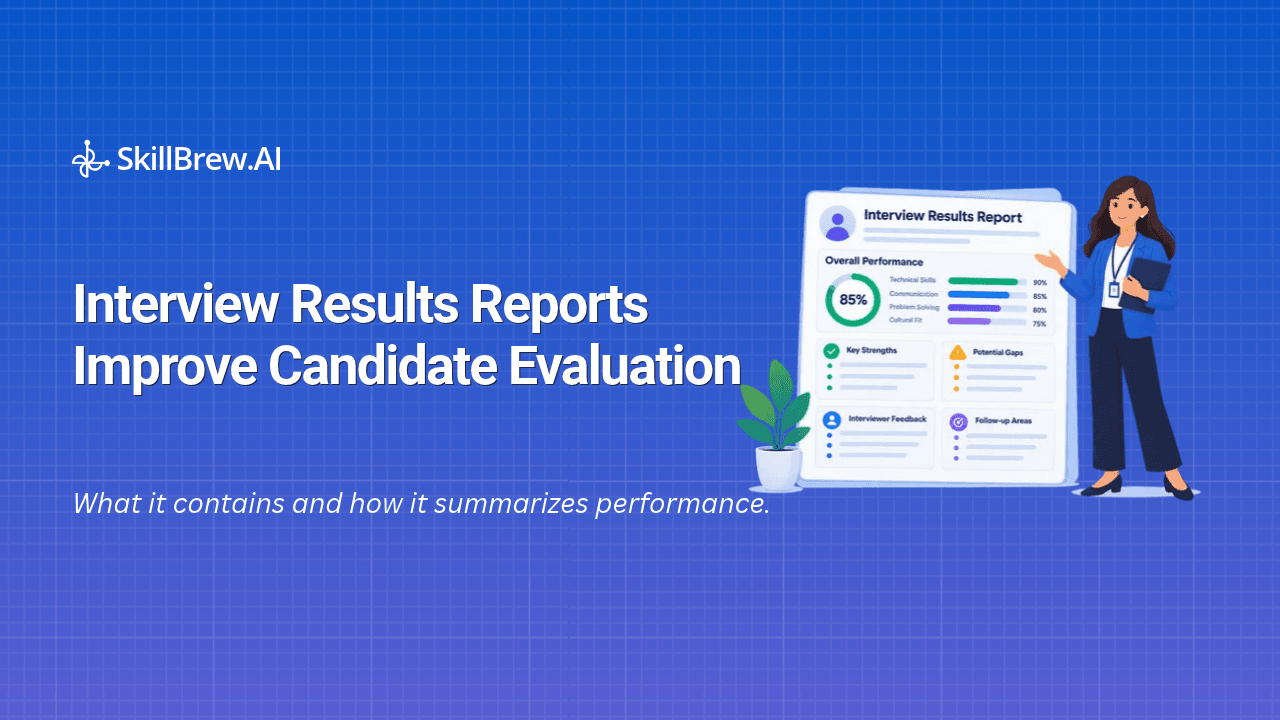
How Interview Results Reports Improve Candidate Evaluation
After an interview, recruiters often have notes, scores, candidate responses, comments, and recordings spread across different places. An interview results report brings the key information together in a structured format, making it easier to review what happened during the interview and identify areas that may need further evaluation. This becomes especially useful when teams are interviewing many candidates for the same role. Instead of relying on scattered notes or memory, recruiters and hir
AI Interview
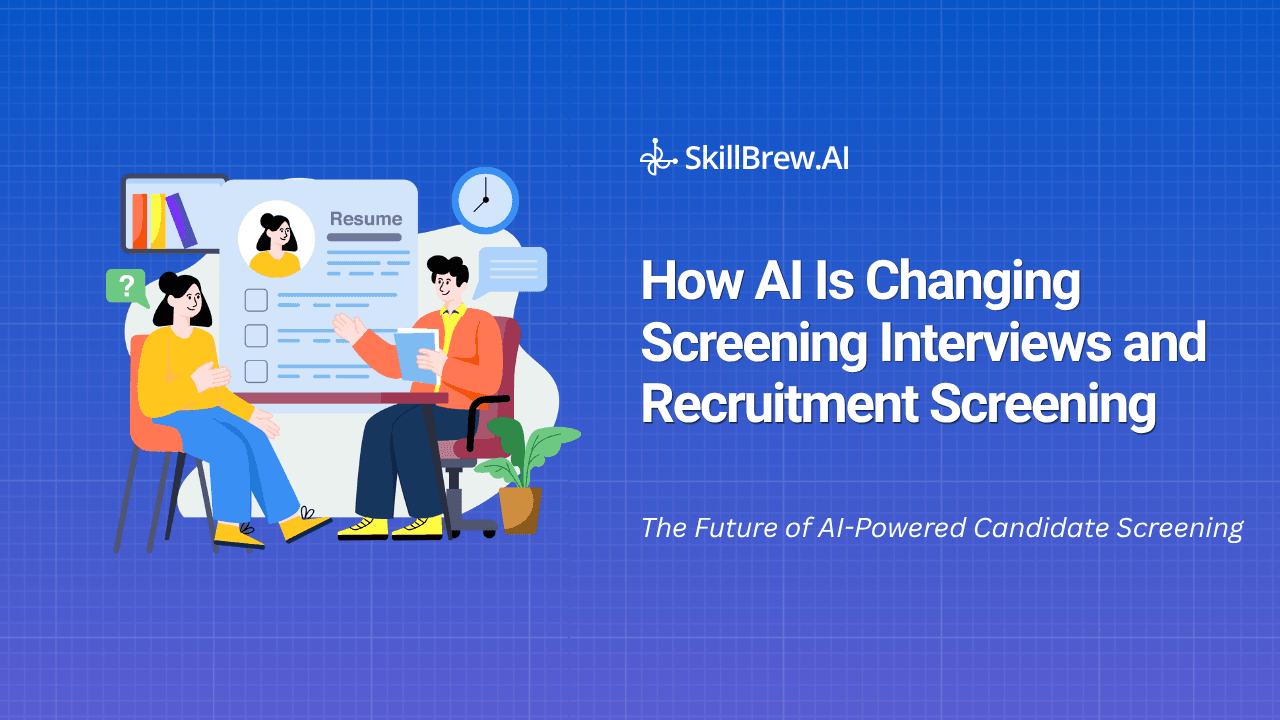
How AI Is Changing Screening Interviews and Recruitment Screening in 2026
Hiring teams are under increasing pressure to find qualified candidates quickly while managing larger application volumes. In 2026, artificial intelligence is transforming recruitment screening by helping organizations analyze resumes, match candidates to roles, automate initial evaluations, and improve recruiter productivity. The biggest change is not simply automation. AI is changing how candidates move through the hiring funnel and how recruiters use information to make better decisions. Tas
AI Interview
AI Interview Questions by Role: 50 Examples for Recruiters
Hiring teams rarely interview candidates for the same skills across every position. A software engineer needs technical problem-solving ability, while a sales executive needs persuasion, objection handling, and communication skills. A customer support executive may need empathy, troubleshooting, and conflict-resolution skills. That is why AI interview questions should be aligned with the requirements of the role rather than pulled from a generic question bank. Importantly, AI interview questio
AI Interview
AI Hiring Compliance: What Recruiters Need to Know About AI Interviews
AI can screen hundreds of candidates in the time it takes a recruiter to conduct a handful of interviews. But faster hiring creates another responsibility: knowing what happens to candidate data and how AI influences the decisions that follow. Is the AI hiring process compliant? That question matters because AI interviews can process significantly more candidate information than a traditional interview. Depending on the platform and configuration, that information may include interview respons
AI Interview
AI Interview Analytics: 12 Metrics Every Recruiter Should Track
Every interview generates dozens of measurable signals, from technical reasoning and communication patterns to problem-solving behavior, yet most hiring decisions still rely on handwritten notes and gut instinct. Interviewers form an initial impression within the first few minutes of a conversation and then spend the rest of the interview looking for evidence that confirms it. Research from the Society for Human Resource Management (SHRM) has found that unstructured, inconsistent interviewing i
AI Interview
AI Interview Questions: How AI Generates Better Questions for Smarter Hiring
Most recruiters still open the same Google Doc every time they need interview questions for a new role. Copy, paste, tweak a line, send it to the panel. It works until you're hiring for 12 roles at once and every panel asks a slightly different, slightly outdated version of the same script. AI interview questions fix that problem at the source. Instead of a recruiter manually rewriting a question bank for every requisition, an AI system reads the job description and generates a fresh, role-rele

AI Interview
AI Interviews vs Traditional Interviews: Which is better for hiring?
AI interviews use artificial intelligence to conduct or assist candidate interviews and evaluate responses using predefined criteria. AI interviews are faster and more scalable, while traditional interviews offer deeper human judgment for later hiring stages. If your calendar is full of first-round interviews that go nowhere, you already know the problem this article is about. Recruiting teams are running the AI interviews vs traditional interviews debate right now because the old model is brea

AI Interview
How AI Interviews Screen, Score, and Shortlist Candidates
Most recruiters don't have a candidate problem. They have a bandwidth problem. A single role can pull in 300+ applicants. Each one deserves a real first-round conversation. None of them are getting one, because no team has the hours to run that many interviews manually, so candidates wait, recruiters burn out, and the strongest applicants take offers elsewhere while you're still scheduling round one. This is the exact gap AI interviews for candidate screening are built to close. Not a recorded

AI Interview
The Best AI Tools for Interview Screening Aren't Doing What You Think
Most platforms called "AI interview tools" are doing something much simpler than they advertise. They're recording video. They're transcribing answers. They're running sentiment analysis on tone of voice. And they're giving you a transcript or a vague "communication score" that tells a recruiter almost nothing actionable. This is why so many TA teams try AI video interviews once, get mediocre signal, and go back to manual calls, without ever finding the best ai tools for interview screening th

AI Interview
What is an AI Screening Interview And What Should Yours Actually Do?
Recruiters aren't running out of candidates. They're running out of time to evaluate them. When a single job posting generates 300 to 500 applications, the math breaks fast. Your team can realistically conduct 15 to 20 first-round interviews a day. Everyone else waits and the best ones don't wait long. AI screening interviews exist to close that gap. But "AI interview" has become one of the most overused phrases in HR tech, attached to everything from basic chatbots to genuinely adaptive inter