Recruitment Automation & Workflow
How to Integrate AI Screening Into Your ATS Workflow
Modern hiring teams are increasingly adopting ATS screening solutions to manage growing application volumes and improve early-stage candidate evaluation. While traditional Applicant Tracking Systems (ATS) help recruiters organize candidate data, manage job openings, and track hiring stages, AI-powered screening adds an intelligence layer by helping teams identify relevant candidates faster and prioritize applications based on role requirements. Recruiters today often handle hundreds or thousand

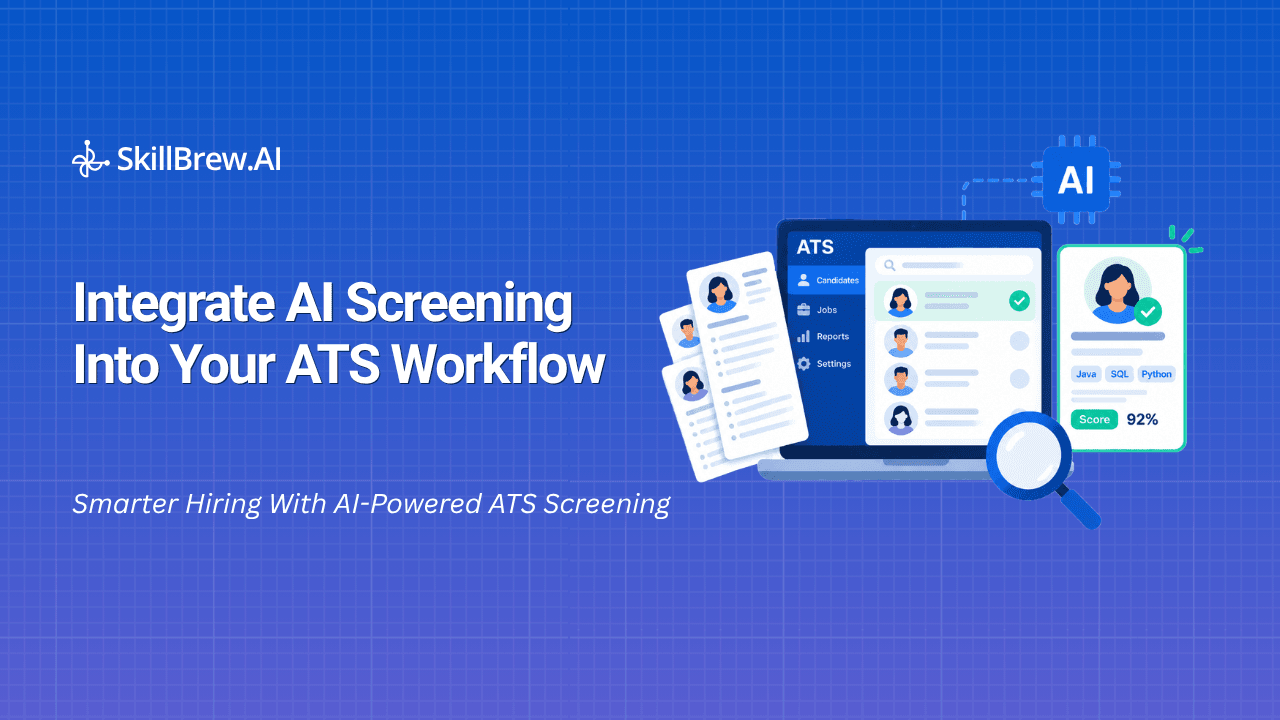
Modern hiring teams are increasingly adopting ATS screening solutions to manage growing application volumes and improve early-stage candidate evaluation. While traditional Applicant Tracking Systems (ATS) help recruiters organize candidate data, manage job openings, and track hiring stages, AI-powered screening adds an intelligence layer by helping teams identify relevant candidates faster and prioritize applications based on role requirements.
Recruiters today often handle hundreds or thousands of applications for a single position. Reviewing resumes, validating qualifications, conducting initial conversations, and deciding which candidates should move forward can quickly become time-consuming.
A well-planned ATS screening strategy allows organizations to connect automated candidate evaluation with existing recruitment workflows while maintaining transparency and recruiter oversight. The goal is not to remove human involvement but to help recruitment teams focus on candidate engagement, interviews, and strategic decision-making.
A well-designed ATS screening workflow combines candidate information from the ATS with AI-powered analysis to improve speed, consistency, and visibility throughout the recruitment process.
Table of Contents
- Understanding AI in Modern Recruitment: How AI improves candidate evaluation and recruitment workflows.
- Why ATS Workflows Need AI Enhancement: Common screening challenges and where AI adds value.
- How to Integrate AI Screening Into Your ATS Workflow: Practical steps for connecting AI with existing recruitment systems.
- Common ATS Integration Methods: Different approaches for connecting AI tools with ATS platforms.
- Benefits of Combining ATS and AI Screening: How AI improves recruitment efficiency and candidate management.
- Best Practices for Successful Implementation: Steps to adopt AI screening effectively.
- AI-Powered Hiring Workflows With SkillBrew.AI: How AI-powered recruitment solutions support modern hiring teams.
- Frequently Asked Questions: Answers to common questions about AI screening and ATS integration.
Understanding AI in Modern Recruitment
Recruitment has become increasingly technology-driven. Hiring teams now use multiple platforms to manage job postings, candidate communication, assessments, interviews, and hiring decisions.
An Applicant Tracking System acts as the central system for managing recruitment operations. It stores candidate profiles, tracks applications, manages hiring stages, and helps recruiters collaborate throughout the process.
While an ATS organizes candidate information and workflow stages, AI screening focuses on analyzing candidate data and helping recruiters identify relevant profiles more efficiently.
Traditional ATS platforms are effective for managing recruitment processes, but many teams still spend significant time reviewing resumes, searching candidate profiles, and manually determining which applicants match job requirements.
AI adds an intelligence layer by analyzing candidate information and identifying relevant skills, experience patterns, and role alignment signals.
AI-powered recruitment systems can evaluate:
- Resume information
- Candidate skills
- Work experience
- Education and certifications
- Role-specific requirements
- Candidate responses during screening conversations
When combined with an ATS, AI helps recruiters move beyond basic keyword filtering and create a more intelligent ATS screening process that evaluates candidates based on skills, experience, and role alignment.
Instead of searching only for specific terms, AI can analyze broader candidate context, including skills, experience, and suitability for a role.
For example, if a company is hiring a backend developer, AI can identify candidates with relevant programming languages, similar project experience, and matching technical backgrounds. Recruiters can then focus their attention on suitable candidates instead of manually reviewing every application.
Why ATS Workflows Need AI Enhancement
Applicant Tracking Systems have improved how organizations manage recruitment, but high-volume hiring continues to create challenges.
A recruiter managing multiple open positions may receive hundreds or thousands of applications within a short period. Reviewing every resume manually can slow down hiring decisions and increase recruiter workload.
Common challenges in traditional screening workflows include:
- Spending excessive time reviewing resumes
- Missing qualified candidates because of application volume
- Depending heavily on manual keyword searches
- Maintaining consistent evaluation standards
- Delaying candidate communication
Traditional ATS workflows answer operational questions such as:
- Where is a candidate in the hiring pipeline?
- Which interviews are completed?
- Who has contacted the candidate?
However, recruiters also need answers to evaluation-focused questions:
- Which candidates best match the role requirements?
- Which applicants have relevant experience?
- Which profiles should recruiters review first?
This is where AI-powered ATS screening improves the recruitment workflow.
AI works alongside existing recruitment systems by adding candidate analysis, ranking capabilities, and structured insights. This approach helps teams introduce candidate screening automation without removing recruiter control.
How to Integrate AI Screening Into Your ATS Workflow
Integrating AI into an ATS does not require organizations to completely rebuild their recruitment process. The objective is to improve existing stages where recruiters spend the most manual effort.
1. Connect AI Screening With Your ATS Data
The first step is connecting an AI screening solution with the existing ATS environment.
Integration can happen through:
- API-based connections
- Native ATS integrations
- Structured data exchange methods
For example, when an ATS receives a new application, an API connection can automatically send candidate data to an AI screening system and return evaluation insights back into the recruiter dashboard.
These connections allow recruitment data such as:
- Candidate profiles
- Resumes
- Job descriptions
- Application status
- Screening results
to move between systems automatically.
Many organizations begin by exploring ATS integrations that allow recruitment systems and AI tools to exchange candidate information without disrupting existing workflows.
A connected ATS screening process allows AI tools to analyze candidate information already available within the recruitment system while keeping the hiring workflow intact.
2. Define Screening Criteria Based on Role Requirements
AI performs best when recruitment teams clearly define what makes a candidate suitable for a role.
Before implementation, hiring teams should identify:
- Required skills
- Minimum experience level
- Preferred qualifications
- Location requirements
- Technical capabilities
- Role-specific expectations
For example, a company hiring software engineers may prioritize programming languages, previous development experience, technical projects, and relevant certifications.
For campus hiring, where organizations may receive thousands of applications, AI screening can evaluate candidates against predefined eligibility criteria, assessment results, and skill requirements before recruiter review.
Clear screening criteria help AI provide relevant recommendations while ensuring recruiters evaluate candidates against consistent standards.
3. Automate Initial Candidate Evaluation
Once screening criteria are configured, AI can analyze incoming applications and generate structured insights.
An AI screening system can help recruiters:
- Compare resumes with job descriptions
- Identify relevant skills
- Highlight matching experience
- Prioritize candidates
- Generate screening summaries
For example, a company hiring customer support representatives can use AI to identify candidates with previous customer-facing experience, communication skills, and relevant industry exposure.
The recruiter remains responsible for the final decision, while AI reduces the time required to identify suitable applicants.
4. Add AI Screening Before Recruiter Interviews
Many organizations conduct initial phone screens before scheduling technical interviews or recruiter discussions.
AI-powered screening can support this stage by collecting candidate information, asking role-related questions, and helping recruiters understand candidate suitability earlier in the process.
A typical workflow looks like:
Job Created in ATS
↓
Applications Received
↓
AI Screening
↓
Candidate Ranking
↓
Recruiter Review
↓
Interview Scheduling
↓
Hiring Decision
For organizations using AI voice screening, AI can conduct initial candidate conversations before recruiter interviews. This allows teams to collect information about candidate experience, availability, interest level, and role alignment.
AI screening can also connect with an AI interview process where shortlisted candidates move into structured interviews and assessments.
Common ATS Integration Methods
The way AI screening connects with an ATS depends on the tools being used, organization size, and required level of automation.
Organizations can choose different integration methods depending on their ATS architecture, hiring volume, technical resources, and automation requirements.
API-Based Integration
For organizations managing high application volumes, API-based ATS screening integrations reduce manual candidate movement and help recruiters access screening insights directly within their existing systems.
Recruitment data such as resumes, job descriptions, candidate stages, and screening results can move between systems without requiring manual uploads.
API-based integrations can also allow organizations to sync candidate status updates, screening outcomes, and recruiter feedback between systems.
Native ATS Integrations
Some AI recruitment platforms provide direct integrations with popular ATS platforms.
These integrations reduce setup complexity and allow recruiters to continue working inside their existing recruitment environment.
They can help teams:
- Send candidates for evaluation directly from the ATS
- View screening results within candidate profiles
- Update candidate stages automatically
- Maintain centralized recruitment records
Manual Data Import Workflows
Smaller teams may use CSV uploads or spreadsheet-based workflows to connect ATS data with AI screening tools.
While less automated, this approach allows organizations to introduce AI screening without major system changes.
Benefits of Combining ATS and AI Screening
Integrating AI capabilities into an ATS creates a more structured recruitment process by combining workflow management with intelligent candidate evaluation.
Automated Candidate Prioritization
AI-powered ATS screening helps recruiters prioritize candidates based on skills, experience, and role requirements.
Instead of reviewing every application equally, recruiters can focus on profiles that are more aligned with the position.
Reduced Recruiter Workload
AI reduces repetitive activities such as resume filtering, profile searching, and initial candidate evaluation.
This allows recruiters to spend more time on interviews, candidate relationships, and strategic hiring activities.
More Consistent Screening Decisions
AI-powered screening automation helps teams apply consistent evaluation criteria throughout the recruitment process.
A structured ATS screening workflow also helps recruitment teams maintain consistency when evaluating candidates across multiple roles.
Faster Candidate Screening
AI-powered ATS screening reduces the time required to review large applicant pools by automatically analyzing candidate information and highlighting relevant profiles. This allows recruiters to move qualified candidates through the hiring process faster.
Better Candidate Visibility
AI systems can provide insights into:
- Matching skills
- Relevant experience
- Screening responses
- Qualification alignment
This gives recruiters better visibility into candidate evaluation and helps create a more transparent ATS screening workflow where hiring teams understand why candidates are prioritized.
Best Practices for Successful Implementation
Understand Your Current Workflow
Before implementation, identify:
- Where recruiters spend the most time
- Which tasks are repetitive
- Where delays happen
- Which stages need improvement
Create Clear Job Requirements
AI depends on accurate job information. Clear job descriptions and realistic requirements improve screening quality.
Monitor Screening Results
Recruitment teams should regularly review AI recommendations, recruiter feedback, and hiring outcomes.
Keep Recruiters Involved
AI should support recruitment decisions rather than replace recruiter expertise.
The most effective ATS screening approach combines AI-powered analysis with human decision-making.
AI-Powered Hiring Workflows With SkillBrew.AI
Modern recruitment platforms are moving toward connected workflows that combine candidate sourcing, screening, assessments, and interviews.
AI-powered platforms such as SkillBrew.AI enable modern recruitment workflows to combine AI screening, candidate conversations, assessments, and interviews while keeping recruiters involved throughout the process.
For example:
- BrewVoice enables AI-powered voice screening conversations before recruiter interviews.
- AI Interviews support structured candidate evaluation through AI-powered interview workflows.
- AI Assessments help teams evaluate candidate skills before advancing applicants.
By connecting these stages, recruitment teams can create more efficient hiring workflows while maintaining human involvement in final decisions.
Frequently Asked Questions
Q1. How does AI screening improve ATS screening workflows?
AI screening improves ATS screening workflows by helping recruiters analyze candidate information faster, prioritize applications, and automate repetitive evaluation tasks.
Q2. Can AI screening improve existing ATS screening workflows?
Yes. AI screening can improve existing ATS screening workflows by connecting with recruitment software through APIs, native integrations, or structured data exchange methods.
Q3. Does AI screening replace recruiters?
No. AI screening supports recruiters by automating repetitive tasks and providing candidate insights. Final hiring decisions remain with recruitment teams.
Q4. What data does AI screening analyze?
AI screening can analyze resumes, skills, experience, qualifications, assessments, and role-specific requirements.
Q5. Is AI screening useful for high-volume hiring?
Yes. AI screening is especially useful for organizations managing large applicant volumes because it helps teams evaluate candidates more efficiently.
Conclusion
Recruitment teams need solutions that can manage increasing application volumes while maintaining a structured and human-centered hiring process.
Integrating AI-powered ATS screening into existing workflows helps organizations improve candidate evaluation, automate repetitive screening activities, and provide recruiters with better insights.
The future of recruitment is not about replacing hiring teams with automation. It is about creating smarter workflows where technology handles repetitive tasks and recruiters focus on meaningful candidate decisions.
With the right implementation approach, ATS screening can become a valuable part of modern recruitment strategies by helping teams manage candidate volume, improve evaluation consistency, and create a more efficient hiring workflow.
See AI-powered hiring in action
Discover how SkillBrew helps hiring teams cut time-to-hire by 60% with skill-validated assessments and AI-ranked shortlists.
Book a free demoNo commitment required · 30 minutes
Continue reading
View All Posts