SkillBrew.AI
Assessment
AI-Powered Assessments for Hiring: The Complete Feature Guide
Most recruiters don't have a testing problem. They have a time problem. Building a technical test from scratch takes hours. Sourcing questions that actually match the job description takes longer. And once the test is live, someone still has to watch for cheating, manually grade coding answers, and chase candidates who forgot to show up. AI-Powered assessments for hiring exist to remove every one of those bottlenecks, not by replacing recruiter judgment, but by handling the mechanical parts of
Assessment
Candidate Assessment Guide: How to Join and Complete Your Test
What Is a Candidate Assessment? A candidate assessment is an evaluation that helps an employer understand how well an applicant’s skills and knowledge match a role. Depending on the hiring process, it may include technical questions, role-specific tasks, or other skills-based questions. If you have been invited to complete an assessment through SkillBrew.AI, this guide explains how to access it, check your setup, answer the questions, and confirm that you have finished. The exact questions,
Assessment
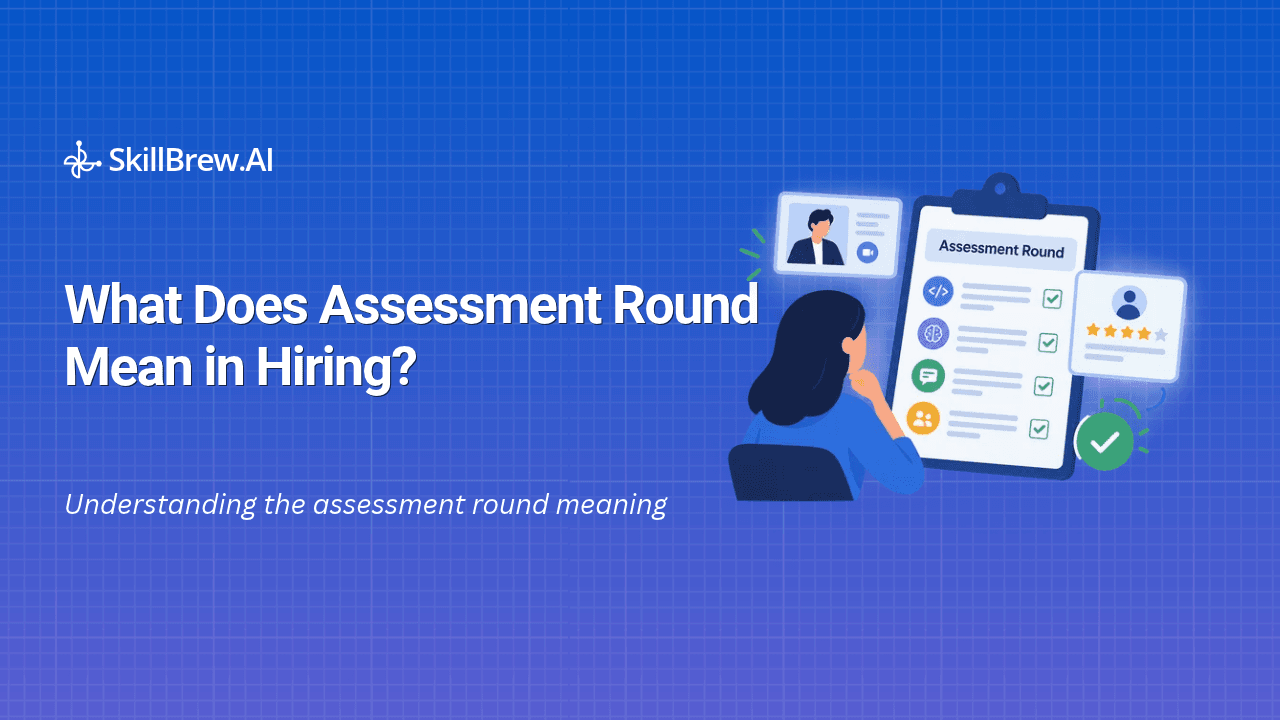
What Is an Assessment Round in an Interview?
If you are applying for a job and have been told that the next step is an assessment round, you may be wondering what it actually involves. So, what does assessment round mean in the hiring process? An assessment round is a structured stage of recruitment where employers evaluate a candidate's skills, knowledge, reasoning, communication, or other job-relevant competencies. Depending on the role, it may include technical questions, coding tasks, aptitude tests, situational questions, communicat
Assessment
Standardized Assessment: How AI Can Improve Candidate Evaluation
Two recruiters can interview the same candidate and walk away with completely different conclusions. One focuses on technical depth. Another prioritizes communication. A hiring manager weighs prior experience more heavily than either of them. The problem usually isn't that someone evaluated the candidate incorrectly. It's that everyone used a different standard. A standardized assessment helps address this by giving candidates comparable questions, instructions, and scoring criteria, so resul
Assessment
Why Generic Hiring Tests Can Miss Great Candidates
Hiring tests are supposed to make recruitment more objective. They give recruiters a structured way to compare candidates, measure skills, and narrow a large applicant pool. But there is a problem: a test can be consistent without being relevant. That distinction is the central issue. Standardized does not have to mean generic, and generic does not automatically mean ineffective. The problem is using an assessment that measures competencies unrelated to the job. When the same assessment is us
Assessment
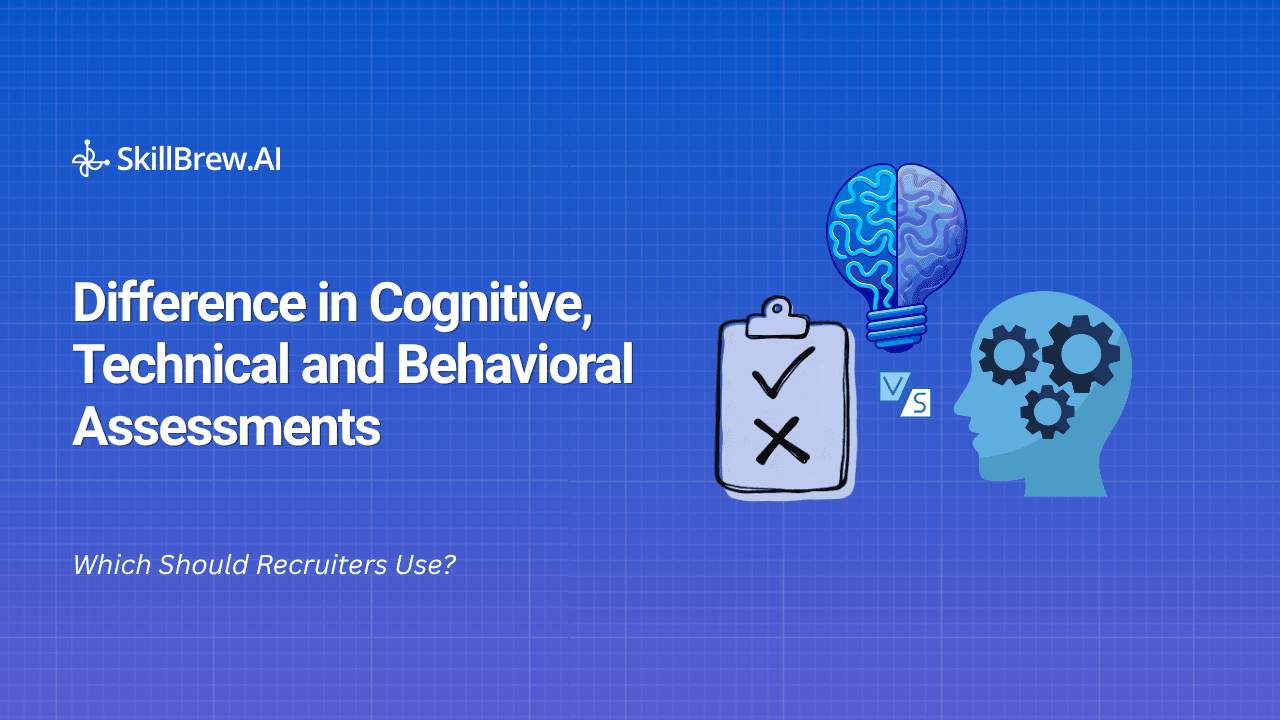
Cognitive vs. Technical vs. Behavioral Assessments: Which Should Recruiters Use?
Resume. Interview. Assessment. That's the evidence chain recruiters build with every hire, and the assessment step is where most of it falls apart. A resume shows what a candidate claims. An interview reveals how they communicate and whether they seem motivated. Neither proves they can actually do the job. That gap between claimed experience and demonstrated ability is exactly what employment assessments exist to close. Cognitive assessments ask: can this person reason through unfamiliar probl
Assessment
How to Build a Role-Specific Assessment That Predicts Job Performance
A great resume can tell you where someone has worked. A good interview can tell you how they communicate. But neither necessarily tells you whether a candidate can actually perform the job. That's where a role-specific assessment comes in. Instead of giving every candidate the same generic test, a role-specific assessment evaluates the skills, knowledge, and behaviors that matter for a particular position. A software engineer might be asked to debug code. A sales representative might handle a
Assessment
How to Create a Pre Hiring Assessment for Any Job Role
Most hiring teams don't lose good candidates in the interview. They lose them earlier, in a screening process that rewards polished resumes over actual skill. A well-built pre hiring assessment fixes that. It gives you signal before you spend an hour on a call, and it does it for every candidate, not just the ones whose resume caught a recruiter's eye at 11 PM. This guide covers what a pre hiring assessment actually is, the types worth using, how it compares to resume-based screening, how to pi

Assessment
AI Assessments vs Traditional Assessments: Which Predicts Job Performance Better?
Every hiring team eventually asks the same question: does a 90-minute proctored exam actually tell you who will perform well on the job, or is it just a filter that's easy to game and expensive to run? That question has gotten sharper with AI in the mix. AI assessments vs traditional assessments isn't just a tooling debate anymore. It's a debate about what predictive validity actually means when you're hiring at volume, against a deadline, with candidates who can find the answer key on Telegram

Assessment
Meet SkillBrew.AI's Hiring Assessment Builder
Most hiring assessments give you one way to build a test: a form with a question bank attached, and you fill it in yourself. That works fine until you're building your fifth one of the week for a role where the job description keeps changing. SkillBrew.AI built its Hiring Assessments platform around a different question: what if setting one up took as little effort as describing the role you're hiring for? Here's what's actually inside the Assessment platform. Table of Contents 1. Two Ways

Assessment
How AI Generates Coding Questions for Hiring at Scale
It's 11 PM. A hiring manager is writing coding questions for a "Senior Backend Engineer" role that opens tomorrow. Half the questions are recycled from the last requisition. None of them really match the tech stack in the job description. But the drive opens at 9 AM, so this is what gets sent out. Sound familiar? This is how most teams still build coding assessments, and it's fine right up until it isn't. It works when you're hiring for one role a quarter. It falls apart the moment you're runn

Assessment
10 Best AI Assessment Tools & Pre-Employment Assessment Software (2026)
Most platforms called an "AI assessment tool" are still doing something fairly simple: pulling questions from a static library, tagging them by role, and calling the match "AI-powered." That's not automatically bad, plenty of these platforms are well-built and widely trusted. But it's worth knowing what you're actually buying before you commit budget to one. Hiring assessments have become a default part of the funnel for a straightforward reason: application volumes keep climbing, and the cost