BrewVoice
Call Management for Recruiters: How to Stop Screening Calls From Leaking Candidates
An unanswered screening call does not necessarily mean a lost candidate. But a call that is logged incorrectly or never followed up can cause candidates to slip through the hiring funnel. The candidate who asked for a callback and never got one, the call that dropped at question four, the voicemail marked "connected": these are the leaks, and they surface after the dial. Fixing them is a call management problem. This guide gives recruitment teams a lifecycle for every screening call, rules for

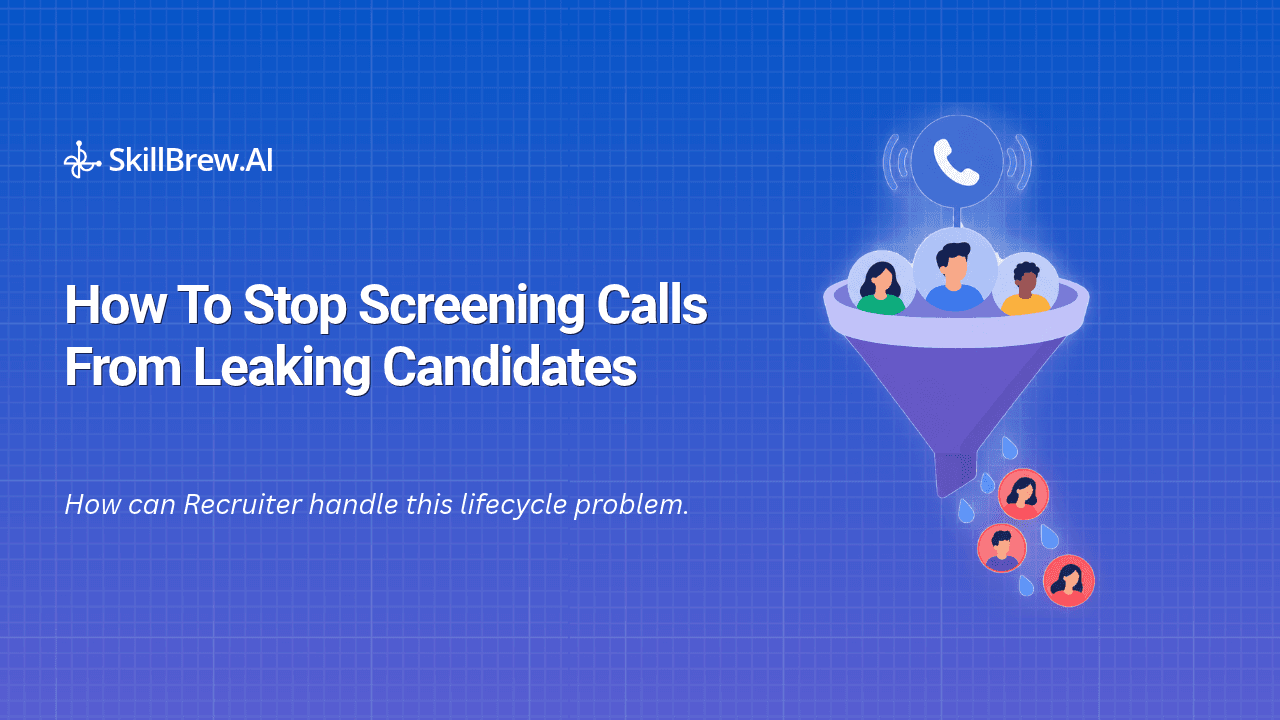
An unanswered screening call does not necessarily mean a lost candidate. But a call that is logged incorrectly or never followed up can cause candidates to slip through the hiring funnel. The candidate who asked for a callback and never got one, the call that dropped at question four, the voicemail marked "connected": these are the leaks, and they surface after the dial.
Fixing them is a call management problem. This guide gives recruitment teams a lifecycle for every screening call, rules for unanswered calls, callback requests, incomplete calls, and unsuccessful attempts, plus the metrics and scripts that keep false calls out of the funnel. It closes with where BrewVoice, the AI voice screening agent from SkillBrew.AI, automates the repetitive work.
Key Takeaways
- Call management is a lifecycle problem. Every call has a current status, a recorded outcome when applicable, and a defined next action.
- Candidates can slip through the hiring funnel after the dial because of missed callbacks, dropped calls, and incorrect statuses.
- False calls (dials incorrectly recorded as connections or screenings) distort pickup and conversion numbers.
- Five metrics are enough: pickup rate, screening completion rate, callback completion rate, false-call share, and time to first reach.
- Automate dialing, retries, and logging. Keep judgment with recruiters.
What Does Call Management Mean in Hiring?
In hiring, call management is the discipline of controlling what happens to a screening call before, during, and after the dial. That covers who gets called, when, how many times, what the result is called, and what follows.
Call management is different from call volume. A team can place hundreds of calls a day and still screen very few candidates. The gap sits in how results are classified and followed up. Teams with strong call management know, for every name on the list, exactly which state the candidate is in.
Why Call Management Matters
Weak call management overstates how many candidates were screened, shows candidates a dis-organized employer, and burns recruiter hours on redialling. Clean call management fixes the data, protects the employer brand, and returns time to work that needs a person.
Where Screening Calls Leak Candidates
| Stage | The leak | The fix |
| Before dialing | Opted-out or invalid numbers on the list | Verify consent and clean numbers first |
| At the dial | Pickup fails at the wrong time of day | Vary call windows across attempts |
| During the call | Connection drops, candidate interrupted | Capture partial answers and resume |
| After the call | Callback promised, never made | Schedule callbacks as appointments |
| In the tracker | Voicemail logged as "screened" | Use outcome statuses, not "called" |
The Screening Call Lifecycle
Every screening call should have a current status, a recorded outcome when applicable, and a defined next action.
Call lifecycle:
Queued → Dialing → Connected → Screening in progress → Outcome recorded
Not every call reaches the screening stage. Record the appropriate outcome for each attempt:
- Completed: the screening finished. Save the responses and screening report for recruiter review.
- Unanswered: no candidate answered. Retry according to the campaign's rules.
- Callback requested: the candidate asked to speak at another time. Schedule the callback and assign responsibility for follow-up.
- Incomplete: the screening ended before completion. Record the last completed question and decide whether to resume.
- Unsuccessful: The attempt cannot produce a usable screening result. Record the reason, such as a candidate declining, a language issue, or a wrong number.
Use a separate follow-up status when necessary, such as Callback scheduled, Retry pending, or Closed. This prevents a callback request or incomplete screening from being treated as a final result too early.
The goal is simple: every attempt has a reliable record, and every non-final outcome has a clear next action.
Unanswered Calls: Timing and Retry Rules
Unanswered screening calls are the largest group in most campaigns, so small rule changes pay off fast.
Cap the Attempts
Three attempts across two or three days is a suggested starting point, not a universal standard. Adapt the cap to candidate preferences, applicable calling rules, and campaign requirements. After the retry cap, stop automated redialling. Consider another contact channel only when the candidate's preferences and applicable rules permit it.
Move the Window
If the first attempt failed at 11 AM, try late afternoon next. Shift and field candidates often answer outside office hours, so set windows per role family. Repeating the same slot repeats the same result.
Leave a Clear Trail
A short message that names the company, the role, and the reason for calling gives candidates context before the next dial. Unknown numbers get ignored. Known context gets answered.
Label the End State Correctly
After the cap, the status is "unreachable". It is not "not interested". Mixing them hides candidates who might respond later.
Callback Requests: Turn a Maybe Into a Booked Slot
A callback request is a valuable follow-up opportunity because the candidate has already expressed a willingness to speak. The open question is whether the team shows up.
Good call management handles a callback in four moves: capture the date, time, and time zone, confirm by message immediately, assign an owner or automated queue, and call at the promised time.
A confirmation message can be short:
Thanks for the time today. This is a reminder that the next screening call for the [role] position is booked for [day] at [time]. Reply here if the time needs to change.
If the callback goes unanswered, run the unanswered rules and keep the original request on record. A missed callback costs more than a missed first call because the candidate asked once already.
Incomplete Calls: Pick Up Where the Call Stopped
Incomplete calls connect but end early. Causes include network drops, interruptions, and candidates who hang up midway.
- Find the cause. A network drop needs a quick retry. A deliberate hang-up needs space.
- Resume, do not restart. If six questions were answered, the next call starts at question seven.
- Retry the same day where possible.
- Store partial answers. They still help the shortlist decision.
Restarting from question one can frustrate candidates when their previous responses have already been recorded.
Unsuccessful Screening Attempts: Reason Codes That Matter
An unsuccessful attempt reaches the candidate but cannot produce a screening result. Group the call management reason codes into two categories, so recruiters can tell candidate-related outcomes from operational issues.
Candidate-related outcomes
- Not interested. Close politely and suppress future calls, subject to applicable requirements and any explicit preferences the candidate communicates.
- Not eligible. Record the failed criterion so the decision can be audited.
Operational issues
- Language or audio issue. Reroute to another language or channel before rejecting.
- Wrong person or number. Correct or remove the number.
Reason codes make failed calls useful. Patterns appear quickly: a spike in "not eligible" often points to a job description that is too broad, and a spike in "language issue" points to a mismatch between the candidate pool and the calling language.
False Calls: Spot Them Before They Skew the Report
In this guide, a false call is an attempt incorrectly recorded as a successful connection or screening despite producing no usable screening result. Related sources of reporting noise include duplicate dials, invalid numbers, and calls to opted-out contacts.
- Voicemail and auto-answer logged as "connected".
- Duplicate dials from two recruiters calling the same candidate.
- Calls to wrong, outdated, or opted-out numbers.
Each source inflates pickup rate or lowers completion rate without anyone noticing. Detect voicemail and treat it as unanswered. Assign one owner per candidate. Check current consent and opt-out status before each dial. Then report the false-call share every week, as its own line.
Metrics for Call Management
Five measures cover the whole process.
| Metric | Suggested definition | What it helps identify |
| Pickup rate | Human-answered call attempts ÷ total dial attempts | Timing and contactability issues |
| Screening completion rate | Completed screenings ÷ screenings started | Drop-offs during screening |
| Callback completion rate | Completed callbacks ÷ callbacks due during the period | Missed follow-ups |
| False-call share | Attempts classified as false calls ÷ total dial attempts | Incorrect logging and invalid contacts |
| Time to first reach | Time from campaign start to first human-answered call | Delays in reaching candidates |
Candidate call tracking needs consistent counting rules. A voicemail is an unanswered attempt, not a human answer. A callback request is a booked callback, not a completed one. Pickup rate and false-call share count dial attempts, while screening completion rate counts screenings. State the unit and the reporting period on every report, and report time to first reach per campaign using one consistent method.
Track these by role family and by campaign. Averages across everything hide the problems. Review all five side by side every week, so a rise in pickup rate paired with a fall in screening completion rate is caught early.
Common Call Management Mistakes
- Logging "called" as an outcome. Effort is not a result.
- Unlimited retries. No cap, no end.
- Restarting dropped calls. Resume instead.
- Merging "unreachable" with "not interested".
- Skipping opt-out checks on repeat campaigns.
- Measuring only pickup rate. Screening completion rate and false-call share tell the real story.
- Removing human review. Automation should surface decisions for recruiters, not make final calls alone.
Where Automation Fits: BrewVoice and Call Management
BrewVoice is the AI voice screening agent from SkillBrew.AI. The capabilities below map to the lifecycle above.
- Consent first. A WhatsApp consent message goes out before calling. Candidates who reply "not interested" are excluded, and consent is tracked on the portal.
- Retries and callbacks. Backend call handling for automated screening calls includes retry logic with scheduled callbacks, so unanswered calls and callback requests follow rules instead of memory.
- Fixed-line numbers. Outbound calls come from 080-series fixed-line numbers.
- Languages. 15+ languages are supported, which lowers language-mismatch failures.
- Volume. 500+ automated calls a day.
SkillBrew.AI reports a 70% reduction in screening time and 28+ recruiter hours saved per hire. These figures illustrate the potential time savings from automating repetitive screening tasks.
BrewVoice doesn't replace the recruiter. It moves the recruiter further down the funnel. Dialing, retries, and logging run automatically. Shortlist conversations, offers, and relationship building stay with people. To test skills after screening, teams can add Assessments. For a wider view of voice tooling, see the guide to call assistant screening technologies.
Call Management Checklist for Recruiters
| Check | Done? |
| Statuses and outcomes defined and shared | Yes / No |
| Current consent and opt-out status checked before dialing | Yes / No |
| Retry cap and spacing set | Yes / No |
| Call windows varied across attempts | Yes / No |
| Callbacks booked with confirmation message | Yes / No |
| Incomplete calls resume from last answer | Yes / No |
| Reason code on every unsuccessful attempt | Yes / No |
| Five metrics reviewed weekly | Yes / No |
FAQs
Q1. What is call management in recruitment?
Call management is the set of statuses, outcomes, retry rules, callback handling, and consent checks that control every screening call from dial to outcome.
Q2. What is the difference between an unanswered call and a false call?
An unanswered call has no pickup. In this guide, a false call is an attempt incorrectly recorded as a successful connection or screening, such as a voicemail logged as "connected".
Q3. What should happen after a candidate requests a callback?
Capture the time and time zone, send a confirmation message, assign an owner, and call at the booked time.
Q4. How should incomplete calls be handled?
Identify the cause, retry the same day if possible, and resume from the last answered question.
Q5. Can AI handle call management?
Yes. AI can dial, retry, schedule callbacks, and log outcomes at volume. Recruiters keep shortlisting and hiring decisions.
Conclusion
Screening calls can leak candidates after the dial. A clear lifecycle, consistent outcome statuses, written retry rules, scheduled callbacks, and weekly metric reviews help recruitment teams identify missed follow-ups and improve reporting accuracy.
Good call management is a process, not just a tool. Start by applying these rules consistently, review the results, and automate repetitive tasks where appropriate. The goal is to spend less recruiter time chasing call statuses and more time evaluating candidates and moving suitable applicants forward.
See BrewVoice in action
Discover how SkillBrew.AI helps hiring teams run screening calls at scale, with consent, retries, and callbacks handled automatically.
See AI-powered hiring in action
Discover how SkillBrew helps hiring teams cut time-to-hire by 60% with skill-validated assessments and AI-ranked shortlists.
Book a free demoNo commitment required · 30 minutes
Continue reading
View All Posts