BrewVoice
Best AI Voice Interview Platforms for Hiring Analytics
Recruitment teams often spend hours calling candidates to confirm their interest, discuss job requirements, check notice periods, and schedule interviews. These repetitive tasks become difficult to manage when organizations receive hundreds or thousands of applications for a single role. An AI Voice Interview Platform can automate initial candidate conversations, collect structured responses, and help recruiters identify applicants who meet predefined job requirements. Instead of manually calli

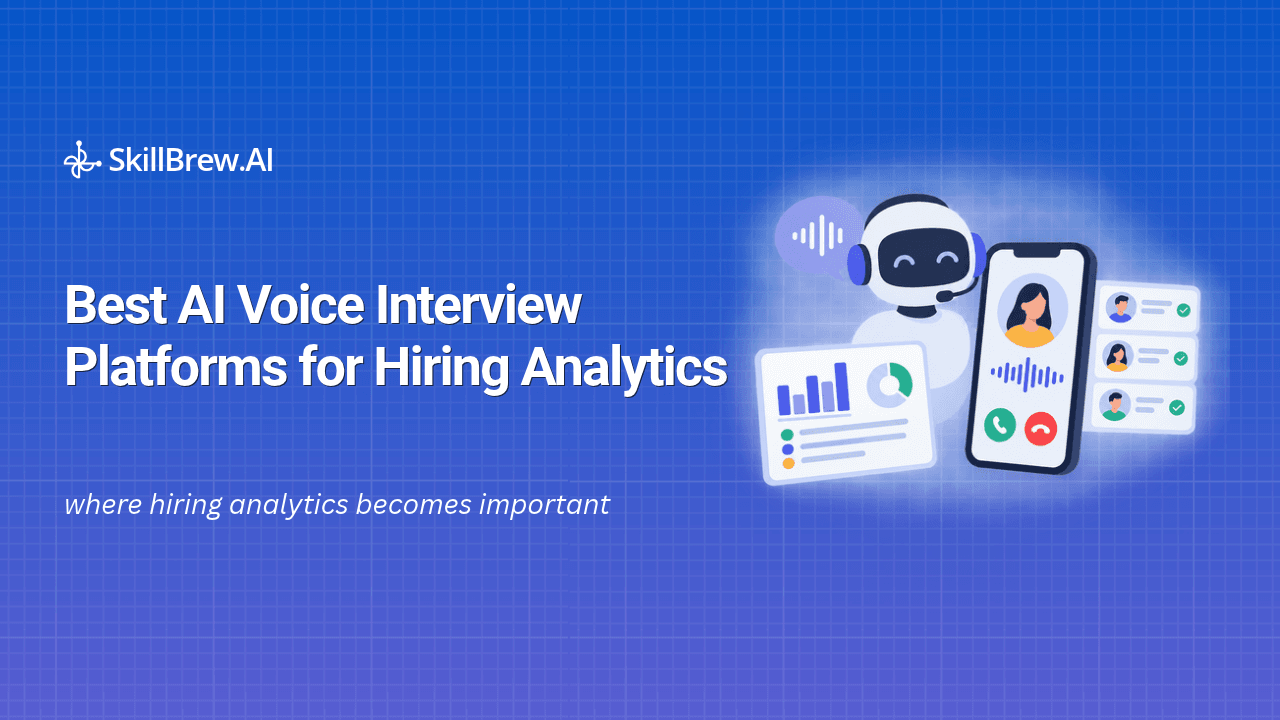
Recruitment teams often spend hours calling candidates to confirm their interest, discuss job requirements, check notice periods, and schedule interviews. These repetitive tasks become difficult to manage when organizations receive hundreds or thousands of applications for a single role.
An AI Voice Interview Platform can automate initial candidate conversations, collect structured responses, and help recruiters identify applicants who meet predefined job requirements. Instead of manually calling every applicant, recruitment teams can focus their attention on candidates who are more likely to progress.
However, automation alone does not guarantee better hiring decisions. Recruitment teams also need reliable data to understand campaign performance, candidate engagement, screening outcomes, and recruiter productivity.
This is where hiring analytics becomes important. The right solution should combine automated voice interactions with reporting that helps recruiters understand what is working, identify bottlenecks, and improve hiring outcomes. When selecting an AI Voice Interview Platform, organizations should evaluate both automation capabilities and the quality of insights available to their recruitment teams.
In this guide, we compare seven platforms, explain the recruitment metrics worth tracking, and outline how to choose a solution that aligns with your hiring requirements.
What Is an AI Voice Interview Platform?
An AI Voice Interview Platform uses artificial intelligence and voice technology to conduct automated conversations with job applicants. Depending on the product, these conversations may cover candidate availability, relevant experience, salary expectations, notice periods, location preferences, language proficiency, and other screening questions.
The platform can contact candidates, ask predefined questions, capture their responses, and organize the resulting information for recruiters. Some solutions also support multilingual conversations, automated follow-ups, integrations, and recruitment analytics.
Typical capabilities include:
- Automated candidate calling: Contact applicants without requiring recruiters to initiate every call manually.
- Structured screening: Ask consistent questions aligned with the role's requirements.
- Response capture: Record candidate answers and make the information available to the recruitment team.
- Call outcome tracking: Distinguish between answered calls, missed calls, completed screenings, and follow-ups.
- Recruitment reporting: Analyze campaign outcomes and identify opportunities to improve hiring processes.
Capabilities vary by provider, so recruiters should verify the exact features, integrations, and reporting options available before selecting a platform.
Why Hiring Analytics Matters in Voice Screening
Automated calling can reduce repetitive recruitment work, but recruiters still need to understand whether their campaigns are producing useful outcomes.
An AI Voice Interview Platform should help teams move beyond counting completed calls. It should provide enough information to evaluate candidate engagement, screening effectiveness, operational efficiency, and hiring progress.
For example, a high call volume may look impressive, but it does not necessarily indicate successful recruitment. If most candidates are unreachable or do not meet the role's requirements, the team may need to adjust its calling schedule, messaging, eligibility criteria, or follow-up strategy.
Useful hiring analytics helps recruiters answer questions such as:
- How many candidates were successfully contacted?
- What percentage completed the screening process?
- How many candidates met the initial eligibility criteria?
- Which campaigns generated the most qualified applicants?
- How much recruiter time was saved?
- At which stage are candidates dropping out?
- Which languages, locations, or calling windows perform best?
For organizations comparing solutions, an AI Voice Interview Platform should turn these answers into actionable insights that recruiters can use to improve future campaigns.
10 Hiring Analytics Metrics to Track
When evaluating an AI Voice Interview Platform, recruitment teams should prioritize metrics that connect operational activity with meaningful hiring outcomes. Tracking the right metrics helps teams identify inefficiencies, measure improvements, and make better decisions about recruitment resources.
1. Candidate Connection Rate
Connection rate measures the proportion of attempted calls that successfully reach candidates.
A low connection rate may indicate outdated contact information, inconvenient calling times, or insufficient follow-up attempts. Recruiters can use this metric to test different calling windows and improve contact strategies.
Example: If a campaign attempts 1,000 calls and successfully connects with 400 candidates, the connection rate is 40%.
2. Screening Completion Rate
Screening completion rate measures the percentage of contacted candidates who finish the required screening conversation.
A low completion rate may point to lengthy questionnaires, unclear questions, technical difficulties, or candidates losing interest during the call.
An AI Voice Interview Platform should make it possible to distinguish completed screenings from calls that were answered but ended before all required questions were covered.
3. Qualified Candidate Rate
Qualified candidate rate measures the proportion of screened candidates who meet the predefined eligibility criteria.
This metric helps recruiters assess whether their screening questions and sourcing channels are attracting suitable applicants.
For example, if 200 candidates complete screening and 70 meet the role's initial requirements, the qualified candidate rate is 35%.
Recruiters should define qualification criteria before launching a campaign. The criteria should be job-related, consistent, and reviewed to reduce the risk of unfair screening outcomes.
4. Interview Progression Rate
Interview progression rate tracks how many screened candidates move to the next stage of recruitment.
A strong connection rate does not necessarily mean that a campaign is effective. If contacted candidates rarely progress, the team may need to reassess its targeting, screening criteria, or job communication.
An AI Voice Interview Platform can support this analysis by connecting screening outcomes with subsequent recruitment stages, where the necessary integrations and data are available.
5. Time to Shortlist
Time to shortlist measures how long it takes to identify candidates suitable for further consideration.
Automated calling can help reduce the time spent contacting applicants individually and collecting basic information. Reporting on shortlist timelines can show whether this automation is translating into faster recruitment.
Compare results across similar roles and hiring periods to understand whether improvements are attributable to the process change rather than differences in application volume or role complexity.
6. Recruiter Hours Saved
Recruiter hours saved estimates the manual effort reduced through automated calling and screening.
To calculate this metric, compare the time recruiters previously spent on repetitive calls, follow-ups, and basic data entry with the time required to manage the automated process.
For a realistic estimate, include time spent configuring campaigns, reviewing responses, handling exceptions, and following up with candidates.
An AI Voice Interview Platform should support an assessment of operational efficiency rather than relying only on broad claims about time savings.
7. Cost per Qualified Candidate
Cost per qualified candidate measures the recruitment expenditure required to produce one candidate who meets the initial screening criteria.
A basic calculation is:
Cost per qualified candidate = Total campaign cost ÷ Number of qualified candidates
Campaign costs may include platform charges, recruiter time, calling expenses, and related operational costs.
This metric is particularly useful for high-volume hiring, where small improvements in screening efficiency can have a meaningful effect on overall recruitment expenditure.
8. Follow-Up and Retry Success Rate
Not every candidate answers the first call. Follow-up and retry success rate measures how effectively additional attempts reach candidates who were initially unavailable.
Recruiters can compare outcomes by calling window, retry interval, and campaign type. However, follow-up rules should respect candidate preferences, consent requirements, and applicable communication regulations.
A useful reporting setup distinguishes between candidates who were unreachable, those who requested a later call, and those who declined further contact.
9. Candidate Drop-Off Rate
Candidate drop-off rate tracks how many applicants stop participating before completing screening or moving to the next stage.
High drop-off may indicate that the process is too long, the questions are unclear, the timing is inconvenient, or the role's expectations have not been communicated effectively.
An AI Voice Interview Platform should provide clear call outcomes and completion data so recruitment teams can investigate where candidates disengage.
10. Language and Campaign Performance
Organizations recruiting across multiple regions may need to conduct screening in several languages.
Comparing campaign results by language, location, role, and calling window can reveal differences in connection rates, completion rates, and candidate progression.
Teams should interpret these differences carefully. Lower completion in one language, for example, could reflect call quality, scheduling, candidate demographics, or campaign design rather than language preference alone.
7 AI Voice Interview Platforms for Hiring Analytics
The following platforms are worth evaluating for automated candidate conversations and recruitment workflows. Their capabilities differ, so confirm current features, integrations, pricing, and analytics depth directly with each provider.
1. SkillBrew.AI BrewVoice
Website: https://skillbrew.ai/brew-voice
BrewVoice is SkillBrew.AI's voice-based recruitment solution for automating candidate calling and initial screening workflows.
Recruitment teams evaluating an AI Voice Interview Platform can consider BrewVoice when they want to reduce repetitive candidate outreach and organize screening outcomes more efficiently.
Potential evaluation areas include:
- Automated candidate calling and screening workflows.
- Collection of candidate responses to predefined questions.
- Support for high-volume recruitment processes.
- Call outcome visibility and campaign monitoring.
- Opportunities to connect screening activity with wider recruitment operations.
Best suited for: Recruitment teams exploring voice automation for repetitive candidate communication and initial screening.
What to verify: Ask for a demonstration of the available analytics dashboard, reporting filters, integration options, language support, and export capabilities. Confirm which features are currently available rather than assuming that every reporting function is included.
2. Hunar AI
Website: https://hunar.ai/solutions/hiring
Hunar AI offers AI-focused hiring solutions that recruitment teams can evaluate as part of a broader effort to streamline candidate assessment and hiring workflows.
When comparing Hunar AI with an AI Voice Interview Platform, assess how its available automation features fit into the existing recruitment process and whether the reporting supports the team's specific hiring objectives.
Evaluation areas may include candidate screening, workflow automation, structured information collection, and visibility into hiring activity.
Best suited for: Organizations looking to evaluate AI-supported hiring workflows.
What to verify: Confirm the exact voice capabilities, candidate communication options, available hiring metrics, and compatibility with your applicant tracking system.
3. Hirin.ai
Website: https://www.hirin.ai/
Hirin.ai is another option to consider when assessing AI-supported recruitment and candidate screening workflows.
Recruiters should examine how the platform handles candidate interactions, captures relevant information, and helps hiring teams manage applicants throughout the recruitment process.
An AI Voice Interview Platform comparison should focus on practical workflow fit rather than feature labels alone. The important question is whether the solution provides the capabilities needed for the roles, candidate volumes, and recruitment stages being managed.
Best suited for: Teams exploring AI-assisted recruitment workflows and screening automation.
What to verify: Request details about voice-based screening, reporting depth, integrations, implementation requirements, and the availability of campaign-level analytics.
4. Recruit Bud AI
Website: https://www.recruitbud.in/
Recruit Bud AI can be included in a shortlist of AI-driven recruitment solutions for organizations looking to streamline parts of their hiring workflow.
When evaluating the platform, focus on whether it can help reduce repetitive recruiter tasks while preserving visibility into candidate progress and screening outcomes.
For high-volume recruitment, reporting should ideally make it easier to identify completed interactions, outstanding follow-ups, and candidates who meet the initial role requirements.
Best suited for: Recruitment teams investigating AI-based workflow support and hiring automation.
What to verify: Confirm the availability of automated voice calls, structured screening, analytics dashboards, recruitment integrations, and configurable reporting.
5. HuskyVoice.AI
Website: https://www.huskyvoice.ai/recruitment
HuskyVoice.AI provides a recruitment-focused offering that teams can assess when exploring voice automation for candidate communication.
An AI Voice Interview Platform should be evaluated on how reliably it manages the candidate interaction process and how easily recruiters can interpret the resulting information.
Consider whether the solution supports the team's expected call volumes, handles unsuccessful contact attempts clearly, and provides enough information to manage follow-ups without creating additional manual work.
Best suited for: Teams assessing voice-based automation for recruitment-related communication.
What to verify: Review the available screening workflow, supported languages, call reporting, configuration options, and integration capabilities.
6. Fawin
Website: https://fawin.in/
Fawin is another provider recruitment teams can investigate while comparing technology options for hiring automation.
The evaluation should establish which recruitment tasks the platform supports, how candidate information is captured, and whether the available workflows align with the organization's screening requirements.
For hiring analytics, teams should also assess whether reports can be segmented by role, campaign, location, or other useful dimensions.
Best suited for: Organizations exploring recruitment technology and automation options.
What to verify: Ask about voice functionality, screening capabilities, analytics availability, reporting exports, pricing, and implementation support.
7. VoiceGun
Website: https://voicegun.ai/industries/recruitment/
VoiceGun offers a recruitment-focused solution that can be considered by teams evaluating voice automation for candidate outreach and hiring workflows.
When reviewing the platform, assess the relationship between its calling capabilities and the information recruiters need to make operational decisions.
A useful solution should make it possible to understand what happened during a campaign, which candidates require follow-up, and where process improvements may be needed.
Best suited for: Recruitment teams evaluating voice automation for candidate communication.
What to verify: Confirm supported recruitment use cases, analytics functionality, integration options, language availability, and the level of reporting included in the proposed plan.
Comparison of AI Voice Interview Platforms
Use the following table as an initial shortlist. It is not a verified feature-by-feature ranking; the details should be confirmed with each provider.
| Platform | Primary evaluation focus | Questions to ask |
| SkillBrew.AI BrewVoice | Automated candidate calling and screening | Which call metrics, screening outcomes, and reports are available? |
| Hunar AI | AI-supported hiring workflows | Which voice and analytics capabilities are included? |
| Hirin.ai | Recruitment and screening workflows | How are candidate interactions and outcomes tracked? |
| Recruit Bud AI | Recruitment automation | What reporting and integration options are supported? |
| HuskyVoice.AI | Voice-based recruitment communication | How are call outcomes, retries, and screening results managed? |
| Fawin | Recruitment technology workflows | Which automation features and reports are available? |
| VoiceGun | Recruitment-focused voice automation | How are campaigns configured and performance measured? |
The best choice depends on your recruitment volume, workflow complexity, integration requirements, and analytics needs. Arrange demonstrations using the same set of screening scenarios so you can compare the platforms fairly. An AI Voice Interview Platform should be judged on measurable outcomes and verified capabilities, not marketing claims alone.
How to Choose the Right Platform for Hiring Analytics
1. Define Your Recruitment Goals
Start by identifying the problem you want to solve. You may need to reduce manual calling, improve screening completion, shorten time to shortlist, or gain better visibility into campaign performance.
Clear goals make it easier to compare solutions against measurable outcomes. Before selecting an AI Voice Interview Platform, establish the baseline metrics you want to improve and decide how you will measure success.
2. Check Analytics and Reporting Depth
Look beyond the number of calls completed. Determine whether the platform reports connection rates, screening completion, candidate progression, follow-up outcomes, and other metrics relevant to your process.
For a fair comparison, assess each provider against the same reporting requirements and sample recruitment scenarios.
3. Evaluate Integration Capabilities
Check whether the platform can exchange information with your applicant tracking system, customer relationship management tools, or other recruitment software.
Clarify which fields are synchronized, whether updates occur automatically, and whether integration requires additional implementation or licensing costs.
4. Assess Language and Candidate Experience
If you recruit across different regions, confirm which languages and accents the solution supports. Test whether questions are understandable, responses are captured accurately, and candidates can request clarification or end the conversation appropriately.
The screening experience should remain accessible, respectful, and easy to navigate.
5. Review Data Privacy and Security
Candidate conversations can contain personal information. Ask how call recordings, transcripts, and candidate responses are stored, accessed, retained, and deleted.
Review consent processes, data protection responsibilities, access controls, and relevant legal requirements before deploying the system.
6. Measure Total Cost and Return on Investment
Compare subscription or usage charges with the time and resources saved. Include implementation, integrations, recruiter oversight, training, and ongoing administration in your calculations.
A lower per-call price does not necessarily mean a lower total cost if the solution creates additional manual work or provides insufficient reporting.
7. Test Before Scaling
Run a pilot with a defined set of roles or recruitment campaigns. Establish baseline metrics before implementation and compare them with results after the pilot.
Use the findings to identify process improvements and determine whether the solution is ready for wider deployment.
Common Mistakes to Avoid When Using Voice Interview Analytics
Focusing Only on Call Volume
More calls do not automatically produce better recruitment outcomes. Track completed screenings, qualified candidates, and progression alongside operational activity.
Treating Automated Screening as the Final Hiring Decision
Voice automation should support recruiters, not replace appropriate human judgment. Final decisions should consider relevant evidence, role requirements, and the candidate's overall qualifications.
Using Inconsistent Screening Questions
Different questions across similar candidates can make results difficult to compare. Create structured, job-related screening criteria and review them regularly.
Ignoring Candidate Feedback
Candidates may experience confusing questions, poor call timing, or technical difficulties. Use feedback and call outcomes to improve the screening process.
Failing to Review Data Quality
Incomplete records, incorrect classifications, and inconsistent status labels can undermine reporting. Establish clear definitions and audit the data regularly.
Assuming Every Platform Offers the Same Analytics
Providers differ in their available metrics, dashboards, exports, and integrations. Validate the exact reporting capabilities during product demonstrations.
How to Implement Voice Interview Analytics Successfully
A structured rollout helps recruitment teams introduce automation without losing control over the candidate experience.
Step 1: Establish a baseline. Record current contact rates, screening completion, recruiter time, and time to shortlist.
Step 2: Standardize screening criteria. Define the questions, eligibility rules, and outcomes required for each role.
Step 3: Configure the workflow. Set up calling schedules, follow-up rules, escalation paths, and the appropriate candidate communication process.
Step 4: Run a controlled pilot. Begin with a limited number of roles or campaigns and monitor performance closely.
Step 5: Review the results. Compare the pilot against the baseline, investigate unexpected outcomes, and gather recruiter and candidate feedback.
Step 6: Improve and scale. Refine questions, scheduling, and follow-up rules before expanding to additional teams or hiring campaigns.
Throughout implementation, an AI Voice Interview Platform should be monitored for data quality, operational reliability, candidate experience, and the consistency of screening outcomes. Teams should review performance regularly and update workflows when the data reveals avoidable bottlenecks.
Frequently Asked Questions
Q1. What is an AI voice interview platform used for?
It automates voice-based candidate conversations for tasks such as initial screening, availability checks, collecting job-related information, and coordinating follow-ups. The exact functions vary by provider.
Q2. How does voice interview analytics help recruiters?
Voice interview analytics helps recruiters measure contact rates, screening completion, candidate qualification, hiring progression, and operational efficiency. These insights can reveal bottlenecks and inform improvements to recruitment workflows.
Q3. Which metrics should recruitment teams track first?
Start with connection rate, screening completion rate, qualified candidate rate, time to shortlist, and recruiter hours saved. Add further metrics based on your hiring goals and the quality of the data available.
Q4. Can these platforms support high-volume hiring?
Some solutions are designed to support large recruitment campaigns. Before choosing a provider, confirm its calling capacity, concurrency limits, retry controls, reporting capabilities, and pricing at your expected volume.
Q5. Can voice interview platforms support multiple languages?
Language support varies across providers. Confirm the languages available and test pronunciation, comprehension, response capture, and candidate experience before deploying the solution across different regions.
Q6. Do voice interview platforms replace recruiters?
No. They can automate repetitive tasks and organize screening information, allowing recruiters to focus on candidate evaluation, relationship building, and hiring decisions. Human oversight remains important.
Q7. How should businesses compare pricing?
Compare total costs, including platform charges, usage, implementation, integrations, training, and ongoing administration. Relate those costs to measurable outcomes such as reduced manual effort and cost per qualified candidate.
Q8. What should businesses look for in hiring analytics?
Look for accurate reporting, clearly defined metrics, useful filters, export options, integration capabilities, and visibility into campaign outcomes. The reports should help recruiters make practical decisions rather than simply display activity counts.
Conclusion
Automated voice screening can help recruitment teams manage repetitive candidate communication and organize initial screening more efficiently. However, the real value comes from understanding how those interactions affect hiring outcomes.
When comparing platforms, evaluate calling capabilities alongside reporting depth, integration options, language support, data privacy, candidate experience, and total cost of ownership. Use a controlled pilot to determine whether a solution improves the metrics that matter most to your recruitment process.
If your team is exploring an AI Voice Interview Platform, SkillBrew.AI BrewVoice is one option to evaluate for automated candidate calling and screening workflows. Review the available capabilities, request a demonstration, and assess how the solution fits your hiring requirements before scaling.
Explore SkillBrew.AI BrewVoice: Schedule a Demo!
See AI-powered hiring in action
Discover how SkillBrew helps hiring teams cut time-to-hire by 60% with skill-validated assessments and AI-ranked shortlists.
Book a free demoNo commitment required · 30 minutes
Continue reading
View All Posts